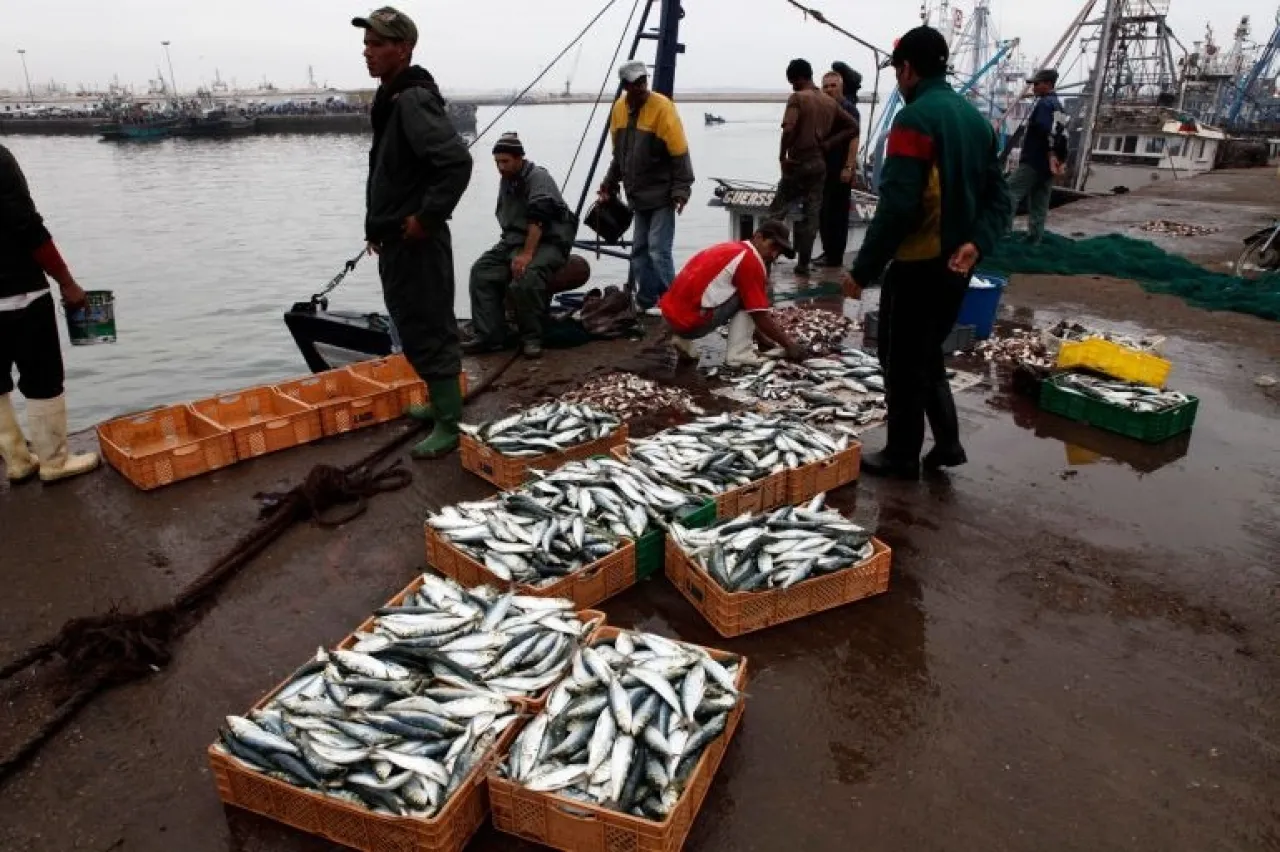
Khaberni - The Moroccan Secretary of State for Maritime Fishing, Zakia Driouch, announced that her country will stop exporting frozen sardines from the beginning of February to protect the local supply and contain prices.
Sardines are a staple food for families in Morocco, which is the world's largest exporter of sardines thanks to its long coasts on the Atlantic Ocean and the Mediterranean Sea.
Driouch told parliament members late on Tuesday that the decision was made after a significant drop in supply, but she did not specify how long the ban would last.
She mentioned that fish species that live near the water surface, such as sardines, represent about 80% of Morocco's coastal fish resources, while white fish make up 20%.
In June, the National Union of Fish Canning Industries called on authorities to take measures to prevent illegal fishing following reports of declining catch quantities.
According to official data, sardine quantities in Morocco fell by 46% in 2024 to 525,000 tonnes.
According to the latest data available from the World Bank's integrated database and the World Trade Organization, Morocco led the exports of frozen sardines in 2023 with 89,000 tonnes and revenues of $83 million.
South Africa, the European Union, Brazil, Spain, and Turkey are among the largest markets importing sardines from Morocco.
Moroccan news websites quoted Driouch as saying that the decision to ban the export of frozen sardines will help control prices at an acceptable level.
She added the day before yesterday: "Prices are subject to supply and demand, but fish prices are somewhat reasonable, considering a variety of factors, such as weather conditions, ship trip costs, the cold chain, and profit margins of intermediaries and installment traders."