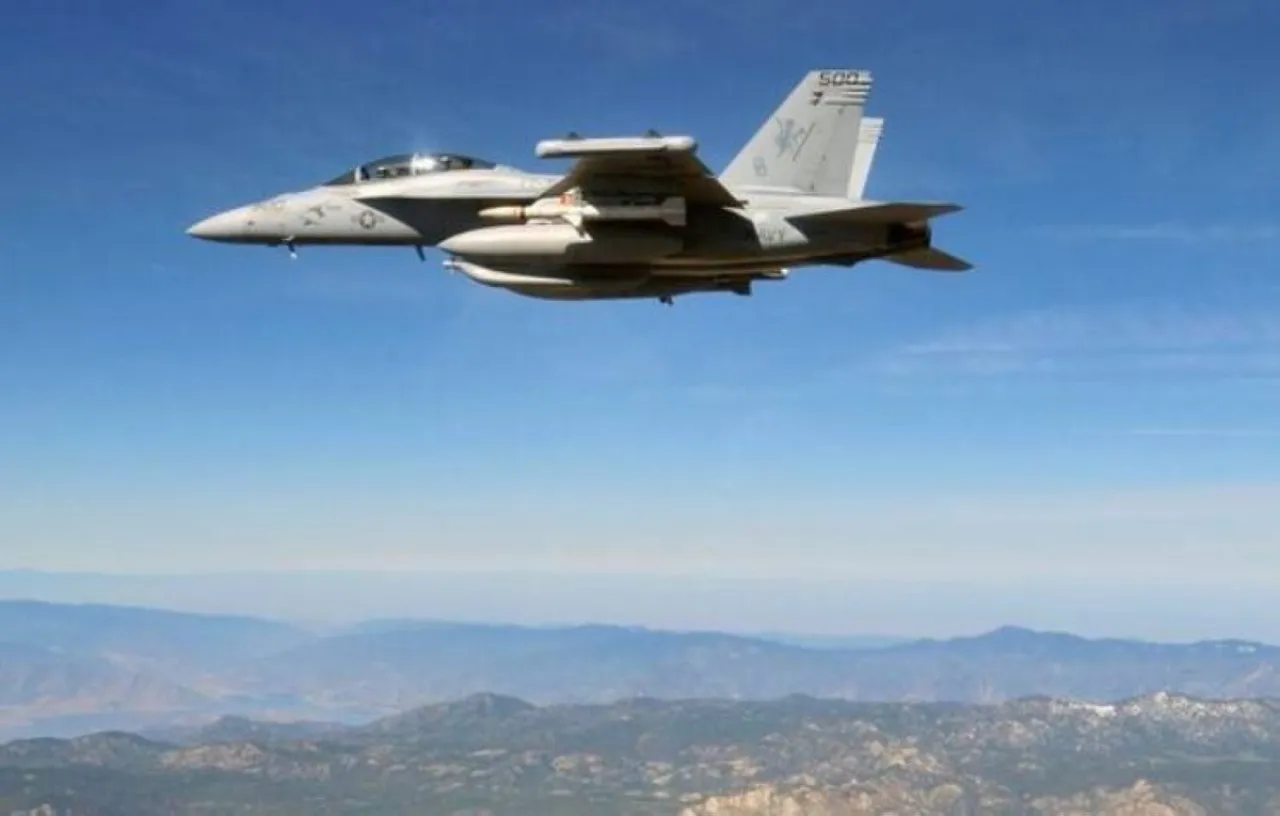
Khaberni - Among more than 150 American warplanes that flew over Venezuela last weekend, there was the "Growler," a jet aircraft that attacks signals, not people.
The Boeing EA-18G Growler is specialized in electronic warfare, an aspect previously neglected in combat, but has seen a significant revival after its extensive use in the Ukrainian war.
After the American armed forces initiated "Absolute Resolve" against Venezuela on January 3, which resulted in the destruction of many military targets and infrastructure in the capital and the arrest of President Nicolas Maduro by elements of the Delta forces of the US Army, increasing information has emerged about how quickly South America's most advanced air defense network was breached, according to the Wall Street Journal.
It is especially confirmed that the US Navy's EA-18G Growler electronic attack aircraft, specialized in suppressing and destroying enemy air defenses, played a pivotal role in granting the American forces almost full access to the airspace over the Venezuelan capital, Caracas.
Reports indicate that weeks of prior operations near Venezuelan territory were crucial in paving the way for this, allowing EA-18G aircraft to collect valuable intelligence information using its extensive array of passive sensors.
The Growler is an advanced version of the medium-weight F-18F fighter, capable of systematically mapping radar systems, identifying their strengths, exploring their weaknesses, as well as providing intelligence information that enables the development of more effective countermeasures.
These capabilities are unique among Western fourth-generation aircraft, with the Chinese Air Force's J-16D and the Chinese Navy's J-15D, which entered service in 2021 and 2024 respectively, being similar aircraft.
The Soviet Union previously possessed highly specialized aircraft for air defense suppression, the most prominent of which was the MiG-25BM, but they were decommissioned without replacement after the dissolution of the Union.
The US Air Force lacks a similar aircraft, despite recurring speculation about the possibility of developing one based on the F-15E.
Before the attacks on Venezuela, the US Navy not only deployed EA-18G aircraft to scout local defenses but also deployed F-18E/F fighter aircraft to simulate attacks on the country.
It is worth noting that the giant aircraft carrier USS Gerald Ford is unable to deploy the latest F-35C fighter jets due to delays in integrating them with the new electromagnetic launch system.
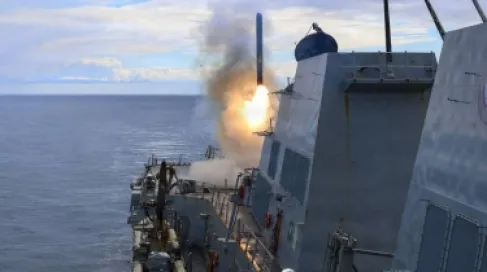
In addition to collecting electronic intelligence information, EA-18G aircraft carry AGM-88 HARM anti-radiation missiles as their main kinetic weapon, along with a wide range of specialized jamming containers that provide protection for accompanying aircraft against radars across a wide range of radar frequencies.
It is believed that these aircraft participated in strikes on Venezuelan air defense systems, with video footage confirming the destruction of several ground-to-air missile launch platforms in the capital.
The EA-18G aircraft entered service in 2009, and production is scheduled to cease in 2027. Its production spanned precisely twelve years due to delays in developing and operating the F-35C aircraft, which is expected to achieve Block 4 capabilities necessary for high-intensity operations in the early 2030s.
The F-35 includes a set of passive sensors unprecedented in multi-role fighter jets, allowing it to perform electronic intelligence tasks over Eastern Europe to collect valuable information about Russian air defenses, as the EA-18G aircraft did when flying over Venezuela.