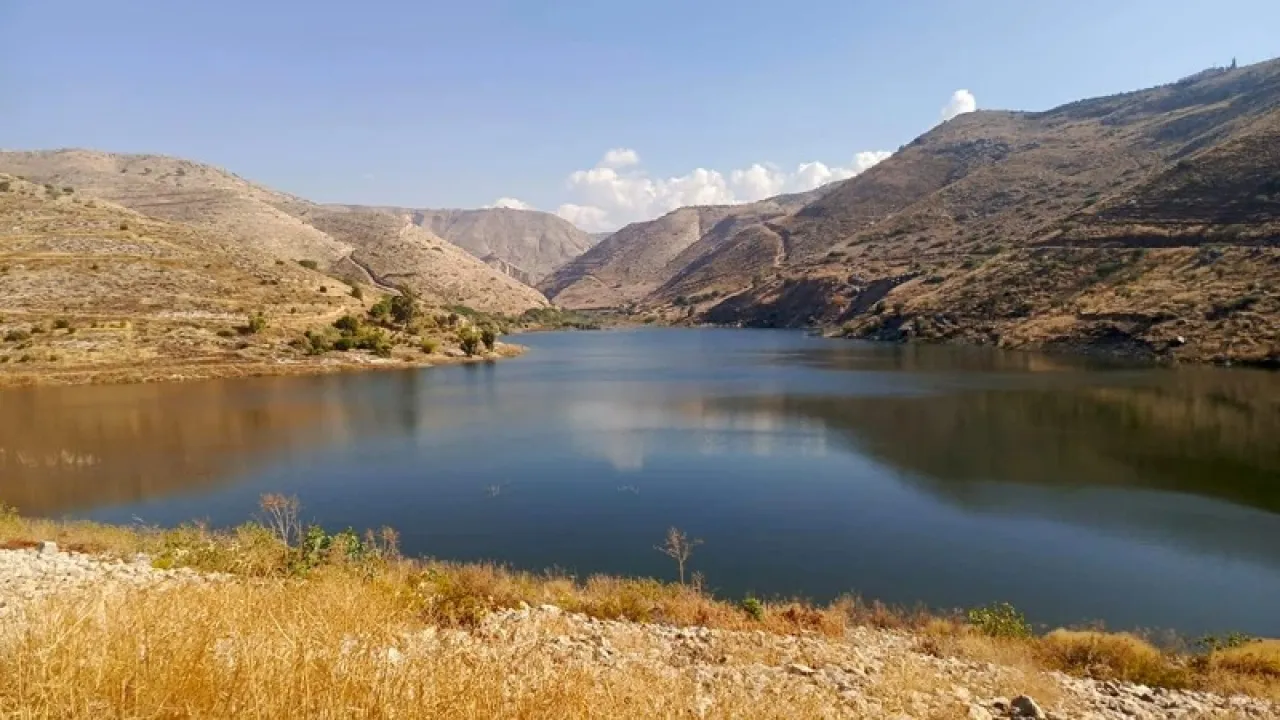
Khaberni – The lecturer and researcher in the field of environmental protection, Dr. Ahmad Al-Sharida, explained the reason why all the dams in northern Jordan have not been filled with rainwater, despite the abundance of the rainy season so far, particularly the dams in the governorates of Irbid and Ajloun, namely: Al-Wehda Dam, Wadi Al-Arab Dam, Sharhabil bin Hasna (Zqlab) Dam, and Wadi Kufranjah/Ajloun Dam.
Al-Sharida pointed out that the previous rainy season (2024/2025) was exceptionally dry, with rainfall amounts less than 40% of the general annual average, leading to severe drought affecting the three environmental elements: water, soil, and vegetation.
He clarified that the current rainy season (2025/2026) has witnessed in Irbid governorate, so far, three low-pressure systems and several cases of atmospheric instability, with rainfall amounts reaching about 40% of the general annual average, which is 450 millimeters, during 12 rainy days.
Al-Sharida said that there are several reasons for the dams not being fully filled, the most prominent of which are:
1. Effective surface runoff requires a low-pressure system lasting three consecutive days or more, in addition to soil saturation with water from previous rainfalls.
2. The permanent dryness of previously flowing streams, and the drying of water springs and sources that feed the dams.
3. The density of vegetation and forests in most of the surface water supply areas in the governorate, along with land reclamation through the construction of stone terraces on the paths of wadis and feeder streams, to prevent soil erosion and store rainwater, thereby increasing the moisture of agricultural soil.