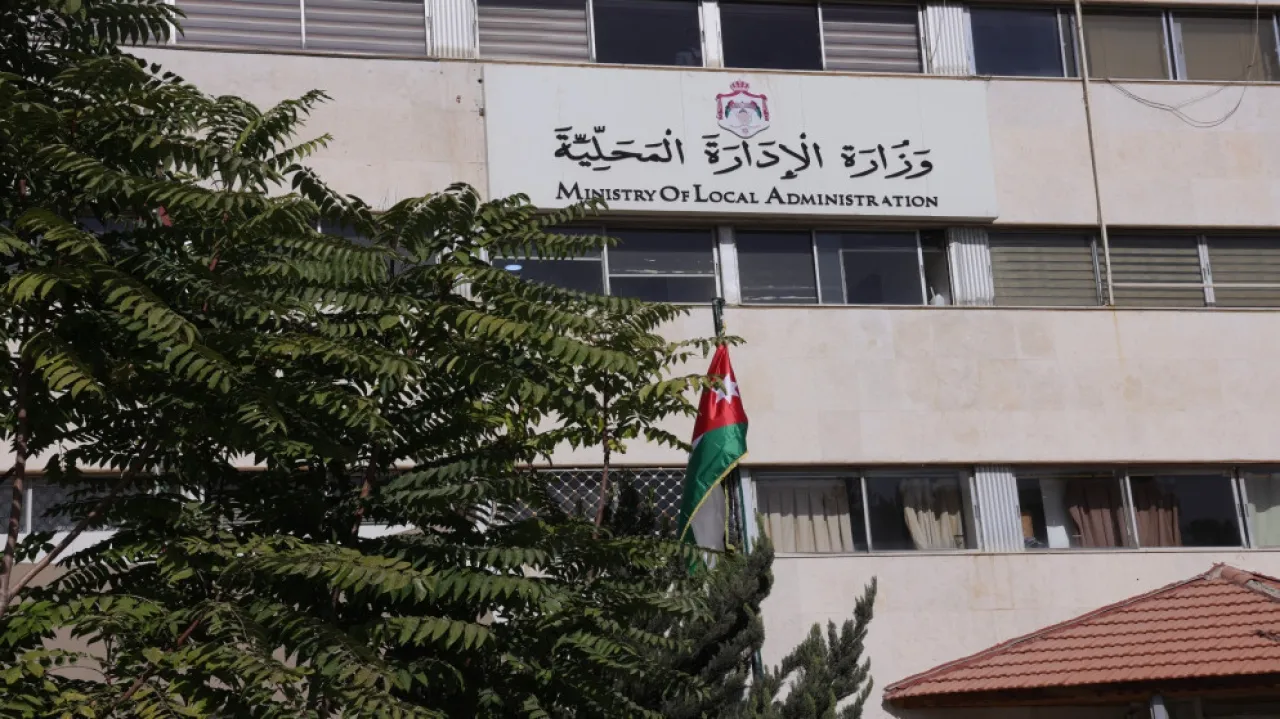
Khaberni - The Ministry of Local Administration stated that the land use regulation system for the year 2026 and the land use map, approved by the Cabinet yesterday, Sunday, aligns with the vision of His Majesty King Abdullah II to enhance sustainable spatial planning, protect agricultural lands, and achieve a balance between development requirements and natural resource conservation.
The Director of Comprehensive Planning at the Ministry, Iman Al-Amawi, indicated on Monday that the system aims to preserve the agricultural expanse outside the regulated boundaries, control urban expansions resulting from planning additions, limit random industrial and residential expansion on fertile agricultural lands, support agricultural projects, and regulate land uses to prevent changes in their designated purposes.
She noted that the system relies on an updated land use map, which classifies lands in terms of their suitability for agriculture, and provides precise geographic spatial information that aids decision-makers, reducing time, effort, and costs for concerned institutions, benefiting from advancements in modern software and artificial intelligence applications.
She explained that the map was updated using a scientific and participative methodology, relying on the agricultural map prepared by the Ministry of Agriculture, which is based on about 360,000 soil samples covering various regions of the kingdom, including soil characteristic and salinity analysis.
She pointed out that the updated map was prepared in partnership with a wide range of national bodies and institutions, and includes 52 layers of data to support precise decision-making, mentioning that there is a plan to launch a specialized electronic portal during this year.
The system identifies the classification of lands outside the regulated boundaries in terms of their suitability for agriculture according to the land use map, regulates their use, limits changes in land use or conversion, and ensures the provision of precise geographic spatial information that aids in facilitating decision-maker’s tasks and reducing time, effort, and costs for competent institutions and bodies.