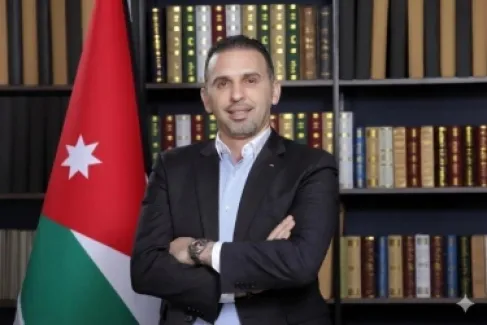
Khaberni - Dr. Yousef Obeidallah wrote:
When the article "Hope in Jaafar Hassan's Government" was published in several influential Jordanian media sites, the goal was neither to market naive optimism nor to grant the government an open check of confidence. Instead, it was a bid to interpret the situation from a different perspective—through both the government's lens, as it tries to manage a complex moment, and through that of a society experiencing unprecedented pressures.
However, the wide engagement with the article clearly revealed that the Jordanian street not only reads texts but also translates them into a clear political message.
The reactions clearly split into two directions.
The first direction expressed a sharp decline in the level of trust in the government. Some commentators even expressed astonishment at any talk of popular satisfaction or hope given the challenging living conditions and a lack of tangible sense of imminent improvement. This direction does not attack the government as much as it expresses general fatigue and a strong conviction among a broad segment that successive governments have failed to make the necessary difference in people's lives.
The second direction, which is broader in implication, went beyond mere assessment of the government to address the core of social discontent and the demand for general amnesty. Here the discussion becomes deeper and extends beyond the person of the head of government or his name, as general amnesty in the street's consciousness is no longer just a legal demand but has turned into a symbol of a step toward calming down and a message acknowledging accumulated suffering and an attempt to reopen channels of trust between the government and society.
The demand for general amnesty is the result of years of economic pressures and the accumulation of financial and livelihood issues that affect families, not just individuals.
Therefore, the repetition of this demand in comments, with notable intensity, indicates that citizens are not just waiting for reassuring speeches, but are awaiting a tangible decision that makes them feel that the government stands with them. Understanding the paradox may not trust the government, but at the same time sends its message to it and holds it responsible for taking an extraordinary step, which in itself is an implicit recognition that the government still holds the keys to relief even if it does not possess all the tools for resolution. Properly designed and timed, general amnesty can be a politically impactful act with broad social effects, without undercutting the government's prestige and enabling it to balance legal prescriptiveness and humanitarian considerations.
Most importantly, this popular engagement is reordering priorities. The discussion is no longer about satisfaction rates or media performance assessments but about measures that reduce tension and bring some reassurance. Here, Jaafar Hassan's government faces a real situation where the hope written about is represented by the ability to catch the street's message and transform it into a well-considered public policy.
What the reactions to the article "Hope in Jaafar Hassan's Government" revealed is that the Jordanian street is going through a sensitive phase, the most prominent feature of which is the decline in trust and the escalation of the need for genuine calming initiatives, and general amnesty, as evident from the general mood, has come to the forefront of what citizens believe to be an entry for reducing tension and starting a different path that may restore the relationship between the government and the people on a less tense and more realistic basis.