Khaberni - Minister of Labor Khaled Albakkar stated that the exclusion of the workers in the textile and clothing sector from the minimum wage decision was based on the specificity of this sector and its economic and developmental importance, to ensure the continuity of investment and to maintain its competitiveness in the export markets.
The minister, in his response to the parliamentary question raised by MP Hala Youssef Al-Jarrah, explained that Jordanian women’s employment rate in this sector constitutes a majority of the Jordanian workforce therein, which contributes to the economic empowerment of women, in addition to the ease of their transition from home to the workplace due to the geographic expansion of these industries across different regions of the kingdom.
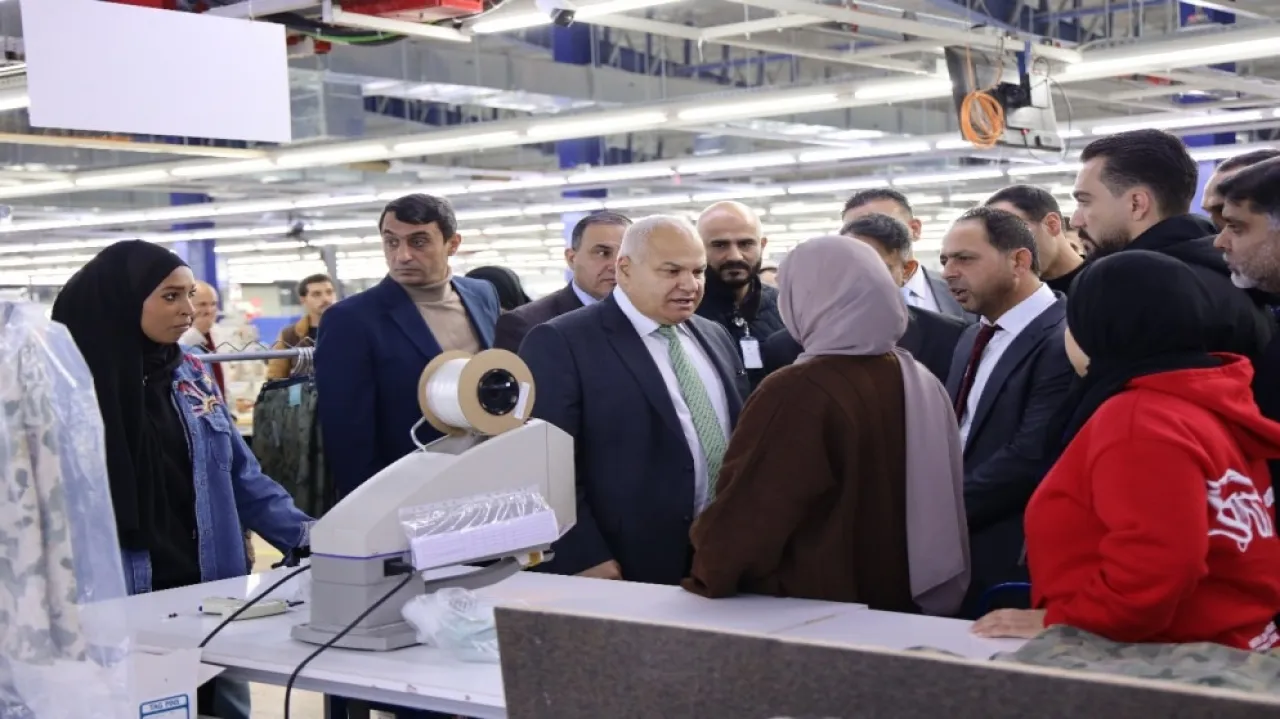
Albakkar indicated that the textile and clothing industry is among the vital economic sectors in the kingdom, and relies heavily on both Jordanian and foreign labor, with its annual exports exceeding two billion US dollars.
He mentioned that most industrial companies operating in this sector are distributed across various provinces of the kingdom, and have established production branches in remote and poor areas, which contributes to localizing economic development in various provinces and providing local employment opportunities.
He pointed out that the contractual relations of these companies in export markets are of a special nature, aimed at ensuring the efficiency and competitiveness of Jordanian companies with foreign companies, noting that to ensure the continuity of investments in this sector, it was exempted from the minimum wage decision, leaving the issue of wage determination to be handled through collective work contracts and agreements conducted by sector stakeholders.
Albakkar clarified that these contracts are concluded between the Jordanian Association of Garment and Textile Exporters and the General Union of Textile and Garment Factory Owners as representatives of the employers, and between the General Union of Workers in Textiles Spinning, Weaving, Finishing and Leather and Garment Industries as representatives of the workers in this sector.
Albakkar confirmed that this exemption was issued by decision of the Tripartite Committee for Labor Affairs, formed from the three elements of production: the government, employers, and representatives of the workers.
He noted that the collective labor agreement applied in the clothing manufacturing sector grants Jordanian workers additional benefits, including an annual increase of five dinars for those who have completed one year of service with the employer from the date of their hiring, provision of free transportation or a cash allowance of 25 dinars if transportation is not provided, in addition to providing meals for workers in some companies operating in the sector.
The contract also includes provisions for overtime work according to the Labor Law and depending on the worker’s desire, which increases the monthly income of the worker, alongside providing healthcare, both physical and mental, for the workers, enhancing the role of women in the sector through focusing on employing women, employing persons with disabilities, and providing nurseries for the children of female workers in the sector or paying a cash allowance if not available.
Minister of Labor affirmed that these measures aim to balance the protection of the rights of Jordanian workers and ensure the sustainability of the clothing industry sector and its continuation as one of the vital export sectors in the national economy.