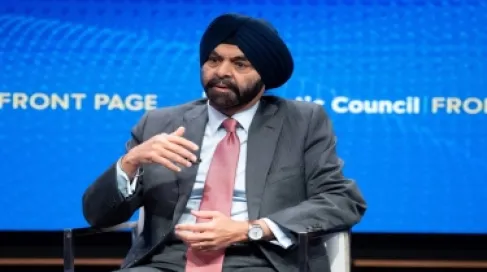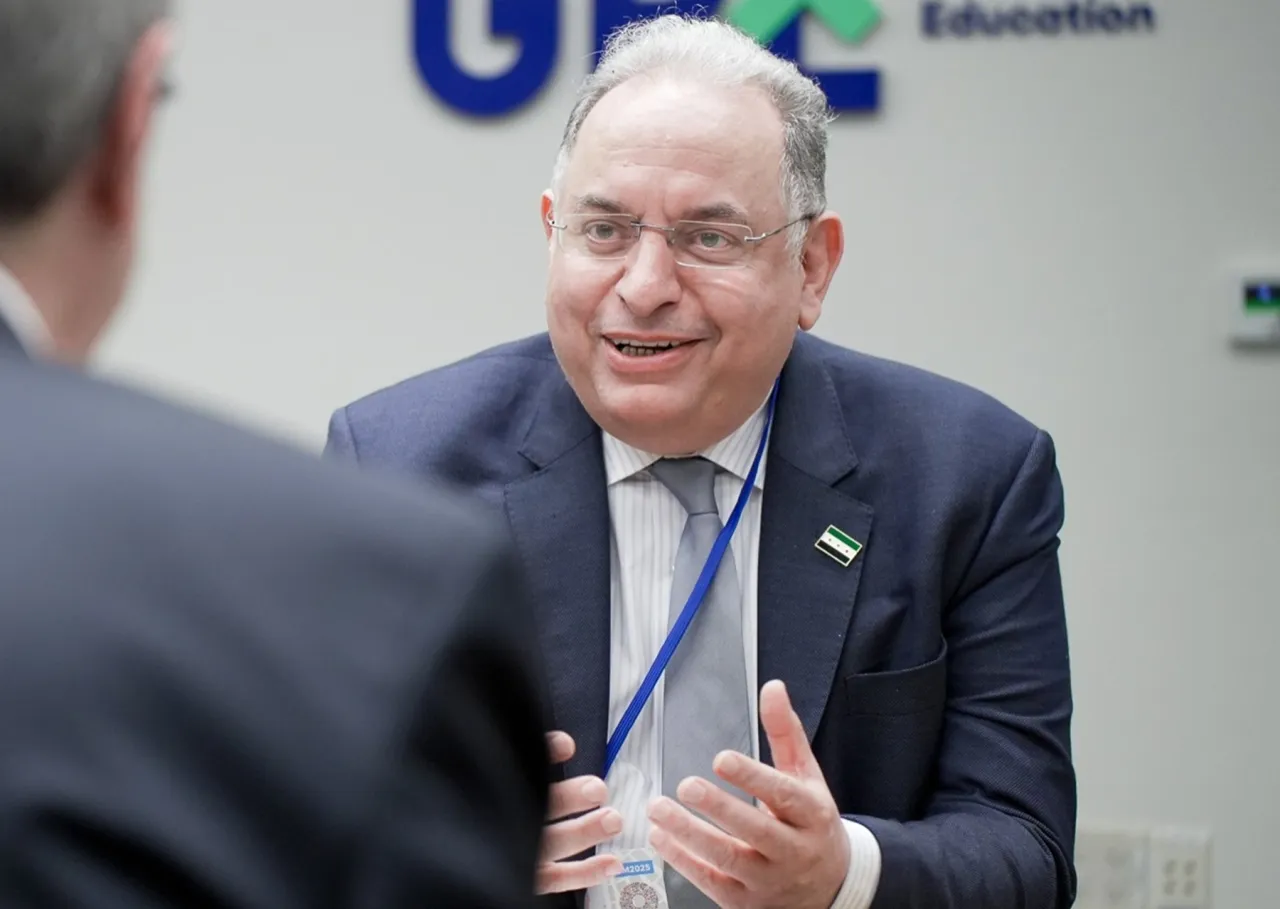
Khaberni - In an extended interview as part of the "Salon of the Republic" program on the "Syria Now" platform, the Syrian Finance Minister, Mohammad Yasar Birniyah, presented a detailed overview of the financial and economic policies adopted during the transitional phase, presenting the public with numbers and approaches that are unusual in the official Syrian discourse.
The interview covered issues ranging from budget and financial surplus to public debt, tax reforms, and the role of the private sector, leading up to the debt files for Iran and Russia, which the minister explicitly described as "odious."
Financial Surplus Government Is Hesitant to Celebrate
The Finance Minister revealed that the government had achieved a budget surplus over the first ten months of the year, but he emphasized from the start that this figure cannot be isolated from the social reality, saying, "Yes, we have a budget surplus, but this surplus does not reflect an ideal situation."
The minister explained that this surplus is not an achievement in itself, adding "No one can be proud of having money in their pocket while their children are hungry, their schools are destroyed, and their hospitals need rehabilitation."
Birniyah justified the surplus as a direct result of combating corruption and controlling investment spending, noting that the government restricted spending on unfinished projects, which reflected financially, but does not eliminate the urgent need to direct resources towards social sectors.
Transparency and Financial Discipline as a Constant Choice
The minister linked the management of public funds with transparency as a condition for public trust, saying, "Every pound that enters the general budget, you will know where it came from and where it was spent."
He said that the government would publish financial reports periodically after the budget is approved, considering that the citizen is a partner in oversight and accountability.
In this context, Birniyah emphasized that financial discipline is fundamental in any economic stability, saying that "the stability of the Syrian pound primarily comes from discipline in public finance and not financing the deficit from the central bank," considering this policy not just a temporary circumstance, but a long-term choice.
Public Debt.. Zeroing Domestic and Restricting External
In his discussion about public debt, the Finance Minister announced that the government had paid off all advances owed to the Central Bank of Syria, confirming that "domestic debt is currently zero."
He explained that the government is keen on not resorting to the central bank for financing, in support of its independence.
As for foreign debt, he estimated it at about 4.5 billion dollars, explaining that the government had entered into negotiation paths to address it.
He said, "We do not want to burden future generations with any debt," adding that easy borrowing "we have seen drowns other countries," and any potential borrowing would be "under very easy terms and for clear social or strategic goals."
Birniyah: There are odious debts towards Iran and Russia, and we are working on preparing countervailing financial claims multiple times what is asked (Syria Now)
Birniyah: There are odious debts towards Iran and Russia, and we are working on preparing countervailing financial claims multiple times what is asked (Syria Now)
Iran and Russia
The most sensitive file in the interview was Birniyah’s description of the debts owed to Iran and Russia, where he said, "There are odious debts towards Iran and Russia," revealing that the government is working on preparing countervailing financial claims, adding "If they demand a certain amount, we will demand multiples of it, for their role in destroying the country."
He confirmed that this file is "politically complex," but he emphasized that the state "will not compromise any rights of the Syrians," and that it will hold the relevant parties fully responsible.
Tax Reform and Redefining the Role of the State
Domestically, the Finance Minister outlined the features of the new tax system, affirming that it is based on simplification and reducing rates, with an expansion of compliance base, saying, "We want to lower taxes, but increase compliance."
He explained that the sales tax would be about 5%, and that wide segments of those with limited income would be exempted.
At the same time, he emphasized that the state "will not compete with the private sector," and that public sector companies would be restructured or transformed into shareholding companies, with the possibility of merging or liquidating those that are not viable, to serve economic growth.
The Syrian Pound and Dollarization as a Temporary Stage
Regarding the currency, Birniyah denied any permanent orientation towards dollarization, considering the use of the dollar as "a transitional stage," and said, "We want to reach a stage where the citizen is confident in the Syrian pound and handles it without fear."
He affirmed that this shift will not happen through coercive or security decisions, but through financial stability and coherent monetary policy, gradually restoring confidence in the national currency.