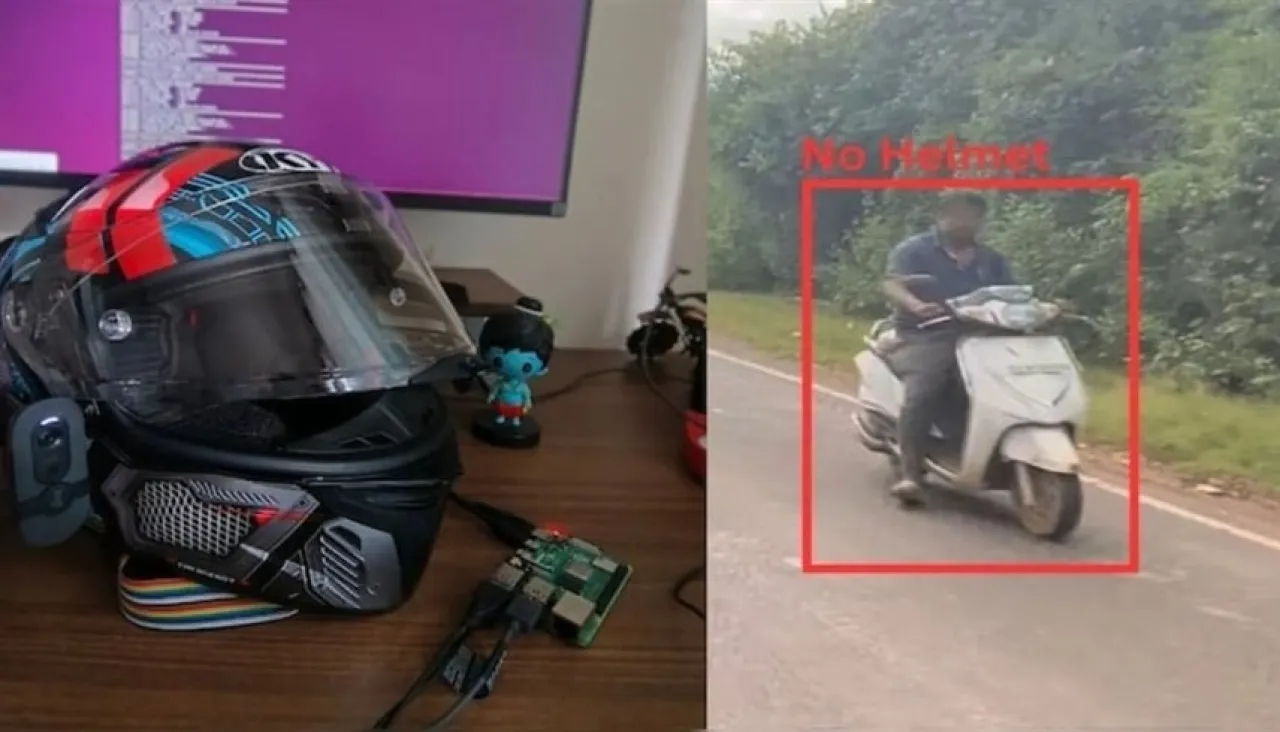
Khaberni - In an impressive incident, a young man in Bangalore, India, managed to turn his motorcycle helmet into a smart tool for monitoring traffic violations by integrating artificial intelligence technologies inside it, serving as a "mobile traffic cop" that documents violations and sends them directly to the relevant authorities.
The story began when Pankaj Tanwar, a technology specialist, decided to turn his daily frustration with traffic chaos into a practical project. He modified his helmet and connected it to an artificial intelligence system, capable of detecting common violations such as driving without a helmet or absence of a license plate, documenting them with photos and geographic location, before automatically sending them to the police, according to "Ndtv".
Tanwar wrote on the platform "X": "I am tired of the recklessness on the roads, so I decided to make my helmet a traffic police device," adding, "The system starts working as soon as I start riding the bike, where the artificial intelligence agent analyzes the traffic scene moment by moment, capturing the necessary evidence without any manual intervention."
Immediate Reporting
Tanwar shared a video demonstrating how the system works, which showed the immediate reporting of a motorcyclist who was driving without wearing a helmet, sparking a widespread wave of interaction on social media, exceeding 150,000 views in a short time.
Users described the innovation as a "quintessential Bangalore moment," in reference to the spirit of innovation that the Indian city is famous for, while others called for the idea to be generalized nationwide, and integrated into cars and dashboard cameras.
Some interactants went on to suggest more ambitious models, including connecting vehicle cameras to official cloud platforms and offering financial incentives to citizens whose reports help in catching violations, considering that this could bring a real transformation in traffic discipline levels.
Strange and Fun Designs
Tanwar, who was surprised by the scale of interaction with his project, said he enjoys designing "strange and fun projects," noting that this innovation is just one of several ideas he has worked on previously.
While his project impressed many, it also raised questions about privacy, the limits of individuals’ roles in law enforcement, and the future of relying on artificial intelligence in traffic regulation.