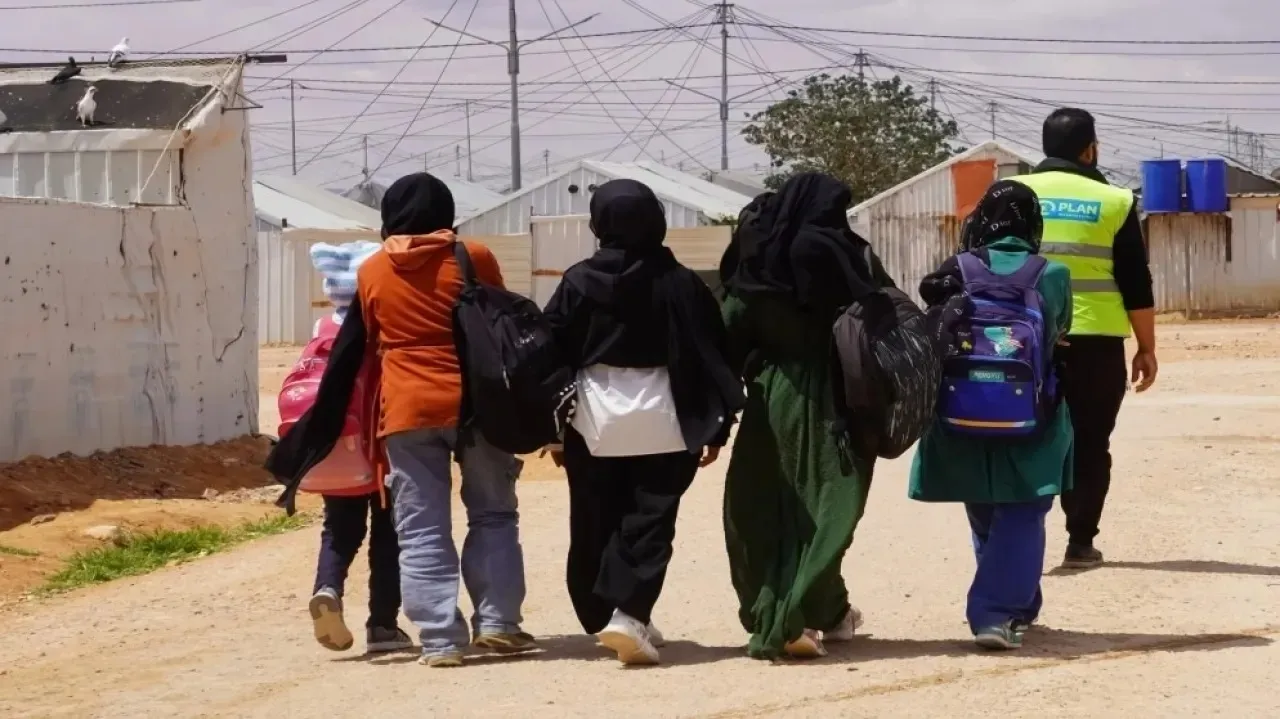
Khaberni - Reports from the United Nations High Commissioner for Refugees have indicated a 13% decrease in the number of Syrian refugees returning from Jordan to their home country, explaining that since December 8, 2024, after the fall of the regime until December 18, 2025, more than 175,000 refugees from Jordan have returned.
The reports highlighted that throughout the year, the monthly return rates varied, but peaked in July, with a returning count of 28,000.
During the third week of December, over 2,400 registered refugees returned, representing a 13% decrease compared to the second week, which saw nearly 3,000 refugees return.
The demographic composition of returnees remained stable throughout the year, with nearly equal distribution between women and men, while children made up about 43% of the returnees, and men aged 18 to 40 accounted for approximately 19%.
Most of the refugees returned from host communities, particularly from Amman (40,000), and Irbid (39,000), with fewer returnees from the Za'atari camp (26,000), and the Azraq camp (11,000).
Throughout the year, the Commissioner provided assistance to returning refugees through advice, information exchange, transportation provision, and cash assistance.
The Commissioner stated that by December 18, 2024, 1,281,933 Syrians had returned to their home countries from other nations.
The demand for support increases as the Commissioner had previously indicated that there is a surge in requests for basic needs support by refugees, alongside a significant increase in assistance requests coinciding with the onset of winter.
The Commissioner confirmed the continued deterioration of the social and economic conditions of the refugees, pointing out the financial pressures faced by refugees, which force many to forgo basic medical care due to unaffordability.
The Commissioner emphasized that funding constraints have limited the necessary resources for maintaining the infrastructure of the camps, increasing the vulnerability of refugees living in old shelters to harsh winter conditions.
Critical funding gap
The Commissioner announced that it had secured funding of 115 million dollars, which constitutes only 31% of its total needs for the past year, amounting to 372.8 million dollars.
The Commissioner noted that "the refugee response in Jordan today faces a critical funding gap," working closely with the government, donors, and partners to maintain basic services and enhance long-term support for both refugees and host communities as long as they need it within Jordan.
In the same context, the World Food Programme confirmed that the assistance it provides to refugees in Jordan is "insufficient" as around one-third of the refugees suffering from food insecurity are currently not receiving aid.
The Programme pointed out that food insecurity among refugees remained high in the third quarter of 2025, according to its food security monitoring report, which showed that half of the program's beneficiaries in the camps and 81% in the local communities suffer from food insecurity, and despite some returning to Syria, "many refugees remain in Jordan due to limited livelihoods and services in their home country."
The Programme added that half of the beneficiaries in the camps and three-quarters of the beneficiaries in the local communities are planning to stay in Jordan for at least another year.
The Programme confirmed that refugees are facing increasing pressures due to their limited and unstable income sources, alongside rising debts, resulting in their significantly reduced food expenditure compared to previous years.