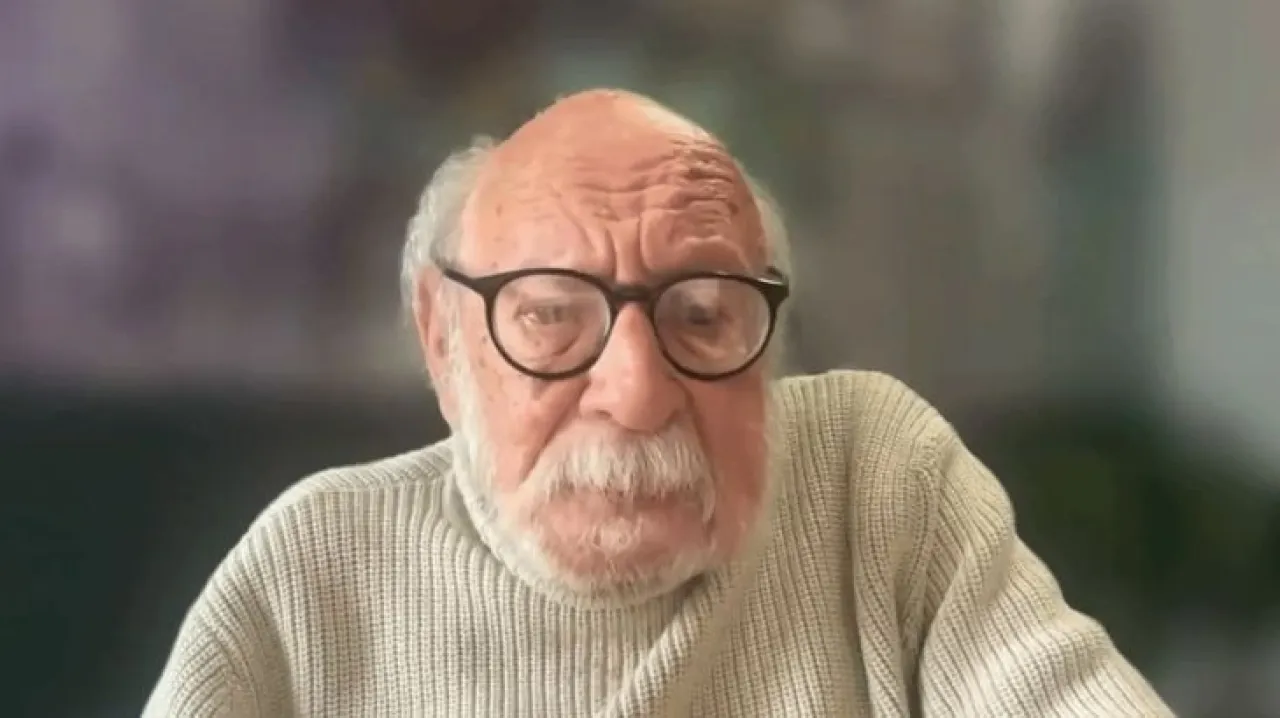
Khaberni - "The only fear I experienced in Gaza was from Israeli bombing, not from its residents," summarized American documentary filmmaker Maurice Jacobson his experience inside the Gaza Strip, where he lived for about two years and experienced daily life under siege.
Jacobson, who is Jewish by religion, said he lived among Palestinians in Gaza and was very welcome during his stay, during which he did not hide his identity as an American Jew, according to Al Jazeera.
He affirmed that he never felt threatened by anyone living inside the Gaza Strip, but his only fear was from the common enemy of all the residents of the Strip, regardless of their orientations and even nationalities, which is the Israeli occupation.
He added: "I was received with great kindness and openness, and people were eager to talk to me about their conditions. The only fear I felt was the same fear everyone there lived with, which was the fear of Israeli bombing and not knowing when the next strike would occur. Israel was the only thing that personally frightened me, just like anyone residing in the Strip."
From Jerusalem to Gaza
Jacobson's relationship with Palestine began about 25 years ago, when he arrived in the region to work on a documentary project for American Public Television titled "Jerusalem: A Living History."
During that period, he met Palestinians in the West Bank, and began to notice a deep gap between the reality of their daily lives and the prevailing image of them in Western media.
He said: "I felt that the story of Palestine, and Gaza in particular, was not being told as it is in the West, and as a filmmaker, I felt a responsibility to get closer and listen directly to the people."
This motivation subsequently led him to the Gaza Strip, where he lived for two periods: the first in 2010, when he spent between one and a half years, and he returned again in 2015 and stayed between 6 and 9 months. During that period, his presence was not limited to media work but extended to the details of daily life in the streets, cafés, homes, and hospitals, trying to document as much as possible of the lives of the Palestinians.
He added: "We lived in a constant state of fear from the bombing. No one knew when the next bomb would fall. The only difference between me and the residents of Gaza was that I could leave with my American passport, while that was not available for most of those around me."
The Siege.. A More Complex Reality
During his stay in the Gaza Strip, Jacobson dealt with the Hamas government as the authority managing the affairs of the people, and said that the reality on the ground was more complicated than is usually presented in the media discourse.
He continued: "It was very clear that there are three distinct wings within Hamas, the first being the political wing which operates like any political party in the world and sets policies, an administrative bureaucratic wing which is the largest, and was responsible for managing schools, hospitals, collecting trash, and organizing daily life, and then there are the military wings."
Jacobson noted that the administrative wing was widely respected among the population because it tried to keep life going amid a crippling siege and harsh penalties.
He cited a scene that is still stuck in his memory, saying: "In one of my last interviews with the mayor of Gaza, he said that the Swedish government had donated modern garbage trucks to the city, but they remained stuck at the port of Ashdod between 6 and 9 months because Israel did not allow their entry. Therefore, the municipality was still using donkey-pulled carts to collect garbage."
For Jacobson, this was a vivid example of how life is managed under siege, and the reasons that made the residents appreciate those who try to manage their daily affairs despite the restrictions.
"Gaza as a Pressure Cooker"
Describing what happened on the seventh of October/ October 2023, Jacobson said, "Gaza was living inside a pressure cooker with a closed valve. People, especially the youth, were economically, politically, and psychologically trapped. When pressure accumulates without any prospect, an explosion happens. The seventh of October/ October was an explosion."
He confirmed that what followed was "a completely disproportionate Israeli response," adding: "What Israel did after the seventh of October/ October was clear genocide, and what we are witnessing today is slow genocide; people are living in tents, under rain and cold, without any way out. This is a form of systematic destruction of life."
Despite all the tragedies he witnessed, Jacobson asserted that what stuck in his memory the most is the human aspect, explaining: "Despite the difference in language and culture, I discovered that we are remarkably similar. We have the same dreams, and the same desire for a better future for our children."
Jacobson categorically refused to associate Palestinians with terrorism, saying: "The word 'terrorist' cannot be linked with the word 'Palestinian.' This is a false description and does not reflect the reality I lived. Palestinians are people living under siege, not a stereotypical image as they are intended to be presented."
Today, while outside Gaza, Jacobson says he feels a doubled responsibility to convey what he saw and experienced. Therefore, he has been working for years on producing numerous documentaries that convey the lives of Palestinians, among them the film "We All Live in Gaza," which he finished before the seventh of October/ October 2023, only for the war to make him start producing the film again from scratch.
He concluded his speech saying that "what I am doing is not political analysis, but a testimony of a person who lived the experience. I feel it is my duty to share this story, because silence means participating in distorting the truth."