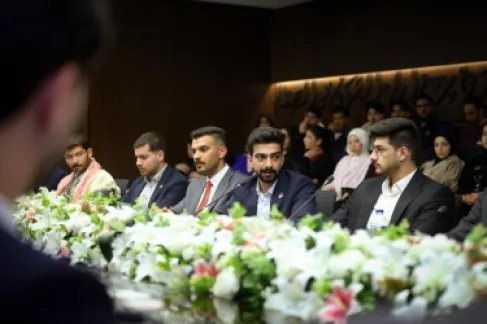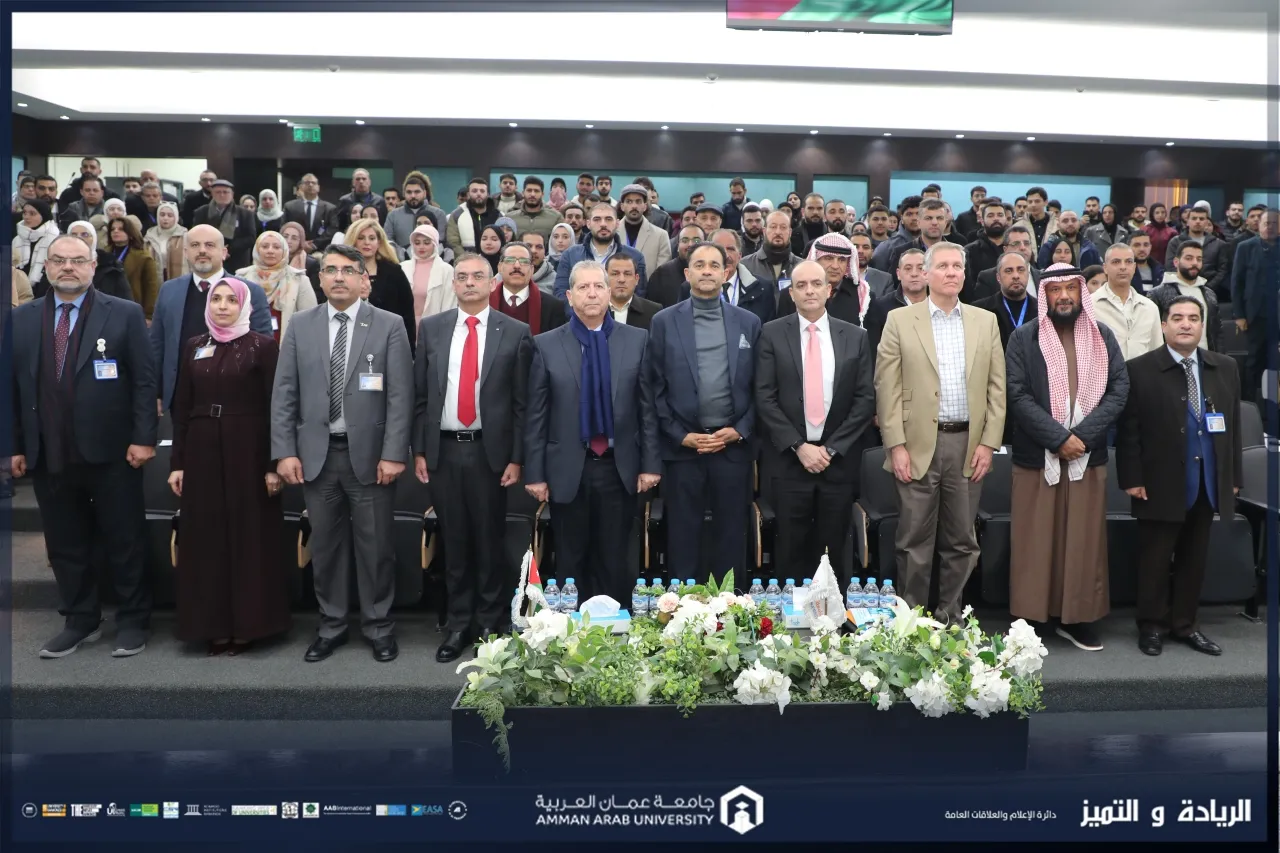
Khaberni - As part of its strategic vision to keep up with global developments in the fields of artificial intelligence and modern technology, Amman Arab University hosted Professor Omar Hatamleh, one of the global thought leaders in artificial intelligence and a senior advisor in artificial intelligence and innovation at NASA's National Aeronautics and Space Administration, to deliver a specialized lecture titled "Artificial Intelligence and the Industry of the Future," attended by His Excellency the British Ambassador to Jordan Mr. Philip Hall, Dr. Omar Mashhour Al-Jazi, the chairman of the university’s board of trustees, and Professor Dr. Mohammad Al-Widian, the university president, as well as the vice presidents, assistants to the president, deans of colleges, members of the faculty and administration, and the university students.
During the lecture, Professor Hatamleh discussed the pivotal role of artificial intelligence in reshaping the future of various sectors, its impact on innovation, decision-making, and the job market, emphasizing the importance of preparing young talents and equipping them with the knowledge and skills necessary to keep pace with the global digital transformation. He noted that artificial intelligence is no longer a technological luxury, but has become a strategic tool for future-making, requiring institutional and human readiness based on specialized knowledge, analytical thinking, and advanced digital skills, stressing the importance of investing in preparing young talents and empowering them with applied sciences and future skills to keep up with the accelerating digital transformation. He also reviewed leading global examples of employing artificial intelligence technologies, touching on the ethical and legislative challenges accompanying this development, and stressing the need to adopt flexible educational policies that enhance innovation and link educational outputs to the requirements of the Fourth Industrial Revolution, contributing to building a generation capable of competing globally and creating intelligent solutions that serve communities. He also highlighted the importance of shifting from consumer use of technology to knowledge production based on research and development, calling for enhancing critical thinking, innovation, and interdisciplinary work among students, and linking university education to practical applications and the actual needs of the global job market.
In turn, Dr. Jazi pointed out that hosting these global scientific figures aligns with Amman Arab University’s vision of keeping pace with the accelerated technological developments, and enhancing its academic and scientific presence at both local and international levels, confirming the university's commitment to integrating artificial intelligence concepts into its academic programs, contributing to the preparation of qualified cadres capable of making the future. Dr. Jazi added that the university values the importance of international partnerships and openness to global expertise, which directly impacts the development of the educational process and builds a university environment that stimulates creativity and innovation.
For his part, Dr. Widian provided an overview of the university’s journey and academic vision, showcasing its most notable achievements in the fields of education, scientific research, and community service, mentioning that the university is taking clear steps towards digital transformation as a committee for digital transformation was formed to develop the university systems and services to align them with modern global practices. He also indicated that the university has recently made a strategic decision to update and develop its curricular plans by adding artificial intelligence as a required university subject, affirming its commitment to integrating modern technology in various disciplines and transforming theoretical knowledge into real practical skills that meet the needs of the job market.
The lecture also witnessed significant interaction from the audience as the university students presented interventions and questions reflecting their awareness and interest in the rapid advancements in artificial intelligence technologies. Professor Hatamleh answered their inquiries, emphasizing the importance of curiosity for knowledge, scientific research, and investing in the youth's capabilities as the real drivers for making the future. The lecture also saw notable interaction from the participants, with university students presenting interventions and questions reflecting their interest in the rapid developments in artificial intelligence technologies, and inquiring about the future of the job market amidst the increasing reliance on artificial intelligence, and the best ways to acquire the globally required digital skills. Professor Hatamleh responded in detail to all inquiries, emphasizing the importance of knowledge curiosity, scientific research, and investing in young capabilities, and placing applied education and future skills at the heart of the preparations for a future increasingly dependent on artificial intelligence, affirming that dialogue between different generations and experiences is fundamental in building an innovative and globally competitive knowledge-based society.