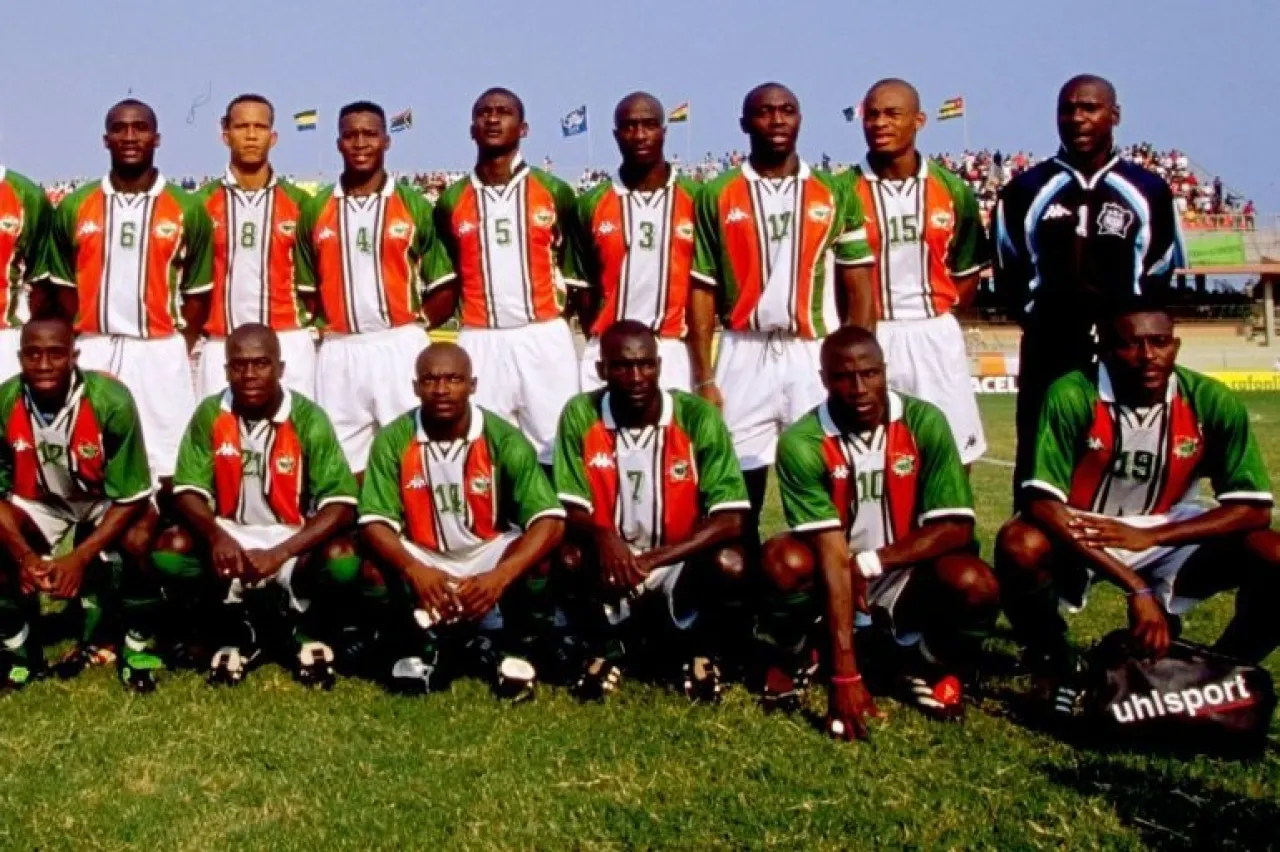
Khaberni - Players of the Gabon national team seem fortunate compared to what their counterparts in the Côte d'Ivoire team experienced after their early exit from the first round of the 2000 African Nations Cup.
"Le Parisien" states that the Gabon players can breathe a sigh of relief. Even though the “Tigers” team’s government halted their participation after their early elimination from the first round of the 2025 African Nations Cup, star player Pierre-Emerick Aubameyang and his colleagues feel relieved that they did not undergo a worse experience.
The Gabonese government announced the suspension of the national team and the firing of the coach, as well as excluding Aubameyang from the team lineup following their reception of 3 losses in the group stage of the African Nations Cup for football.
In contrast, the Côte d'Ivoire team players faced a much more horrifying fate after being detained for two days in a military barracks by order of President Robert Guei following their elimination from the first round of the 2000 African Nations Cup.
Details of the Incident
After the “Elephants” team landed in the "group of death" in the tournament alongside Ghana, the host country, Cameroon (later campeones), and Togo, the team finished third with 4 points, being directly eliminated from the tournament since there was no ranking for the best third-placed team at the time.
This angered Guei. A few weeks after coming to power in a military coup, the general made a decisive decision, ordering the players to be sent to a military barracks in Yamoussoukro, even though they were expecting to fly to Abidjan, the capital.
Lassina Diabate, a player for Bordeaux (1997-2001), told "Le Parisien" at the time, "We couldn't believe what happened, we had never seen anything like it before."
He added, "In a country supposed to be moving towards democracy, we were truly shocked. We wondered what would happen. I was scared. There was a complete cutoff from the outside world."
The Ivorian international players were deprived of their phones and passports, forced to march at a steady pace, cut off from the world, and required to follow a program designed to instill discipline and the honor of defending their country’s flag in them.
Diabate says, "At seven-thirty in the morning, we had to salute the flag. Then we had to attend civic education classes," and he continued, "But we rebelled, everyone did as they pleased, and I refused to attend these classes. We asked the armed guards what they’d do if we refused to comply with their demands. Would they shoot us? They didn’t answer, but we felt threatened nonetheless. It was crazy; we couldn’t understand why we were being detained. In professional sports, you have to know how to accept defeat."
The Threat of Mandatory Military Service
After two days and two nights of suffering, the “Elephants” team faced President Robert Guei, who did not hesitate to harshly criticize them in front of the cameras.
The general said, "When you love your country, you must play not only with your feet, but also with your hearts. The performance we just saw on the screen is not what we expected from you. If you leave again to bring shame to the country as you did, you will stay for the duration of your military service (18 months)."
Lassina Diabate took this threat seriously and sighed, saying, "Now we will all think carefully before returning to the national team."
But this did not prevent the Elephants from repeating this disappointing performance; they missed the 2002 World Cup and were eliminated in the same year from the African Nations Cup in the first round.
But fortunately for them, Robert Guei’s fate wasn’t any better; he lost the presidential election in 2000 and was found murdered along with his entire family two years later.