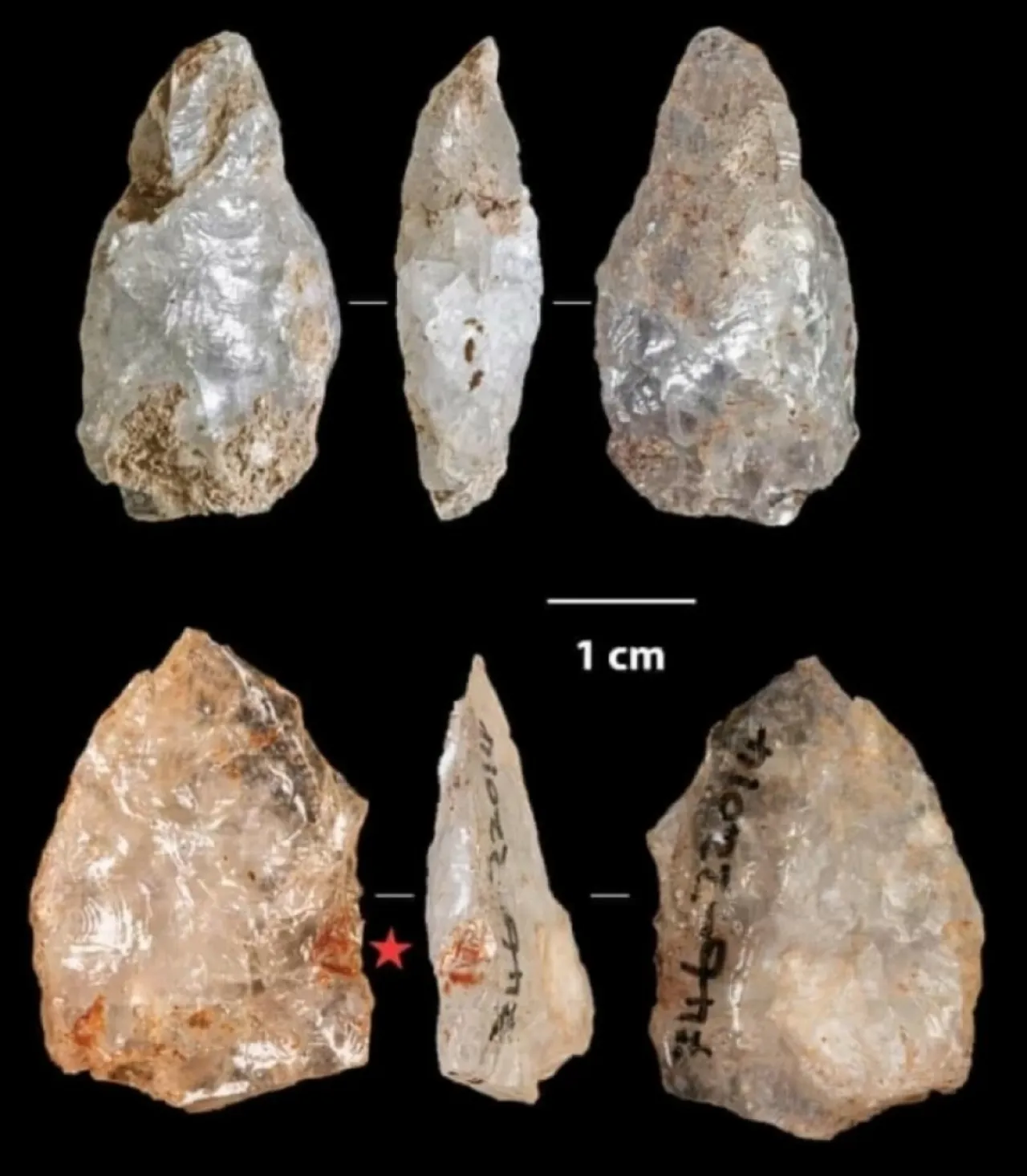
Khaberni - In a significant archaeological discovery published in «Science Advances» in early January 2026, an international team of researchers uncovered a funerary crematorium dating back about 9,500 years, in a rock shelter at the foot of Mount Hora in northern Malawi, Central Africa.
The oldest crematorium in history
It is believed that this crematorium is globally the oldest containing adult remains, and the oldest confirmed for intentional burning in Africa, as well as being the first associated with African hunter-gatherer communities.
Details of the archaeological discovery
The remains were discovered during excavations conducted between 2017 and 2018, consisting of 170 burnt bone fragments distributed in two groups, belonging to a short-statured adult woman (less than 1.5 meters tall), surrounded by thick layers of ash, charcoal, and sediment.
Although it is unclear why this woman was given special treatment, the team noted that at least one fire was lit on top of the cremation site later, possibly as a memorial act or celebration.
However, the site—known as Hora 1—contains evidence of multiple campfires, indicating that it was also used in everyday life.
Before this discovery, the oldest known crematorium containing human remains was in Alaska dating back about 11,500 years, but it was for a small child. Most of the older burnt remains from 8,000 years ago were not in an organized crematorium, and the oldest confirmed deliberate burns in Africa dated back only about 3,500 years, associated with pastoral peoples in the Neolithic.
Life of African hunter-gatherers
Jessica Thompson, the principal researcher from Yale University and project supervisor in collaboration with the Department of Museums and Monuments in Malawi, confirmed that differentiating individuals in death suggests a greater complexity in social roles during life, contrary to the stereotypical image of hunter-gatherers in tropical regions as simple societies.
On the other hand, Professor Joel Irish, (not involved in the study) from the Department of Anthropology and Archeology at the University of Liverpool, welcomed this discovery, stating: «The very early date, combined with being mobile hunter-gatherer communities, makes it all the more astonishing. It appears they possessed advanced beliefs and a high degree of social complexity in that distant era.»
This discovery provides a rare window into the behaviors of ancient humans, highlighting the substantial collective effort involved in building the crematorium and the rituals associated with it, thus reshaping our understanding of the complexity of human societies in the Stone Ages.