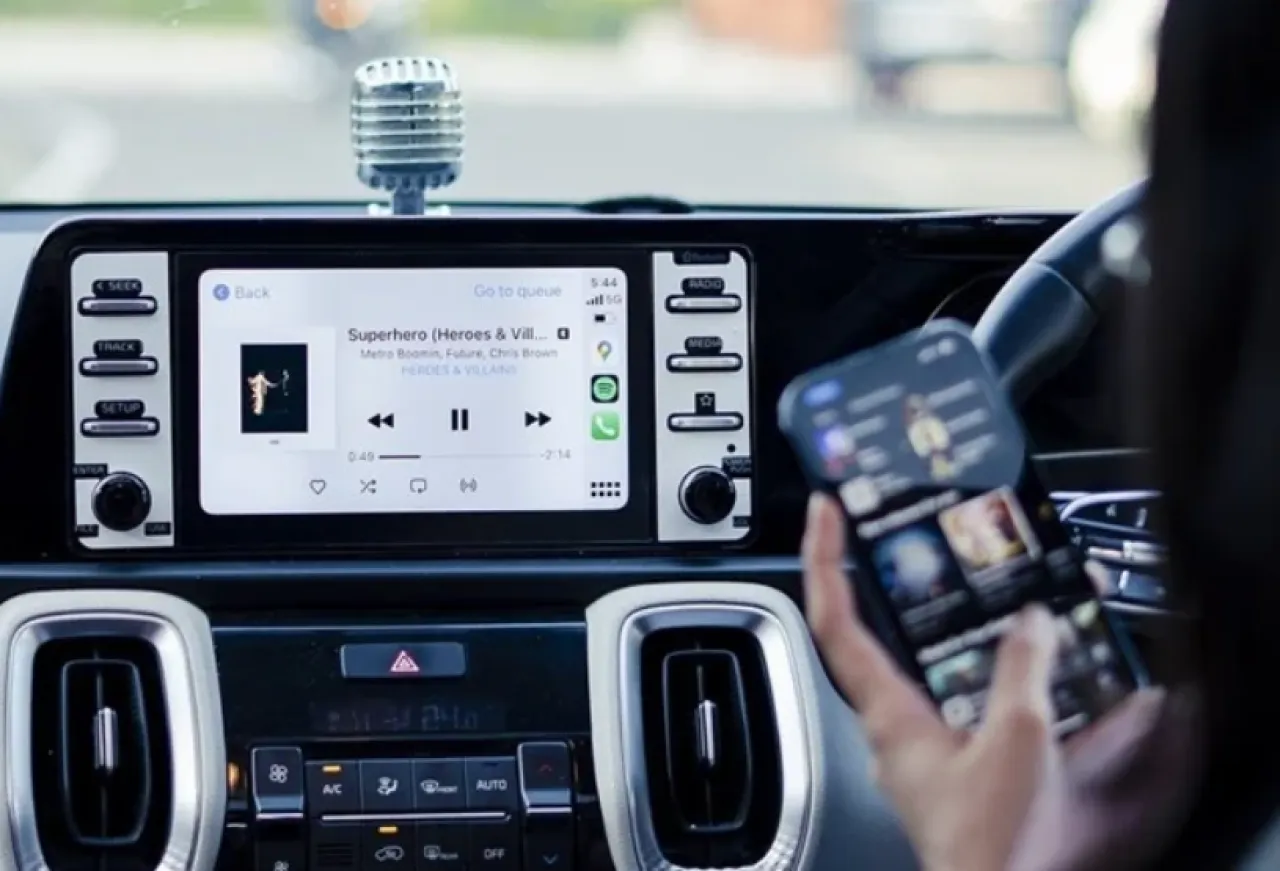
Khaberni - For many, listening to music is an integral part of the car driving routine, just like wearing a seatbelt; we create special playlists for our road trips and choose songs that help us stay awake, and sometimes we even turn up the volume when traffic congestion becomes suffocating.
Reports indicate that over 80% of drivers listen to music on most of their trips. Many young drivers find it difficult to focus without it.
We tend to believe that music relaxes us, energizes us, or helps us focus while driving.
However, according to the "Independent," science presents a more complicated picture. Decades of studies have shown that music can improve some aspects of driving and weaken others.
It also affects young drivers differently from more experienced drivers.
In recent studies, researchers tested different types of music and driving scenarios in dozens of small studies, and the results were often conflicting.
How does music affect our driving?
Aggregate analyses have shown that music changes the way we drive in several ways.
Drivers who listen to music tend to increase the likelihood of collisions, have poorer speed control, and a decreased ability to maintain safe following distances compared to those who drive in silence.
Other results, such as car positioning in the lane, signal errors, and reaction times, show mixed or inconsistent effects.
Music and Heart Rate
Music often changes the driver's heart rate and makes it more variable. It also increases the level of attention and mental effort, i.e., how mentally engaged one is while driving.
Additionally, music can help tired drivers stay alert during long and monotonous journeys, but only for a short time.
Then this positive effect fades after about 15 to 25 minutes.
Thus, music can make you feel better and increase your attention for short distances, even though it adds an additional mental burden and competes with the primary task of driving.
Impact of Volume and Type of Music
The volume level affects driving, but its impact is less clear than many believe.
Loud and medium volume music tends to slightly increase drivers' speeds, while consistently low-volume music leads to slower driving. These effects are minor but relatively consistent in their direction.
Fast music has a bad reputation, but the aggregated evidence is not conclusive. One comprehensive analytical study found no overall effect of rhythm on the driving performance of the average driver. However, the scenario differs slightly for novice drivers.
Individual studies still suggest that very loud and aggressive songs might prompt some drivers towards more dangerous behaviors and make them more prone to mistakes. But rhythm alone cannot predict safety accurately.