Khaberni - Following the rapidly unfolding events in Yemen since last Tuesday, and the request by the head of the Yemeni Presidential Leadership Council, Rashad Al-Alimi, to the Southern Transitional Council to withdraw from the provinces of Hadramout and Al Mahrah, the situation remains ambiguous concerning the withdrawal process amid a complex political scene.
Today, Thursday, Al-Alimi warned against circumventing sovereign decisions, stating that they were made to protect civilians and to prevent the imposition of a fait accompli by force of arms.
The head of the Yemeni Presidential Leadership Council stated that the sovereign decisions were a legal and moral response to obstructing consensus processes, pointing to decisive measures being taken in coordination with the Coalition to Support Legitimacy to prevent further deterioration of the situation in the eastern provinces.
During a meeting with the advisory body, Al-Alimi praised the local authorities' response in securing sovereign facilities and ensuring the continuation of services. He emphasized addressing the southern issue through peaceful means, away from the logic of force; calling for elevating state values, coexistence, and national unity.
Al-Alimi had previously warned that unilateral military movements in the provinces of Hadramout and Al Mahrah pose a serious threat to the unity of military and security decision-making, and a blatant undermining of the state's legal status.
During his meeting with ambassadors of countries sponsoring the political process, he stated that these movements require a firm international stance, supporting constitutional and legal measures; calling on the international community to make an effective contribution in translating Yemeni sovereign decisions into practical measures within the International Security Council.
Limited Withdrawal
Al-Alimi's warning follows reports of a limited withdrawal by the Southern Transitional forces, where Yemen's official channel, quoting sources, said that Homeland Shield forces began deploying in several locations in the province of Hadramout, following the withdrawal of some Southern Transitional Council military sites in the province.
This comes after statements made by the governor of Hadramout, Salem Al-Khanbashi, to Al Jazeera, in which he said that the response of the Southern Transitional Council to the government's request to withdraw its forces from the areas it took over in Hadramout is still limited.
In an interview with Al Jazeera, Al-Khanbashi requested the Southern Transitional Council, which advocates for the separation of southern Yemen from its north, to withdraw its forces from Hadramout and return them from where they came, expressing his desire to avoid bloodshed.
Redeployment
The military spokesman for the Southern Transitional Council, Mohammed Al-Naqeeb, announced last Wednesday night a redeployment of its forces in Hadramout and Al Mahrah with the participation of a governmental force.
Al-Naqeeb stated in a declaration that the forces of the Southern Transitional Council will continue their operations in these areas, but will coordinate with the "Homeland Shield" forces of the Yemeni government forces and the coalition.
Al-Naqeeb confirmed that the redeployment has begun in the area of Thamoud and will be followed by the area of Rumah and other areas in the provinces according to the agreement made.
Earlier on Tuesday, the Southern Transitional Council reiterated its rejection of the decisions of the head of the Yemeni Presidential Leadership Council; emphasizing that its forces will remain in their positions, and they are prepared to face any threats.
Escalating Tension
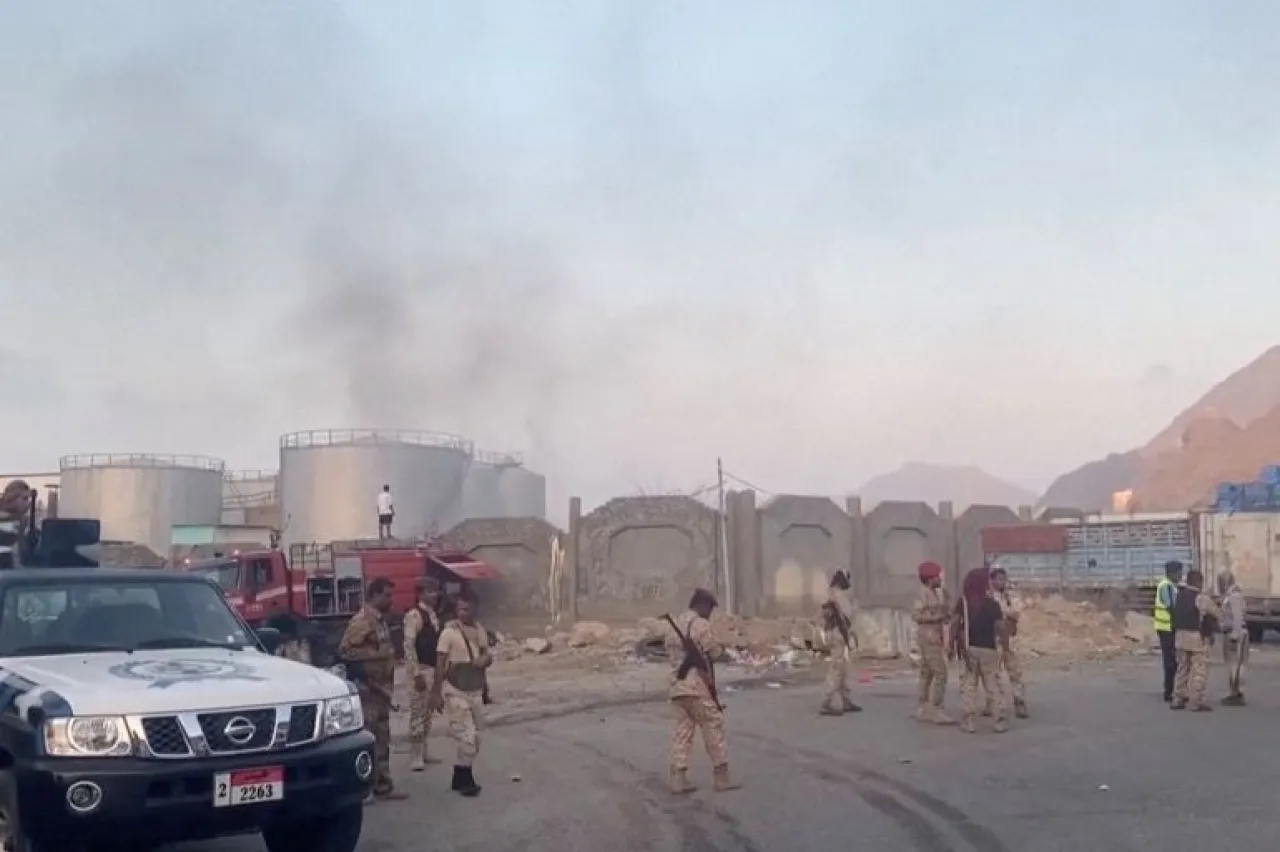
The events in Yemen accelerated following the announcement by the joint forces command of the coalition, last Tuesday, of an airstrike on weapons and combat vehicles that arrived at the port of the city of Mukalla, the capital of Hadramout province under the control of the Southern Transitional Council, coming from the port of Fujairah in the UAE on two ships.
This bombing marked the peak of tension between Saudi Arabia and the UAE in Yemen, where the official spokesman of the Coalition to Support Legitimacy, Brigadier General Turki Al-Maliki, stated that the bombing came in response to a request from the head of the Yemeni Presidential Leadership Council regarding immediate measures to protect civilians in the province of Hadramout, due to "serious and horrific humanitarian violations against them by the armed elements of the Southern Transitional Council."
Following this statement, the head of the Yemeni Presidential Leadership Council demanded all UAE forces to exit all Yemeni territories within 24 hours, declaring a state of emergency throughout the Republic starting from today and lasting for 90 days.
UAE's Response
The UAE expressed its "regret" for what was stated in the recent statement by the Saudi foreign ministry regarding the recent events in Yemen, affirming that it includes "substantial inaccuracies."
The UAE Ministry of Foreign Affairs stated in a declaration that "the UAE expresses its regret for what was stated in the statement of the brotherly Saudi Arabia and what it contained of substantial inaccuracies, firmly rejecting the involvement of the UAE in the tension occurring among the Yemeni parties."
The statement also expressed "dismay" regarding the claims about any Yemeni party conducting military operations that affect the security of Saudi Arabia.
It added: "We affirm our commitment to the security and stability of the brotherly Saudi Arabia and our full respect for its sovereignty and national security."
The statement emphasized that the UAE's stance from the beginning of the events in Hadramout and Al Mahrah was "to contain the situation and support de-escalation."
It reminded that the UAE's presence in Yemen was at the invitation of the legitimate government and part of the Arab coalition led by Saudi Arabia, asserting that "dealing with recent developments must be handled responsibly to prevent escalation and based on reliable facts."