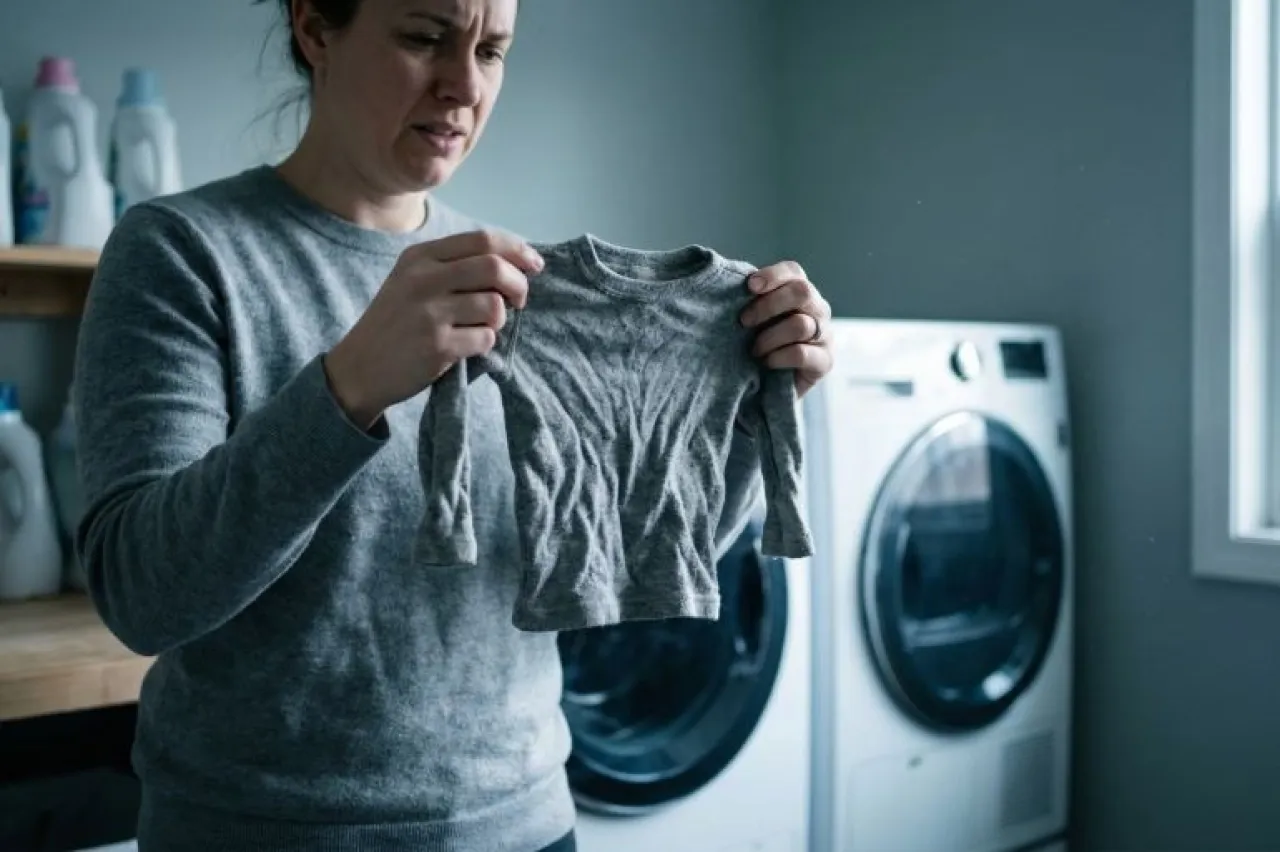
Khaberni - One of the first things you might do before buying a new piece of clothing is to check its material to know if it shrinks after washing or maintains its original size. Many of us have experienced this annoying situation when a favorite piece comes out of the dryer much smaller. Fortunately, there are solutions to these problems, and by following simple steps, it’s possible for your clothes to return exactly as they were before washing.
Understanding the causes of shrinking helps us avoid this problem and take preventive measures to maintain the natural size of clothes, and the first thing we need to know is that the degree of shrinking varies depending on the type of fabric.
1 – Cellulosic Natural Fabrics
Cellulosic fabrics are most susceptible to shrinkage due to their high water absorption capacity. These garments are usually made from plant fibers based on cellulose material, such as cotton, rayon (viscose), and linen.
During manufacturing, the fibers are pulled and twisted mechanically to arrange them in a coherent form, producing smooth and long threads. When these fabrics are immersed in water during washing, the fibers become softer and more flexible, and the fabric loses some of its original taut shape. Inside the washing machine, they gradually return to their original position, resulting in a noticeable shrinkage of the piece.
Also, the high heat in washing or drying accelerates this shrinkage, making the clothes appear smaller.
2 – Wool
Wool has unique properties that distinguish it from other fabrics in the way it shrinks. It is made of animal protein fibers that are covered with tiny scales, and when exposed to water, movement, and heat, these scales open up and interlock with adjacent fibers in a process known as felting.
As a result of this entanglement, the fabric becomes denser and more cohesive, significantly shrinking in size, and the piece may lose some of its elasticity, becoming stiffer, making the shrinkage of wool severe and resulting in a noticeable change in the shape of the piece.
3 – Synthetic Fibers
Unlike natural fabrics, synthetic fibers such as polyester and nylon have a high resistance to stretching and shrinking thanks to their stable chemical structure. They are not easily affected by heat or water, which helps them maintain their original shape even after repeated washing. For this reason, these fibers are used in the manufacture of sports and work clothes that require greater durability.
How to Save Your Shrunken Clothes?
Although shrinking may seem like a permanent problem, a series of simple steps can restore flexibility to the fibers and greatly restore the piece to its original shape.
The first step: Soak in lukewarm water with a softener
To restore shrunken clothes to their natural size, fill a large bowl with lukewarm water, then add a small amount of conditioner or softener to moisturize the fibers and make them more flexible to stretch.
Place the piece in the solution, ensure it is fully submerged, and leave it soaked for between 15 and 30 minutes until the fibers absorb the treated water and regain their ability to re-form.
The second step: Remove excess water without strong squeezing
After soaking, gently lift the piece and place it on a wide towel, then roll the towel with the piece in a cylindrical shape to allow the fabric to release excess water.
It is preferable to avoid any strong squeezing as severe pressure can damage the fibers and tighten them again, so light pressing on the roll is sufficient to ensure moisture absorption without causing any damage to the fabric.
The third step: Gradually stretch and reshape the piece
Place the piece on a flat surface, then gently pull the edges and sides to gradually reshape it evenly, taking care not to deform the fabric.
You may use previous measurements or compare the piece with a similar one to determine the amount of stretching needed, and this crucial stage requires gently pulling the fabric in all directions.
The fourth step: Stabilize the shape during drying
Drying plays a key role in restoring the shape of clothes, so place the piece flat, carefully spreading it into the desired shape, and you can use clothespins to secure the edges to keep them stretched during drying.It is advisable to avoid hanging the piece vertically, as its shape may be distorted by the weight of the water, and it is also recommended to keep it away from direct sunlight or any heat sources, as thermal drying can quickly lead to shrinkage.
These steps apply to natural cellulosic fabrics such as cotton and linen, as well as to wool, noting that wool garments may need to repeat the process several times to achieve the best results, as wool fibers take longer to regain their original shape and size due to their nature and sensitivity to movement and moisture.
How to Avoid Shrinking Your Clothes?
There are some steps and tips recommended by experts to preserve clothes and avoid shrinkage, including:
• Choose the right temperature: Use cold or lukewarm water to wash sensitive fabrics like cotton and wool, and remember that high heat is the primary enemy of natural fibers.
• Read clothing care labels: They are not for decoration, but they are your reliable guide to the correct washing method, take your time to understand them and follow the instructions carefully.
• Choose the right cycle: Use the gentle or delicate wash cycle with a low spin speed for natural fabrics, as strong motion and fast spinning increase the likelihood of shrinkage.
• Pay attention to fabric type: Fabrics with an open and lightweight weave are more prone to shrinkage than those with a tight and dense weave, and give special attention to loosely woven fabrics like linen.
• Air dry instead of using heat: High heat in electric dryers accelerates the shrinkage process, and it is better to air dry naturally.
• Separate clothes based on type: Do not mix sensitive fabrics with heavy fabrics in the same wash, as each type has its specific needs.
Shrinkage of clothes does not mean you have to dispose of them, as it is generally a natural result of fiber interaction with heat and motion, and with simple steps based on rehydrating fibers and gently stretching them, a significant portion of the size and shape of the clothes can be restored.
With adherence to correct washing tips, it is possible to prevent the problem in the future and keep clothes in the best condition for the longest time possible.