Khaberni - Recordings and documents obtained and published by Al Jazeera about attempts led by prominent leaders in the ousted Syrian president Bashar al-Assad’s regime to organize their ranks and start an armed movement in the Syrian coast area, aiming to reorganize the military scene against the current Syrian government.
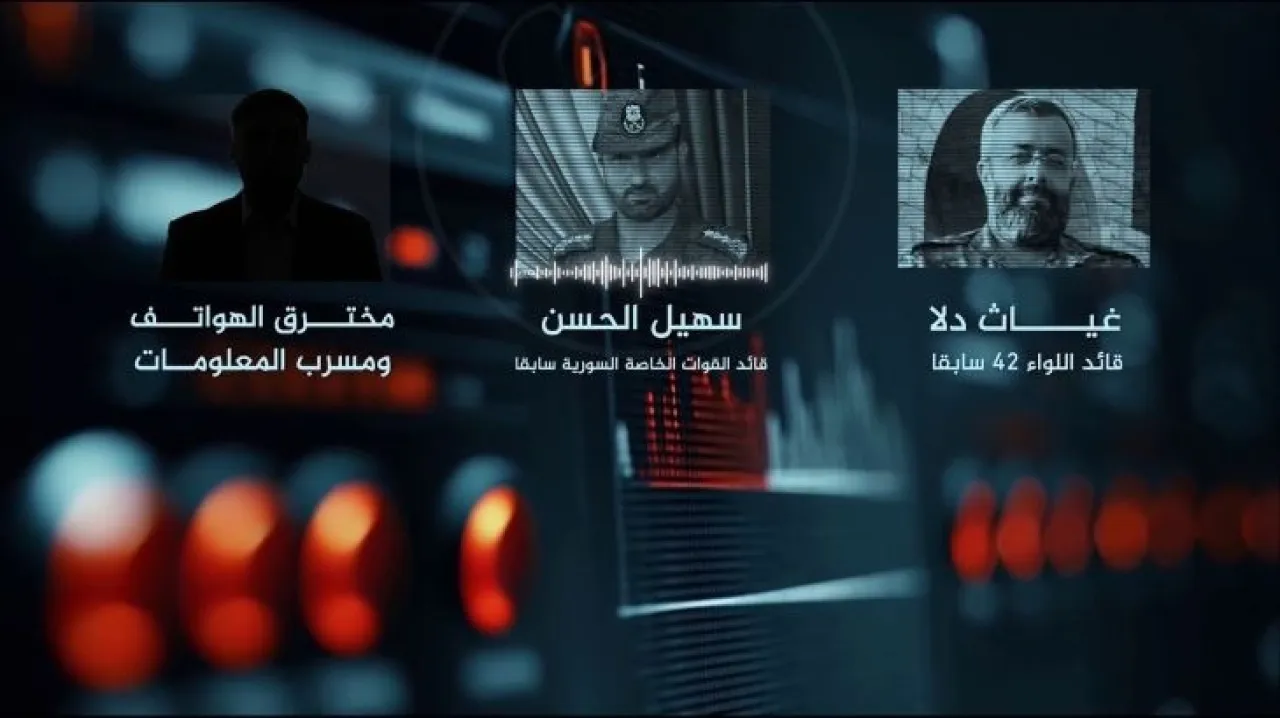
According to the recordings, which are part of the program "Al-Mutaharri" that will later be broadcast on Al Jazeera screen, the main supporter of Sohail Al-Hassan’s movements, the former commander of the special forces in Assad's ousted regime, is Rami Makhlouf, the businessman and cousin of Bashar al-Assad.
The documents highlight a pivotal role for both Al-Hassan and the former Brigadier General Ghiath Dalla in these movements, which included discussions on arranging military operations and reactivating cells loyal to the former regime.
The information indicates that the recordings and documents were leaked by someone who managed to hack the phones of a group of officers of Assad’s regime, after convincing them that he was an officer in the Israeli Mossad, which allowed him access to conversations and recordings related to plans and military moves.
The recordings extend for more than 74 hours, in addition to more than 600 documents, revealing detailed information about the attempts of the remnants of the former regime to reorganize themselves, and coordinate roles between prominent military and security figures who held leadership positions in the regime's structure.
The recordings include explicit praises from Sohail Al-Hassan for the Israeli operations in Gaza Strip, and also reveal his attempt to convince someone he believed to be an Israeli officer to provide support for his movement inside Syria.
These data indicate efforts to establish external channels, in the context of seeking cover or support for potential military movements.
The documents clarify that the plans were not limited to theoretical discussions but included arrangements for military operations aimed at destabilizing stability, with a special focus on the coastal area, which traditionally serves as a stronghold for a number of leaders and officers associated with the former regime.
A week ago, an extensive investigative report by The New York Times showed that former generals of Assad's regime, operating from their exile in Russia and Lebanon, are planning an armed rebellion.
The American newspaper revealed that the fall of Assad's regime did not eliminate the influence of an elite of its military and security leaders, but pushed some of them to reorganize their ranks from exile, in an attempt to destabilize the new Syrian government and perhaps carve out zones of influence within the country.