Khaberni - Minister of Agriculture Saeb Abdel Halim Khreisat confirmed that the heavy rainfall witnessed this season has had a positive and clear impact on the soil's water stock, especially since most field crops in Jordan fundamentally rely on rainwater and are considered rainfed.
In a press statement on Wednesday, he clarified that the amount of rain has contributed to improving the soil properties which will enhance both the quantity and quality of production this season and in subsequent seasons.
He indicated that this effect is clearly visible on winter crops, where an improvement in their productivity is expected compared to previous seasons by good percentages, due to improved soil moisture content and the availability of adequate water stock during critical growth stages, asserting that the good start of the rainy season is a fundamental factor in enhancing production efficiency and quality.
He pointed out that fruit trees, especially almonds, apples, olives, and peaches in highland areas, along with exposed winter vegetables, were among the crops that benefited most from the heavy rains, as it enhanced their physiological readiness for the upcoming production season.
On the other hand, he confirmed that cases of crop damage due to soil saturation with water are rare in Jordan, due to the soil's good permeability and the absence of long-term flooding conditions.
Regarding soil erosion, he clarified that the risks of soil or nutrient loss usually occur in sloped lands during heavy rainfall, emphasizing the importance of adopting water harvesting practices, such as plowing against the slope, creating crescent-shaped pits, earth berms, and terracing systems, which play a significant role in reducing water flow speed and enhancing the water stock inside the soil.
He added that well-timed rains helped reduce reliance on irrigation, especially in fruit trees and exposed vegetables, which directly reflected in reduced production costs.
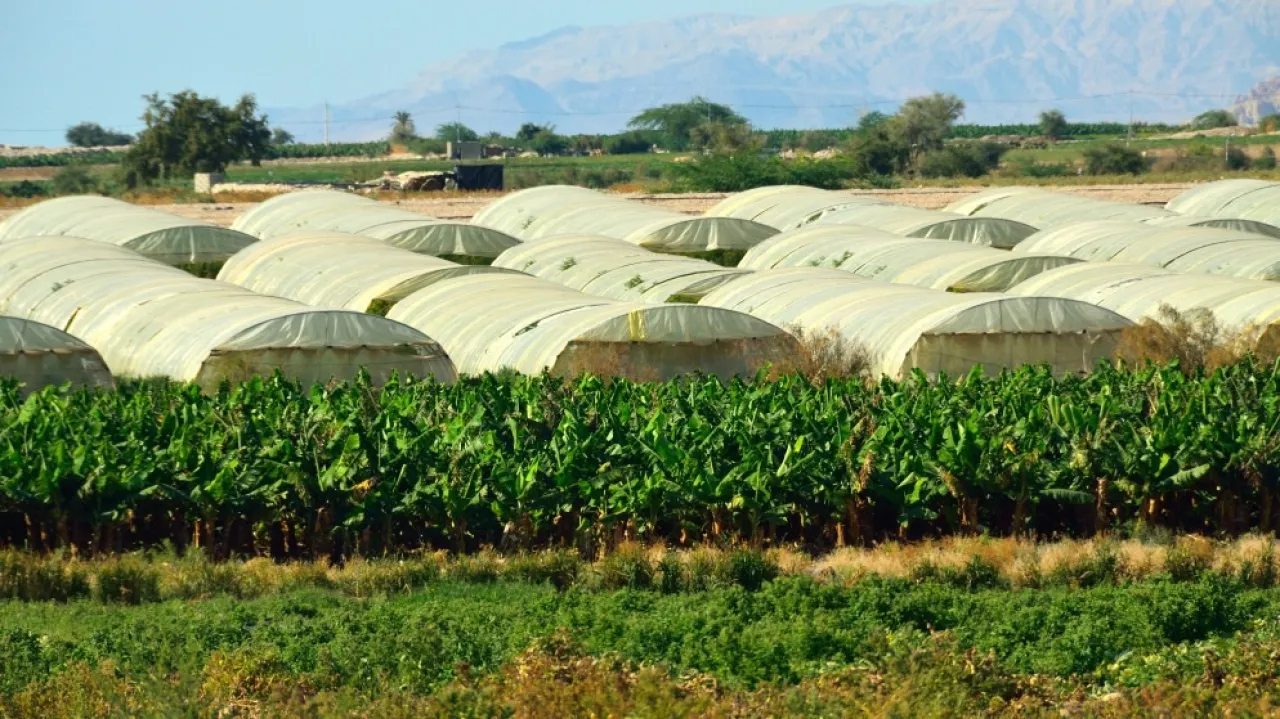
Regarding the impact of high humidity, he mentioned that high humidity is often more associated with fungal diseases than with insect pests, explaining that its impact on exposed crops is limited due to the nature of open spaces and short periods of high humidity, while challenges are more concentrated in protected agriculture, necessitating intensified ventilation inside greenhouses to prevent the spread of diseases.
As for planting times, he noted that climate change has led in recent years to a delay in the start of the rainy season, prompting farmers, especially those of rainfed field crops, to adapt to this reality and delay planting times to align with the timing of rainfall.
He confirmed that the Ministry of Agriculture advises during periods of heavy rainfall to avoid planting in floodplain and valley areas, and to construct drainage channels around farms, in addition to applying water harvesting practices in sloped areas, to protect crops and minimize potential damage.
Regarding the reflection of the rainy season on food security, he explained that an improved rainy season positively reflects on the health of plants, production quantities, and quality, thereby supporting national food security.
He highlighted the vital role of earthen dams and pits in maximizing the benefits from rainfall, especially in desert areas, where they contribute to providing drinking water for livestock, improving vegetation cover, and enhancing groundwater storage.
He concluded by saying that the agricultural infrastructure, from drainage channels to agricultural roads, is generally good within the available capabilities, supported by the cumulative experience of farmers and their attention to maintenance, affirming that challenges remain limited in the context of uncommon and rare climatic conditions.
Khraisat had directed the agriculture directorates in the southern governorates to immediately start identifying and assessing all the damages that the agricultural sector suffered due to the recent low-pressure system, by establishing specialized technical committees in the field for direct communication with farmers and monitoring all complaints submitted by farmers in order to take appropriate measures.