Khaberni - Since the outbreak of war on the Gaza Strip on October 7, 2023, Jordan has adopted a clear humanitarian stance, aimed at supporting the resilience of the Palestinians and alleviating the suffering of the people of Gaza, based on its political and humanitarian constants, and its rejection of targeting civilians and the exacerbation of the humanitarian disaster in the sector.
The Jordanian Armed Forces - the Arab Army - has translated this stance into tangible actions on the ground, including evacuating the wounded and sick, conducting land and air convoys to deliver food, medicine, and fuel, establishing field hospitals, and launching the "Restoring Hope" initiative to install prosthetic limbs for war amputees.
From the beginning of 2025 until December of the same year, the Jordanian Armed Forces emerged as a main pillar in providing humanitarian support to the Palestinian people in the Gaza Strip, where they carried out continuous relief operations by air and land, provided advanced medical services within the sector, and contributed to saving thousands of lives amidst an almost complete collapse of the health system.
The Jordanian Medical Corridor
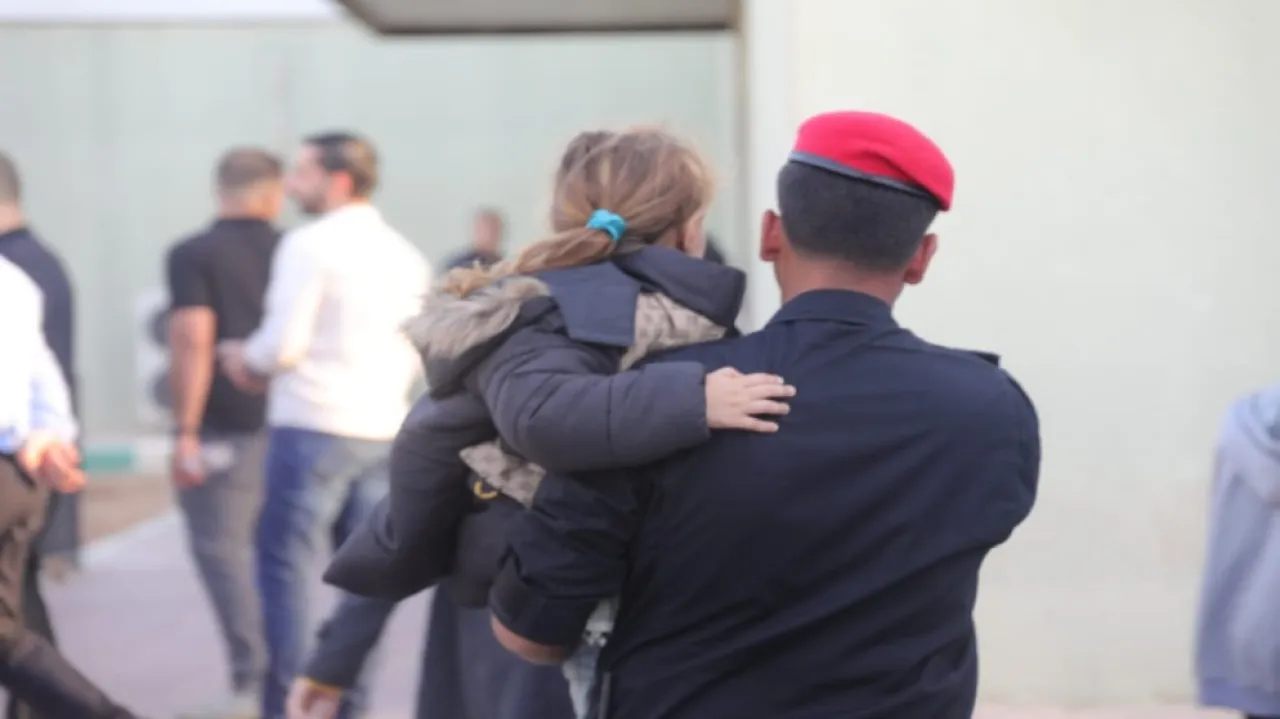
Under royal directives, Jordan announced the "Jordanian Medical Corridor" initiative early March 2025, aimed at hosting two thousand children from the Gaza Strip for medical treatment within the kingdom.
On March 4, the first batch was evacuated as part of the initiative, including 29 children, four of whom were transported by helicopters belonging to the Royal Air Force, while 25 children were transported by ambulance through the King Hussein Bridge, in coordination with the Ministry of Health and the World Health Organization.
The evacuation operations continued in successive batches throughout the year, covering children, patients with chronic diseases, and severe injuries, as well as their companions, within precise medical and humanitarian procedures.
By the end of December 2025, the total number of people evacuated within the Jordanian Medical Corridor reached 1,849 persons from the Gaza Strip, including 498 patients and 1,351 companions of the patients and children, transported by land and air to receive treatment in Jordanian hospitals, according to what the Jordanian Armed Forces reported to "Al-Mamlaka".
After completing the treatment, many children and their relatives were returned to the Gaza Strip to make room for new batches, in a practical affirmation of Jordan's position against the displacement of Palestinians, and its commitment to keep support within a temporary humanitarian framework.
The Jordanian Field Hospitals
The Jordanian Armed Forces established three field hospitals, in the north and south of the Gaza Strip, as well as a field hospital in Nablus in the West Bank.
In the southern Gaza Strip (Khan Younis), the Jordanian field hospital provided extensive medical services, performing 23,679 surgical operations, and received 314,296 medical consultations, covering various specialties, under immense pressure and a severe shortage of resources within the sector.
The Jordanian field hospital in northern Gaza (Tal Al-Hawa) performed 1,139 surgical operations, and received 124,415 medical consultations, before being later moved to the southern sector to ensure the safety of its staff due to escalating bombings in its vicinity.
In the second half of December; the Jordanian Armed Forces began re-operating the Jordanian field hospital in the Tal Al-Hawa area in northern Gaza Strip, after completing the maintenance and equipping it had recently undergone.
These hospitals include clinics for general surgery, internal medicine, orthopedics, pediatrics, neurosurgery, gynecology and obstetrics, alongside emergency units and fully equipped operating rooms, staffed by highly experienced Jordanian medical personnel.
The Airlift and Aerial Drops
Jordan relied on an air bridge between Marka Military Airport and Al-Arish Airport in Egypt to transport humanitarian aid to Gaza, in addition to carrying out direct aerial drops within the sector.
As of August 26, 2025, approximately 564 aerial drops were carried out on the Gaza Strip, including 164 drops by the Jordanian Armed Forces, and 400 drops in cooperation with sisterly and friendly countries, in one of the largest humanitarian air-drop operations.
These drops included essential food, medical, and relief supplies, executed under complex weather and security conditions, with the participation of several countries supporting Jordanian humanitarian efforts.
Food Security Support - Mobile Bakeries
In response to the severe shortage of bread in the Gaza Strip, the Jordanian Armed Forces equipped mobile bakeries in cooperation with the "Global Central Kitchen".
By the end of 2025, the number of Jordanian mobile bakeries in Gaza reached three, each with a daily production capacity of approximately 70,000 loaves of bread, with one bakery alone contributing to the production of more than 11 million loaves during the year, forming a basic pillar for the food security of the population.
The "Restoring Hope" Initiative
The "Restoring Hope" initiative was launched on August 26, 2024, under royal directives, to address the increasing numbers of limb amputees in the Gaza Strip due to the war.
During 2025, 703 upper and lower prosthetic limbs were installed for the wounded from the Gaza Strip, through mobile medical units specialized and equipped with the latest technologies, allowing for the prosthetic limb to be fitted within a short period, and providing ongoing care for both children and adults.
This initiative represents one of the most prominent aspects of sustainable humanitarian support, which goes beyond immediate relief to rehabilitation and restoring life capabilities.