The Syrian authorities have initiated a wide-scale criminal investigation into one of the most unjust cases in the country's modern history, following an investigative report by Reuters that revealed a secret mass grave established in the desert to hide thousands of bodies dating back to victims of Bashar al-Assad's regime, in an operation described as a concerted conspiracy to conceal mass atrocities that had been kept secret for years.
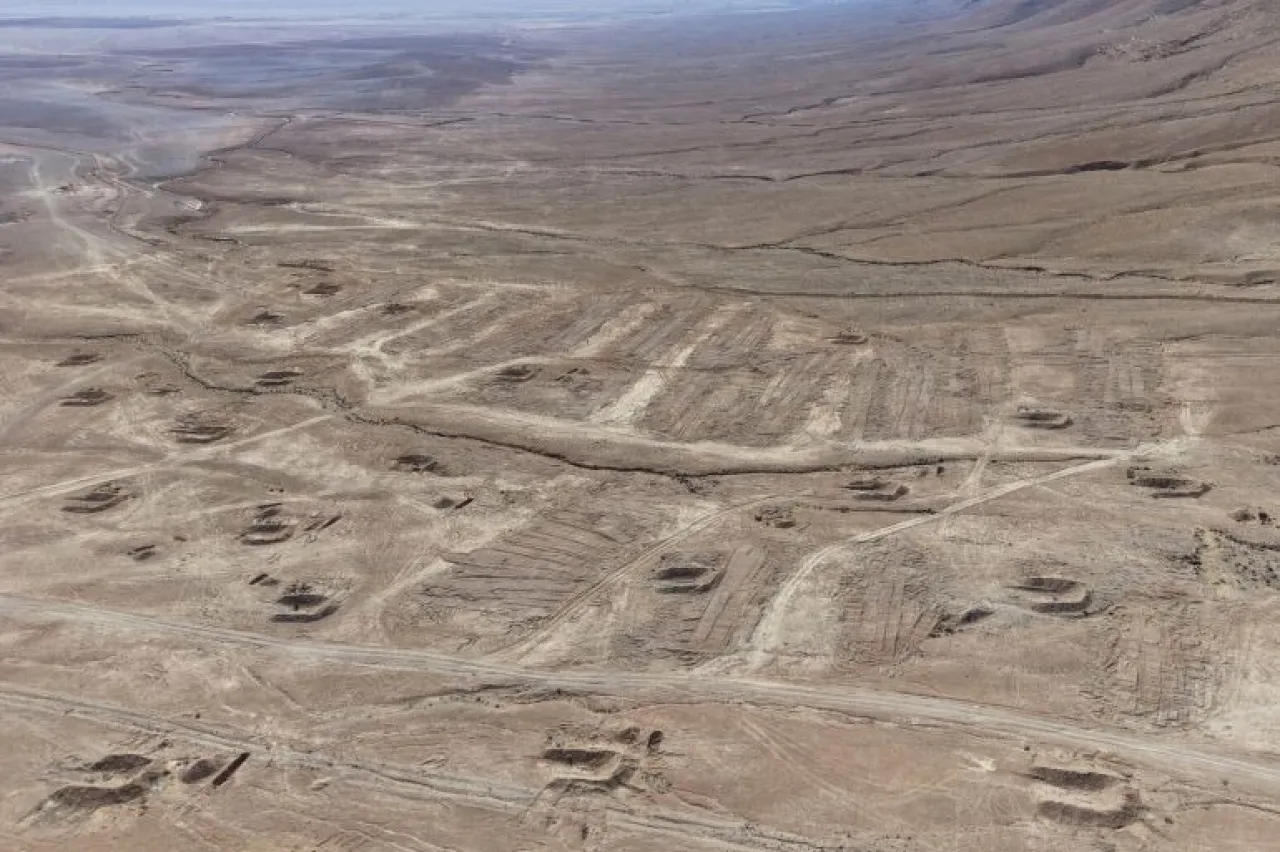
The Syrian government ordered military forces to impose stringent security on the site of the grave, located within an abandoned military facility in the Dumeir desert east of Damascus, formerly used as an armament warehouse during the previous regime's reign.
The Soil Transfer Operation
According to testimonies from former officers and military sources familiar with the details of the operation, the site was cleared of workers in 2018 to ensure absolute secrecy for the operation named "Soil Transfer".
The operation aimed to excavate a mass grave in the outskirts of Damascus (Al-Qutaifa) and transport remains and bodies by trucks to the Dumeir desert facility to obfuscate the evidence.
The operation took place over nearly two years, from 2019 to 2021, averaging four nights a week, during which the trucks loaded with bodies and soil entered the site under military guard and emptied their load into specially prepared trenches and pits for burying the remains.
Guarding the Truth
With the fall of Bashar al-Assad's regime in December 2024, the Syrian army redeployed at the site, not to conceal the crime, but to secure it.
Military officials confirmed that the Dumeir facility resumed operation in November last month as a military barrack and armament depot, within a broader plan to secure open desert areas and prevent any hostile entities from exploiting them, especially since the nearby desert road connects areas still experiencing activity by the Islamic State organization to the capital, Damascus.
According to Reuters, satellite images showed increased military vehicle activity around the base since late November, after the site had been nearly abandoned during the summer when agency journalists repeatedly visited without any guards present.
According to a soldier at the site, a military checkpoint was established at the entrance of the facility weeks after Reuters' report was published in October last year, and entry to the area became conditional on obtaining official permits from the Ministry of Defense.
The Police Begin the Investigation
On the judicial side, the head of the Dumeir police station Jalal Tabsh announced that the police have launched an official investigation into the case of the mass grave, including documenting the site with photos, surveying the land, and listening to eyewitnesses.
Among the key witnesses is Ahmed Ghazal, a truck mechanic who had participated in repairing the vehicles that transported the bodies to the site. Ghazal confirmed that he provided the police with all the details he had previously disclosed to Reuters, noting that the military facility was almost empty during the "Soil Transfer" operation, except for the soldiers accompanying the truck convoys.
The investigation file has been referred to Judge Zamn Al-Abdullah, the public prosecutor in the Adra area, who confirmed that the judiciary is currently conducting a thorough review of security documents obtained after the fall of Assad, in order to identify suspects from the previous regime both within and outside Syria.
Despite reluctance to disclose names because the investigation is ongoing, military documents and civilian and military testimonies indicate that Colonel Mazen Ismendar was the primary responsible for the logistical aspects of the operation, as reported by Reuters.
Excavating the Graves
For its part, the National Commission for the Missing, established after Assad's overthrow to investigate the fate of tens of thousands of forcibly disappeared, is currently training specialized staff and establishing forensic laboratories according to international standards for excavating mass graves.
The Commission confirmed that excavation and extraction operations from several sites dating back to the Assad era, including the Dumeir site, are scheduled to begin in 2027, as part of a plan to identify the victims and hold those responsible for these crimes accountable.
The decision to conceal the mass graves dates back to 2018 when Bashar al-Assad was nearing a "victory declaration" in the war and was striving to regain his international legitimacy after years of sanctions and accusations of committing brutal crimes, including the arrest and killing of thousands of Syrians.
According to the report, a direct order from the presidential palace was issued to excavate the Qutaifa graveyard after its discovery and transport the bodies it contained to the isolated military facility in the Dumeir desert, in an attempt to erase the traces of one of the most horrific crimes in modern Syrian history.
To document this crime, Reuters relied on testimonies from 13 individuals with direct knowledge of the operation, analyzed over 500 satellite images, and used drone photographs supervised by experts in forensic geology, which showed soil discoloration and signs of excavation at the trench sites, confirming extensive transfers of bodies and remains.