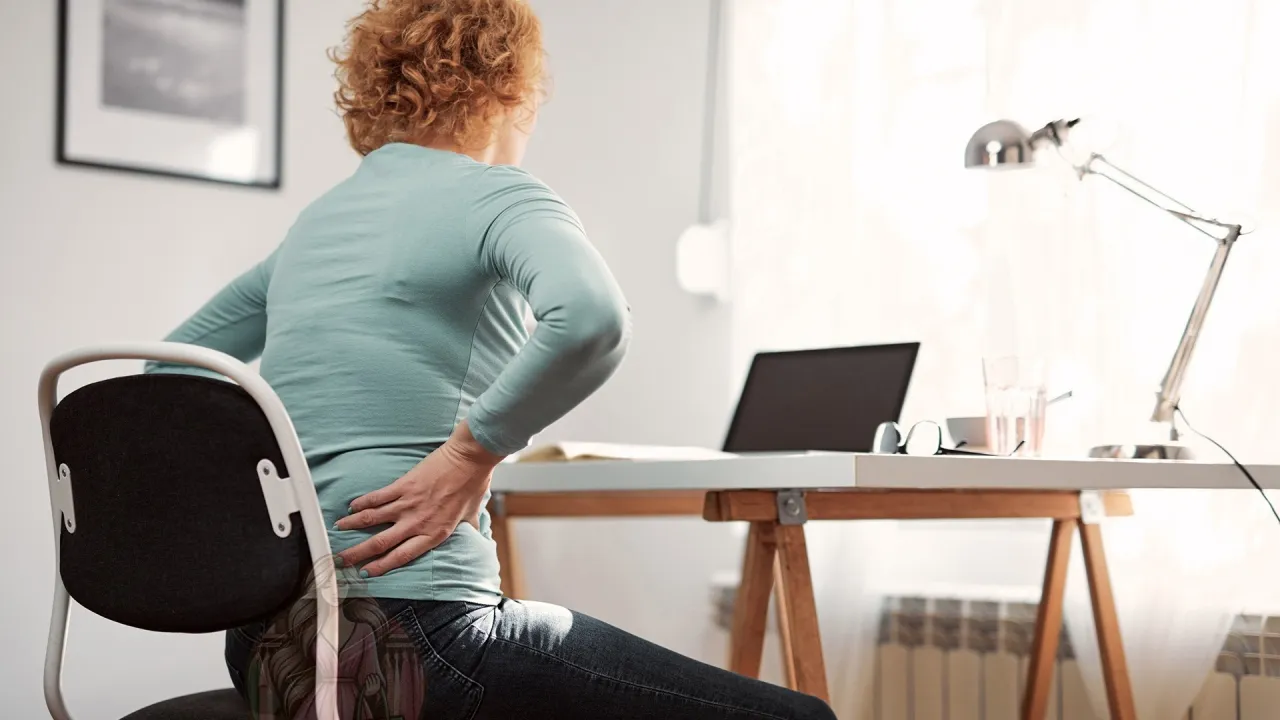
Khaberni - If you are experiencing repeated pains in your lower back or knees without a clear cause, the fault may not lie in your spine or joints as you think, but in the buttock muscles themselves, as experts warn of a condition known as "Dead Butt Syndrome" (Dead Butt Syndrome).
According to journals from the Cleveland Clinic and WebMD, this syndrome - medically known as Gluteal Amnesia - occurs when the buttock muscles lose their ability to function normally, often due to prolonged sitting and lack of movement.
The buttock muscles play a key role in supporting the pelvis, stabilizing the spine, and aiding in walking, running, and standing. But when sitting for long hours, especially in desk jobs or while driving, these muscles become "dormant," meaning weak or inactive.
This dysfunction forces other muscles - such as the lower back or hamstrings - to compensate for the role, which can lead to chronic pains in the back, hip, or knee over time.
The symptoms of this syndrome are not limited to just buttock pain, but may also include lower back pain that increases with standing or walking, stiffness or pain in the hips, knee pain without direct injury, and a lack of balance or instability during movement.
Experts at the American Council on Exercise note that many people treat these symptoms incorrectly without addressing the true muscular cause.
Why has it become common?
Doctors link the spread of the syndrome to modern lifestyles, especially sitting for long hours in front of screens, lack of physical activity, reliance on exercises that do not activate the buttock muscles, and the wrong posture while sitting.
Health reports indicate that even people who exercise may get it if they focus on limited exercises and neglect strengthening these muscles.
How can it be prevented and treated?
Treating this condition does not require medication or surgery, but primarily relies on reactivating the buttock muscles, through stretching and regular movement exercises, strengthening exercises such as squats and the bridge exercise, moving every 30–60 minutes while sitting, and improving the posture of sitting and standing.
Physical therapists confirm that improvement may begin within weeks if a person adheres to the correct exercises.