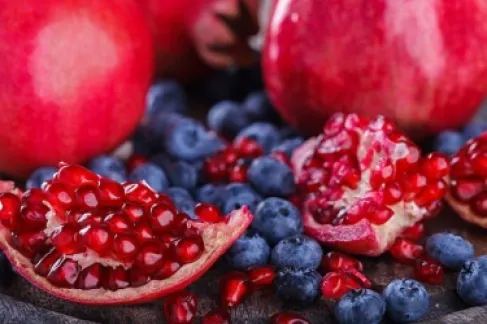
Khaberni - Anthocyanins are pigments responsible for the red, blue, and violet colors in berries, grapes, cabbage, and other plant foods. Anthocyanins appear red in acidic environments, turn to blue when alkalinity increases, and these colors interact in plants that produce distinctive dark purple hues, and research has found they offer great health benefits.
These pigments are present in red grapes, blueberries, purple cabbage, eggplant, black rice, purple sweet potatoes, purple onions, plums, and cherries.
Benefits for brain health
Ageing remains the major risk factor for neurodegenerative diseases such as Alzheimer's disease, Parkinson's disease, and Amyotrophic lateral sclerosis. Increasing evidence suggests that acetylcholine compounds in these purple pigments support aspects of cognitive performance in the elderly in some trials by enhancing memory performance, improving nerve efficiency, and generally promoting brain function.
According to "News Medical", human cell trials have shown that these pigments reduce inflammatory pathways in the brain.
In a 12-week randomized trial, elderly individuals with mild to moderate dementia who consumed 200 ml/day of cherry juice showed significant improvement in language fluency and memory.
Berry supplements
Those with mild cognitive impairment showed stronger responses in working memory tasks after consuming blueberry supplements, reflecting an improvement in brain efficiency.
In healthy elderly individuals, consuming 30 ml of blueberry concentrate daily for 12 weeks improved cerebral blood flow and enhanced activity in brain regions critical for memory and executive functions.
In healthy elderly individuals, consuming wild blueberry powder daily for 12 weeks improved vascular endothelial function, and was also associated with improvements in some memory and function outcomes.
Cardiac effects
Studies conducted on humans have repeatedly shown that consuming blueberry concentrate improves blood pressure and arterial markers, and consuming freeze-dried wild blueberry for 12 weeks in elderly improves blood flow-induced vasodilation and reduces systolic blood pressure over 24 hours.
Short-term studies also suggest selective benefits on blood pressure and vascular markers after consuming berry extracts, although these effects vary depending on the dose, formulation, and overall outcome