Khaberni - Jerusalem Post reported that the Israeli military said the action plan for tripartite military cooperation between Israel, Greece, and Cyprus for 2026 was signed, marking a new step aimed at deepening the security partnership among the three countries.
The Israeli military explained that the signing took place last week in the Cypriot capital, Nicosia, although the official announcement of this development came on Sunday.
The Israeli delegation was led by the head of international cooperation in the Israeli military, Brigadier General Amit Adler, who held meetings with his Greek and Cypriot counterparts to discuss mechanisms for the plan’s implementation.
According to the newspaper, the cooperation plan includes organizing joint exercises and maneuvers, forming specialized working groups in a number of military and security fields, as well as a strategic military dialogue on matters of common interest, enhancing operational coordination and expertise exchange among the three armies.
The newspaper confirmed that the signing of this plan represents an additional step in the path of deepening military cooperation between Israel, Greece, and Cyprus and contributes to enhancing stability and security in the Eastern Mediterranean region.
Deterring Turkish Activities
In related context, sources for Jerusalem Post reported that the cooperation plan is part of broader efforts to deter Turkish military and strategic activities in the Eastern Mediterranean.
The Greek website Tania reported that the three countries discussed the concept of establishing a rapid response force comprising about 2500 personnel, including about 1000 soldiers from both Israel and Greece, and 500 from Cyprus.
According to previous reports, this force would not be a permanent unit but a rapid deployment force for emergencies on land, sea, or air, designed to address sudden developments in the region.
The newspaper reported that the initiative has prominent participation from the Israeli Air Force and Navy, and the foreign relations administration in the army, and it is coordinated through government channels among the three countries.
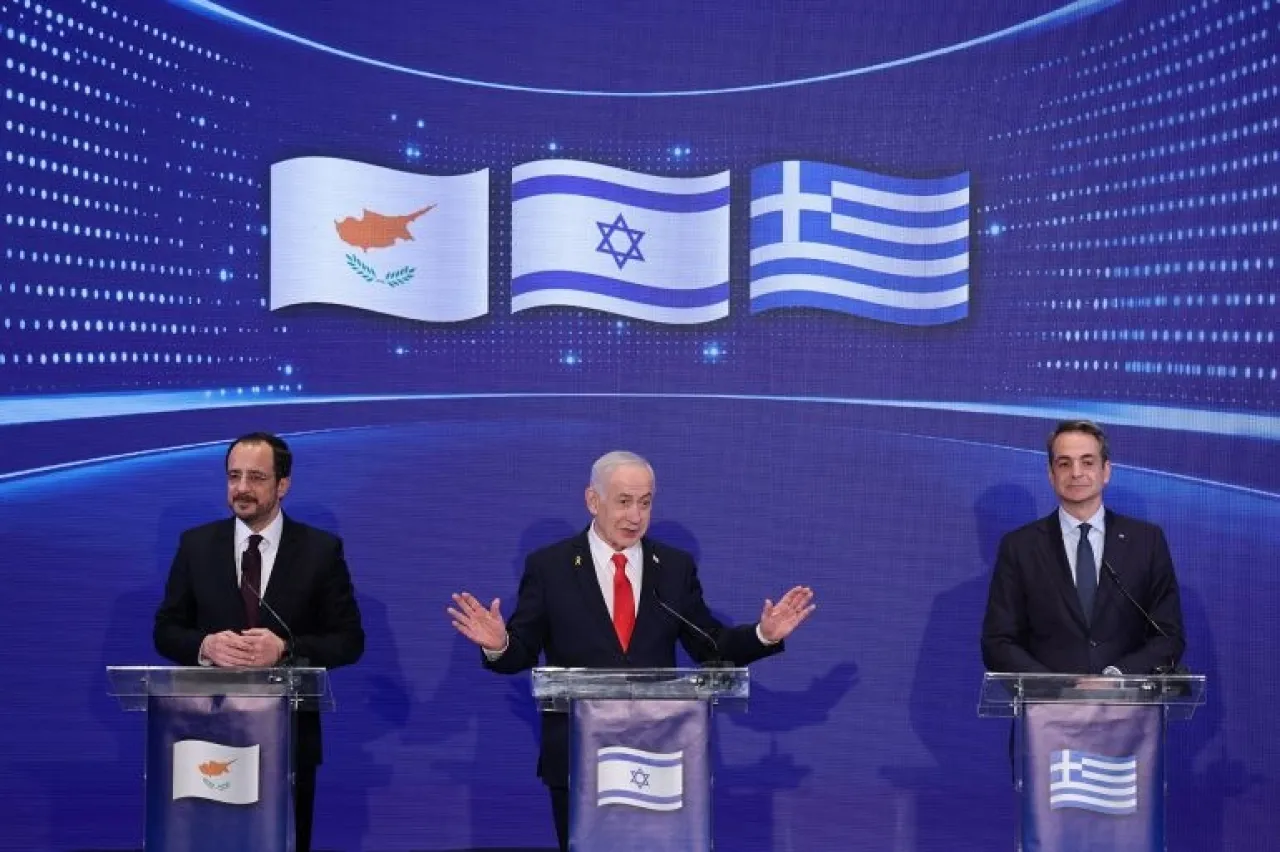
This military development occurs amid concurrent political movements, as last week, Greek Prime Minister Kyriakos Mitsotakis and Cypriot President Nikos Christodoulides visited Israel and held a summit with Israeli Prime Minister Benjamin Netanyahu, during which they discussed regional developments and security cooperation in the Eastern Mediterranean.