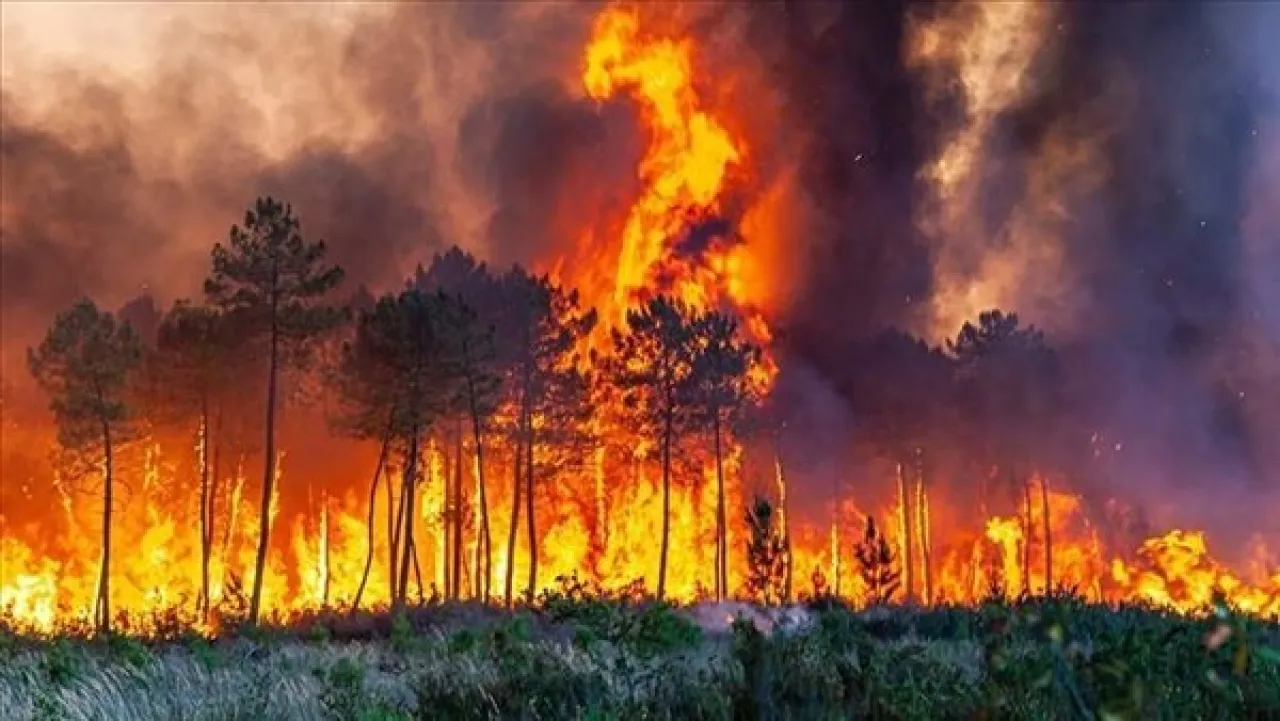
In a year described by experts as «the worst in terms of climate change impacts», a recent study by Christian Aid reveals that the massive economic losses caused by climate disasters exceeded $120 billion, presenting the world with an unprecedented environmental and economic shock.
At the forefront of the disasters, the Palisades and Eaton fires in California during January 2025, caused losses exceeding $60 billion and resulted in the death of more than 400 people. The fires destroyed thousands of homes, including those of celebrities such as Paris Hilton and actor Eugene Levy. The state governor confirmed that fires are no longer just seasonal, but now threaten California year-round.
This was followed by a series of cyclones, heavy rains, and floods in Thailand, Indonesia, Sri Lanka, Vietnam, and Malaysia during November, causing losses valued at $25 billion and killing more than 1750 people.
In this context, the CEO of Christian Aid, Patrick Watt, said: «These disasters are a wake-up call for the world. If we do not expedite the shift away from fossil fuels, economic and human losses will continue to rise».
Joanna Hay, Professor of Atmospheric Physics at Imperial College London confirmed that the disasters are not natural, but a direct result of the use of fossil fuels and political delays in addressing climate change, with the poorest communities bearing the biggest burden.
The most costly climate disasters of 2025
Palisades and Eaton Fires – United States – January – $60+ Billion
Cyclones in South and Southeast Asia – November – $25 Billion
Heavy Rain and Floods – China – June to August – $11.7 Billion
Hurricane Melissa – Jamaica, Cuba, and the Bahamas – $8 Billion
Monsoon Rains, Floods, and Landslides – India and Pakistan – $5.6 Billion
Cyclones and Tropical Storms – Philippines – More than $5 Billion
Drought – Brazil – $4.75 Billion
Hurricane Alfred – Australia – $1.2 Billion
Hurricane Garance – Reunion Island – $1.05 Billion
Sudden Rains and Floods – Texas, United States – $1 Billion
It can be said that the year 2025 proved that climate disasters are no longer just distant news from our lives, but they threaten the economy and communities globally, and prompt us all to wonder: How long will the world remain a spectator to this disaster before it takes action?