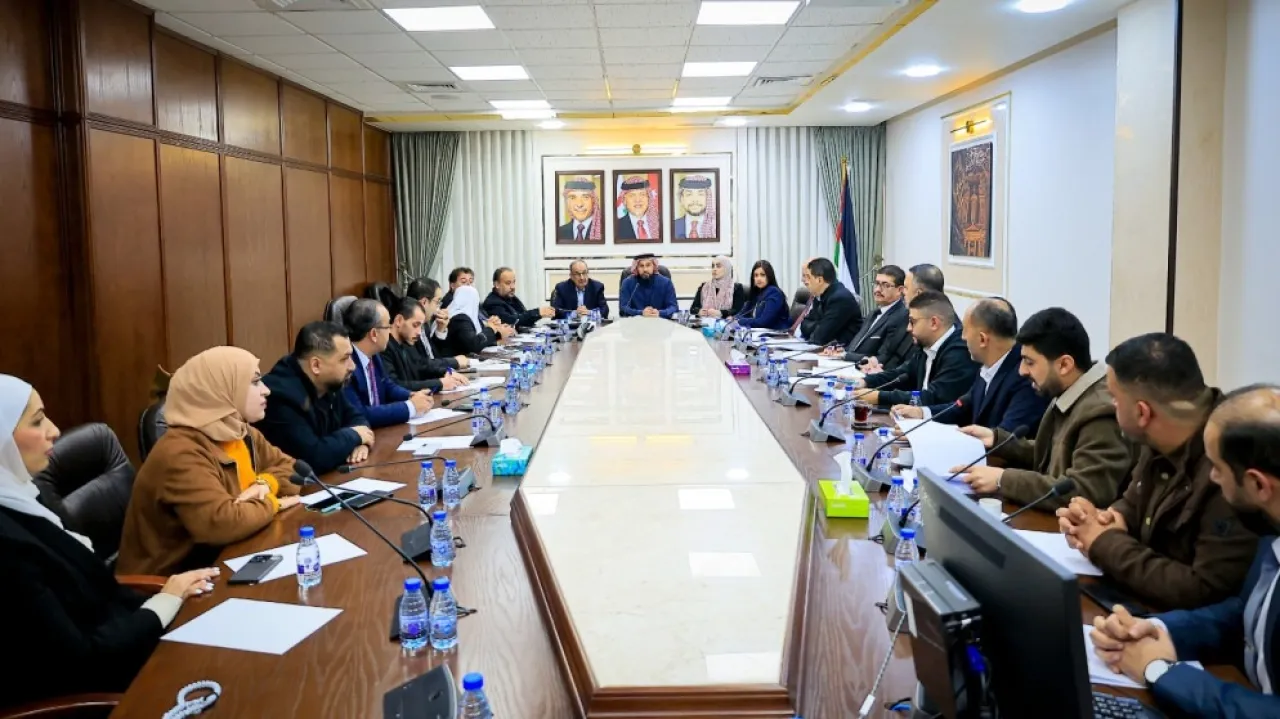
Khaberni - The Parliamentary Education Committee, chaired by MP Ibrahim Al-Qaralah, discussed on Sunday the new high school system based on academic fields and extending over two years, in the presence of officials, educational experts, and representatives from the private sector.
Al-Qaralah emphasized that the new system should reinforce the principles of fairness and equal opportunities among students, reduce the stress associated with traditional examinations, while maintaining the quality of the educational process and aligning its outputs with labor market requirements.
In turn, the Director of the Directorate of Recognition and Equivalence of Non-Jordanian Certificates, Aseel Al-Muhaisen, explained that the proposed system relies on dividing subjects into academic fields that allow students to choose their pathways gradually, noting that assessment would be conducted in a cumulative and two-stage manner, with mechanisms ensuring transparency and reliability.
She pointed out that the system includes special tracks for health and medical specializations that provide students with foundations in biomedical and clinical sciences and early training opportunities.
Moreover, Mohammed Kinanah, the Director of the National Center for Curriculum Development, affirmed that the development process is conducted according to national frameworks, with drafts of the curricula presented to specialists before their approval to ensure quality, highlighting the Center’s openness to professional feedback.
Saleh Al-Omari, the Director of Curriculum Management at the Ministry, mentioned that secondary level shared cultural subjects are considered standard mandatory courses globally, and contribute to building a comprehensive curriculum for all tracks, indicating that adherence to the educational plan exceeded 90 percent in most subjects.
Dr. Faisal Al-Hawari, Director of the Department of Educational Planning and Research, stated that the new system represents an important step in the development of education, offering students broader choices that align with their interests, in cooperation with relevant entities.
In his role, Mohammad Shahadeh, the Director of Examinations Management, noted that streamlining some textbooks and adjusting the number of weekly classes have contributed to reducing the burden within individual classes, pointing to the ongoing review of field performance reports to ensure balance between content and allocated teaching time.
A number of participating teachers affirmed that the development of the educational system aims to keep up with global updates and enhance students’ performance in core subjects, calling for providing the necessary time, equipment, and training to enable teachers to implement educational activities.
Similarly, committee members Issa Nassar, Ibrahim Al-Hamidi, Ahmad Al-Raqb, Huda Al-Atoum, and Rania Khalifat emphasized the need for careful study of any modifications to the educational system, consideration of school conditions and students’ needs, and listening to opinions of relevant parties, to ensure practical and gradual implementation of upcoming decisions.