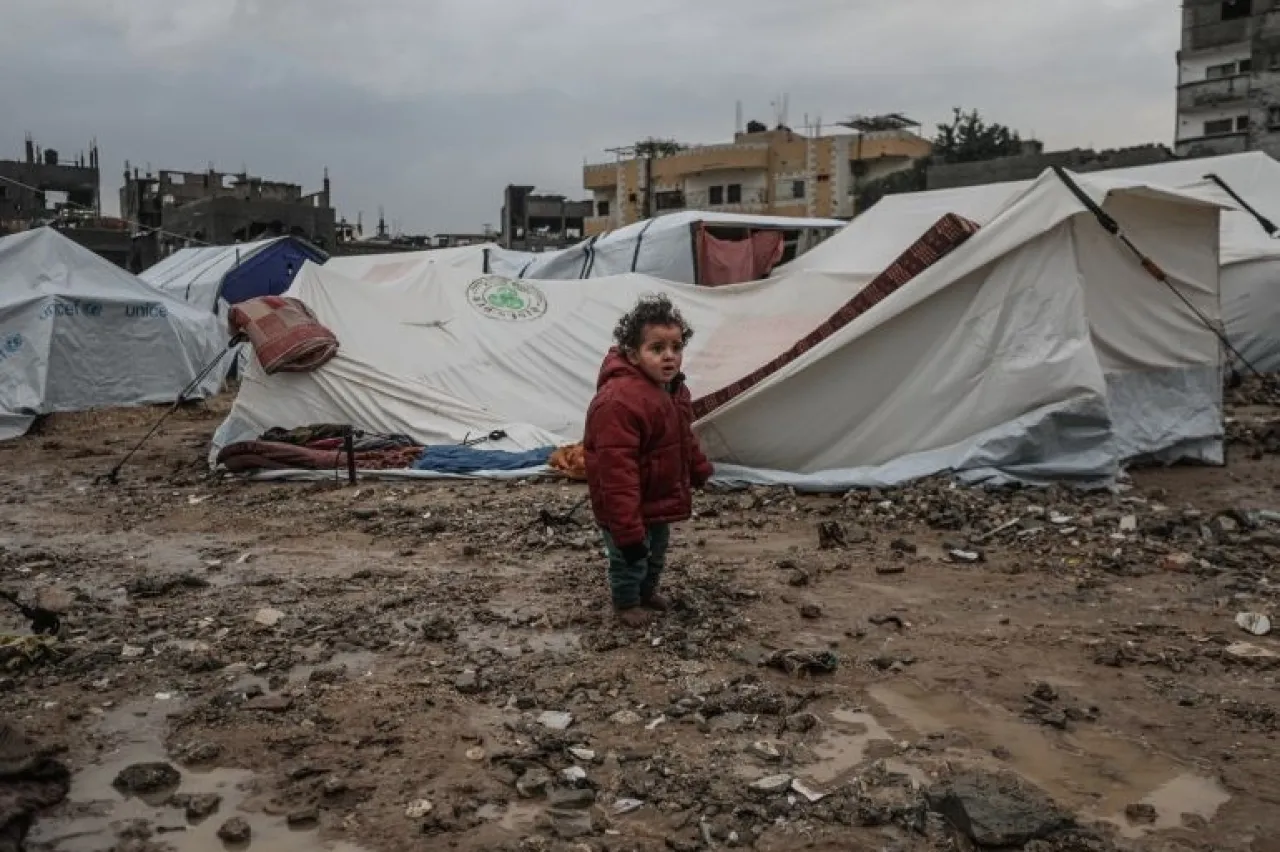
Khaberni - Strong winds and heavy rains, on Saturday evening, caused the flooding of several displaced tents and scattering others across various areas of the Gaza Strip, due to a weather depression impacting the region, exacerbating the suffering of Palestinian families whose homes were destroyed by Israel during the two-year genocide war.
Water submerged tents housing displaced people in low-lying areas, while winds uprooted other tents, forcing families, including children, to go out into the open amid cold weather. Attempts by tent owners to secure them failed due to the intensity of the winds and the strength of the storm.
The Gaza Strip is affected by a new polar weather depression, with wind speeds reaching up to 100 kilometers per hour accompanied by heavy rains.
According to the weather forecast, the depression will be accompanied by thunderous winds and rains ranging in intensity from 20 to 50 millimeters, threatening to completely damage and uproot the displaced tents.
Parts of the sector will experience very low temperatures, with expectations of water accumulation in pools due to the muddy nature resulting from the massive destruction caused by the occupation.
Earlier on Saturday, the Municipality of North Gaza said the occupation had destroyed the province and made it uninhabitable, calling on all parties and international organizations to intervene urgently to save what remains of life in the sector in accordance with international laws.
The municipality called for support with fuel, spare parts, and necessary equipment to operate water wells, waste collection, and sewage pumps.
Since the impact of the weather depressions began on Gaza in December, 17 Palestinians, including 4 children, have died, while about 90% of the displaced shelters, whose homes were destroyed by Israel, have been flooded, according to a previous statement by the civil defense in the sector.
The depressions also damaged more than a quarter of a million displaced people, out of about 1.5 million living in tents and primitive shelters that do not provide the minimum level of protection, according to previous data from the government media office in Gaza.
Also, a number of residential buildings previously damaged by Israeli bombings during the months of genocide have collapsed due to rain and wind.
Palestinians are forced to live in cracked buildings at risk of collapse due to the lack of options amid Israel's destruction of most buildings in the sector and its prevention of the entry of mobile homes and building materials, shirking its commitments specified by the ceasefire agreement.