Khaberni - Official data from the Ministry of Water and Irrigation indicates that the total expenditure on projects and programs during the year 2025 reached about half a billion dollars, including the implementation of major strategic projects, improving water supply, sewage projects, expanding the use of renewable energy, and water harvesting projects, alongside digital transformation programs and building institutional capacities.
This level of expenditure confirms the government's commitment to enhancing national water security, improving the quality of services provided to citizens, and implementing sustainable projects that contribute to addressing the challenges of water scarcity and climate change.
The ministry's achievements in 2025 represent a qualitative shift in managing the water sector through moving forward in implementing the national water conveyance project from Aqaba to Amman, where a contract for the project has been signed, completing 11 annexes of the agreement, in addition to securing grants and international support, most notably a Dutch grant worth 31 million euros as part of a support package for the water sector totaling 100 million euros.
In the area of improving water supply, the ministry and its authorities have implemented rehabilitation and modernization projects for water networks in several provinces, including an improvement project for water systems in Bani Kinana at a cost of approximately 60 million dollars, rehabilitation of water networks in Tafilah Governorate at a cost of 6.1 million dinars and Petra/Maan at a value of 6.8 million dinars, and Rumtha (21.36 million euros), in addition to a project to rehabilitate the Mustabah networks in Jerash Governorate valued at 10.34 million dollars, and rehabilitating 7 wells in the Kafrain area at a cost of 1.196 million dollars, and rehabilitating the Abu Al Zighan wells desalination plant at a value of 36 million dollars.
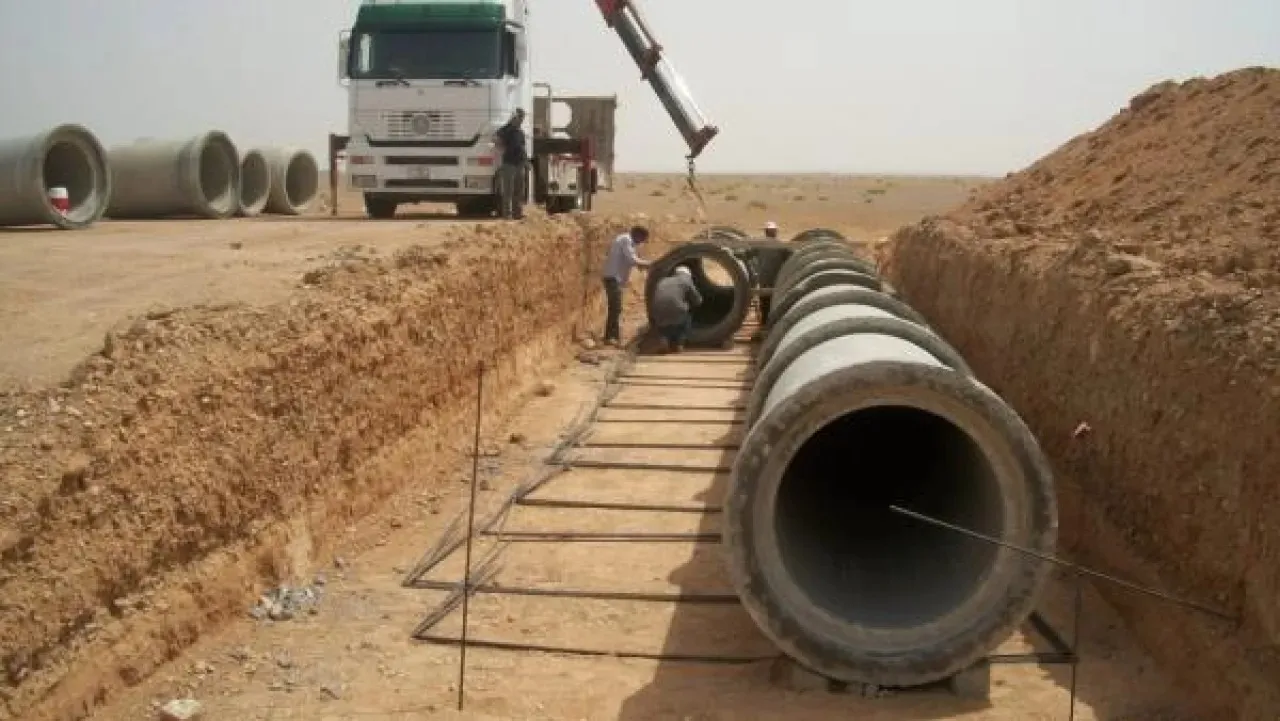
The ministry has paid increasing attention to the sewage sector by implementing and signing agreements for major projects, including the Hakama-Irbid sewage project at a cost of 11.377 million dinars, sewage projects in Northeast Balqa valued at 60 million euros, and projects in West Irbid and Southwest Amman costing 27.7 million dollars, in addition to the expansion project of the Samra station and enhancing water sources costing 46 million dollars, and the expansion and rehabilitation of the Ain Ghazal station through a grant worth 3 million dollars and a second grant of 708.7 thousand euros.
The data indicate that the ministry has worked to reduce the costs of operational energy bills as part of its sustainability approach, implementing renewable energy projects, including running a photovoltaic solar power project with a capacity of 2 megawatts for the Disi Water Project, and implementing solar energy projects at the Zara-Ma'in station at a cost of 1.2 million dinars. One of these projects was awarded the silver award for solar energy projects in the United Arab Emirates in October last year.
In the water harvesting and risk management sector, the ministry completed the design and implementation of 15 water harvesting facilities, received water harvesting and storage facilities with a capacity exceeding 2.1 million cubic meters, in addition to establishing 120 water harvesting units in Karak Governorate, and tendering for digs in Mafraq Governorate with a storage capacity of 125 thousand cubic meters, and prepared national flood intensity maps and launched dam risk assessment tools.
The year 2025 witnessed an expansion in institutional and regional partnerships, with the signing of 10 investment agreements in the central and southern Jordan Valley areas, and 6 agreements to transfer water distribution management tasks to water user associations, in addition to discussing project implementations with international entities, reaching a Jordanian-Syrian agreement on the fair distribution of Yarmouk Basin waters, and Jordan's official joining of the Global Commission on Dams last May.
In the field of digital transformation and capacity building, the ministry launched a water and energy data management system at a cost of 2.7 million euros, inaugurated the Ministry of Water and Irrigation's electronic application, alongside graduating the first batch from the training program for workers in the Palestinian water sector, and Jordan Valley Authority laboratories obtained the ISO 9001:2015 certification in international quality management, and launched an update to the GIS unit in the ministry.
In the field of initiatives and training programs, the ministry implemented several programs, including a plumbing program for women, launching a water conservation campaign in Deir Alla, and launching a training program for engineers and operators in the water sector in cooperation with Al-Balqa Applied University, and organized a series of dialogues to engage local communities in addressing water sector challenges and climate change.