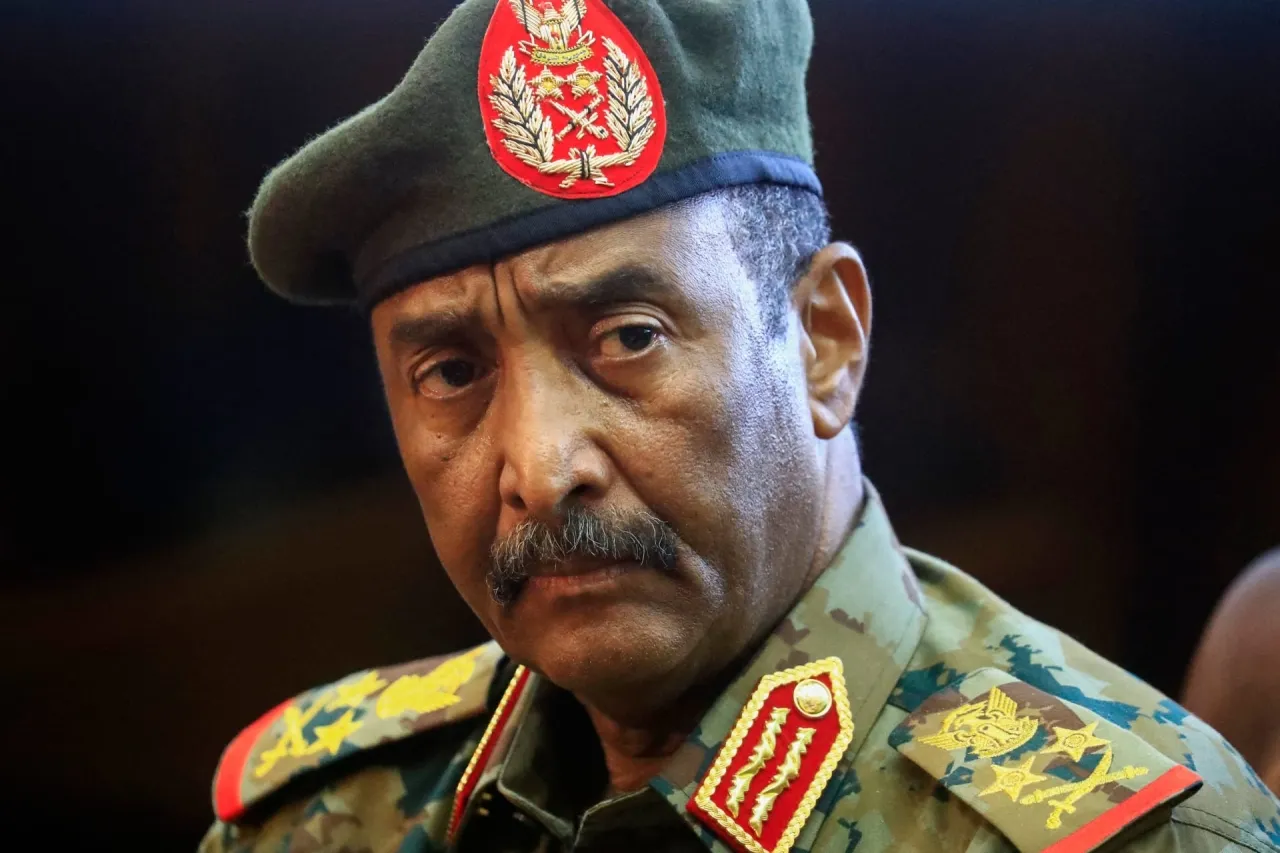
Khaberni - Abdel Fattah al-Burhan, president of the Sovereignty Council in Port Sudan and commander of the Sudanese Armed Forces, faces international sanctions after his proven use of chemical weapons during the civil war in Sudan, repeating the violations by the former Syrian president Bashar al-Assad by using internationally banned weapons.
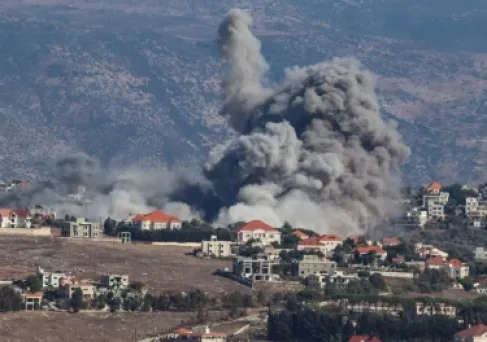
An investigation by "France 24" this month, using "open source" tools, revealed that the Sudanese army, under Burhan's command, conducted airstrikes "using chlorine gas to retake the Al-Jeili refinery located north of Bahri, which was under the control of the Rapid Support Forces".
The investigation mentioned that the army forces in Port Sudan carried out attacks on the 5th and 13th of September 2024, and the channel stated that "the videos and photos were verified by a specialized team", while five experts confirmed that the evidence matches the airdrop operations of chlorine gas barrels, adding the investigation to the evidence condemning the Sudanese army's use of chemical weapons during the war that erupted starting mid-April 2023.
New Testimonies and Evidence
Eyewitnesses for the "Emergency Lawyers" group in Sudan revealed the presence of traces in their areas from the chemical strikes carried out by the Sudanese army last year, while the Sudanese National Observatory for Human Rights issued a statement confirming that "the Sudanese army committed a crime against international law and against humanity through the chemical strikes."
New local testimonies from the areas of Al-Koma and Milit in western Sudan confirmed the change in water color to "pink" after army raids, and "France 24" teams collected soil samples from the areas that were hit to scientifically verify the traces of chemical weapons use.
Darryl J. Campbell, the executive director of the Chemical Weapons Reduction Association, appealed in a statement to "Sky News Arabia" for the international community to pressure the Sudanese army to stop the violations and chemical strikes, especially from countries that provide military support such as Russia.
Repeated Crime
A chemical weapons expert noted that what Burhan did in Sudan is similar to what happened in Syria years ago when Bashar al-Assad's forces, the former Syrian president, used internationally banned chemical weapons.
Campbell mentioned that the "broad response" from the international community to the former Syrian regime after the proven chemical strikes should happen with the Sudanese regime in Port Sudan, noting that "international pressure should not only come from the United States".
The Syrian army, under former president Bashar al-Assad, launched a chemical weapons attack on the Ghouta area in Syria, targeting areas under opposition control in the suburbs of Damascus with sarin gas, with estimates of the death toll ranging from 280 to 1,729 victims.
A United Nations team in Syria after the strike that occurred on August 21, 2013, found "conclusive and convincing evidence" of the use of sarin gas launched through "surface-to-surface missiles" as revealed by the "United Nations Human Rights Council in the following year of the war about the use of large amounts of sarin gas in the attack that targeted populated civilian areas resulting in significant civilian casualties."
In June 2018, the Organization for the Prohibition of Chemical Weapons demanded the Syrian government, led by Assad, to destroy all its chemical weapons and production facilities, expressing concern that such steps had not been taken despite years passing since the Ghouta strike, which is known in the Syrian media as the "Ghouta Massacre".
International Condemnation for Burhan
The United States announced last May, that the Sudanese army used chemical weapons during 2024 and imposed sanctions on the Port Sudan authority including restricting American exports to Sudan and placing a limit on financial lending starting from June 6th last year, according to a statement by spokeswoman for the U.S. Department of State, Tammy Bruce, who called on the army to stop using chemical weapons.
Following the U.S. condemnation of the Sudanese army and confirmation of chemical weapons use, other human rights and international organizations condemned Burhan's army, among them "Human Rights Watch" which issued a statement in October last year, confirming the use of chlorine, banned Internationally by the Chemical Weapons Convention, "which constitutes a war crime under the Rome Statute of the International Criminal Court," urging the international community to act to prevent such violations, and to punish those responsible for this blatant violation of international law.
Sudan signed the Chemical Weapons Convention in 1992, agreeing to "disarm chemical weapons by destroying all stocks of chemical weapons and production facilities it may possess, and to destroy all chemical weapons that may have been left in the past on the territories of other state parties," according to the terms of the Organization for the Prohibition of Chemical Weapons on its official website.
The violations of the Sudanese army do not stop with the use of chemical weapons, as human rights and UN organizations continuously document violations against civilians, through random air bombings targeting infrastructure, schools, hospitals, and markets, according to a report by the team of experts on Sudan to the UN Security Council.
The United Nations and the United States also condemned the violations that reached the level of field executions carried out by "Bara bin Malik Battalion," the military arm of the Muslim Brotherhood group, listed as a terrorist organization in many countries, which fights with the Sudanese army and controls large areas in Sudan since the beginning the war, benefiting from international financing obtained from countries sponsoring the extremist organization, especially Qatar and Turkey.
Despite international condemnations of Burhan, the president of the Sovereignty Council in Port Sudan and the army commander accused of crimes against international law, including the use of chemical weapons, continues to receive direct support from Arab regimes.
Official support for Burhan's forces, which are allied with extremist Islamic militias, comes at a time when the supporting countries have taken steps against terrorist and extremist organizations.
The Sudanese army and its militias affiliated with the Muslim Brotherhood organization consistently receive military support from Turkey, according to a report published by "The Washington Post" last March, which revealed the delivery of "secret shipments of drones and Turkish missiles to the Port Sudan army last year, by a team from Baykar - Turkey's largest defense company - who accompanied the shipments on the ground to ensure the deal went smoothly and to train the fighters on using the drones in the Sudanese war."