




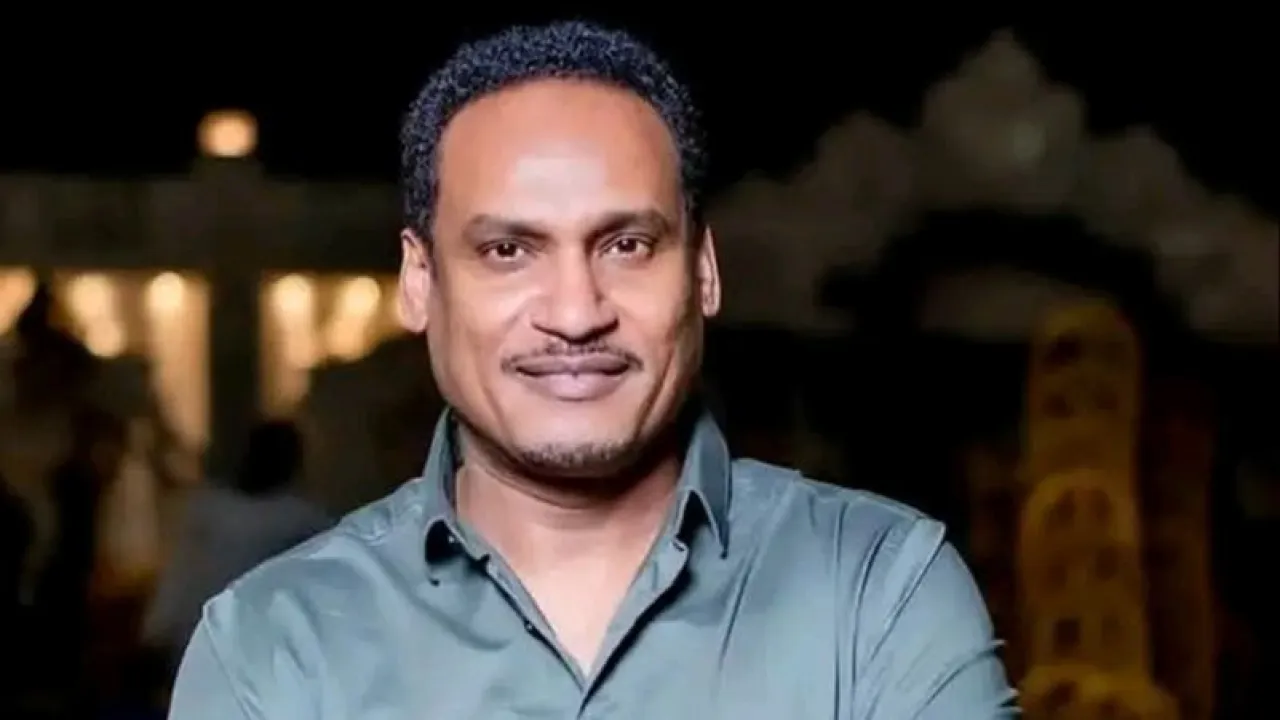
Khaberni - The storm has not settled since Sudanese artist Mohammed Tarus took to the stage at the celebration of the Sudanese community in Uganda, where he presented a scene that caused a great deal of shock and ignited widespread controversy on social media platforms as he stripped off some of his clothes on stage in front of the audience.
This unprecedented theatrical act turned the atmosphere upside down, reviving the debate about the boundaries of artistic expression between shocking symbolism and social norms.
A moment on stage… Art or provocation?
During the ceremony, which saw a large audience including leading Sudanese artists and poets, Tarus's behavior stole the spotlight and triggered a wave of controversy as video clips spread like wildfire among Sudanese at home and abroad, turning the incident into a hot topic of cultural and political debate, surpassing the limits of the celebration itself.
The reactions were divided: some saw the act as a symbol of Sudan's suffering, while others considered it a blatant breach of tradition and a source of annoyance for an audience that was expecting a calm celebration.
Social media… a battle of comments
Comments varied between supporters and opponents; some thought that Tarus wanted to highlight the suffering of his country, but "missed the mark with the style", while another considered that "the celebration was not a place for shocks", and a third thought that what happened was "courageous art that reflects the Sudanese reality with unprecedented boldness".
"The Sudanese reality is more grim than any theatrical shock"
Prominent journalist Mohamed Abdel Maged told "Al Arabiya.net" that what happens on the political stage is much worse than what happens on the artistic stage, considering that objecting to imagination and harsher reality is illogical.
He also pointed out that the situation was evaluated outside the artistic critical scope and was based on political grounds, explaining that "those supporting the war resented Tarus's behavior, while those in the other camp saw it as merely an artistic message meant to draw attention to a specific issue concerning what is happening in Sudan, and it is clear that it succeeded in what it aimed to achieve".
Abdel Maged adds that an artist usually does not pay much attention to those who agree or disagree with him, but strives to make his statement and move on. He continued: "I followed harsh criticisms against Tarus, but it is certain that what is happening in Sudan due to the current war is far worse than Tarus's behavior, and our reality is extremely painful, and it is this reality that deserves to be assessed and reformed, not a transient act by an artist on stage".
And he concluded by saying: "In my opinion, art is always a direct reflection of reality". Calling for subjecting artistic works to critical scrutiny away from political considerations or the standard, with and against".
"A shock that succeeded in stirring but failed in directing the discussion"
From a different critical perspective, Sudanese critic Haitham Ahmed Al-Tayeb reads the act of Mohammed Tarus as a performative artistic act, telling "Al Arabiya.net": "As a professional, I read the matter from an objective angle, what is the purpose of the act in its essence, and considering the performer a theatrical character, comes the question: Is this theater?".
Al-Tayeb believes that part of the controversy quickly deviated from evaluating the act as a theatrical work to interpreting it from the angle of Sudanese customs, explaining that "some people entered into a movement of evaluation and criticism from this side, then moved to interpretations related to Sudanese customs because he acted against them for example".