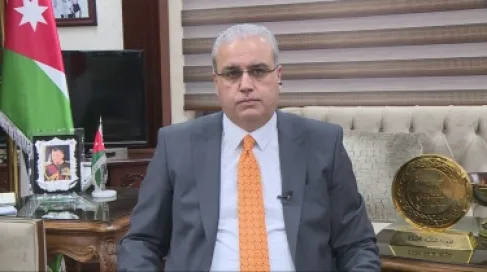
Khaberni - Environment Minister Dr. Ayman Suleiman confirmed that the phenomenon of random waste dumping has become worrying and noticeable in various regions of the kingdom.
He added in a radio talk that these practices are now spreading in cities, residential neighborhoods, and markets, after previously being limited to external roads or tourist and archaeological sites.
The minister explained that the spread of coffee shops and ready-to-drink beverages has contributed to exacerbating the phenomenon, as some citizens find it easy to throw cups and waste in the streets or from vehicles, noting that throwing waste from cars has become one of the most prominent current environmental challenges.
"The regulatory laws exist, but the goal is not only to tighten penalties," he assured, stating that the ministry has launched a comprehensive national campaign under the name “Campaign Program,” which will not be a temporary campaign, but a sustainable program that extends throughout 2026, to achieve a clean Jordan that befits its citizens," he reported on the Voice of Life program via Hayat FM radio.
He mentioned that the program is based on four main pillars, the first being the study of community behavior through scientific research to understand the causes of the spread of this phenomenon, in preparation to develop effective behavioral solutions.
The second pillar is represented in enhancing infrastructure, by increasing the number of waste bins, workers, and cleaning mechanisms at all locations, whether tourist or residential.
He continued that the third pillar focuses on systematic and continuous awareness, which will include schools, universities, mosques, and civil society institutions, with the aim of establishing a culture of cleanliness as a civilized and religious behavior.
The fourth pillar involves enforcing the law, through activating existing legislation, such as the traffic law related to throwing waste from vehicles, and the waste management framework law, where fines range from 20 to 500 dinars, depending on the type of violation.
Regarding control mechanisms, the minister revealed a plan to install 300 surveillance cameras in various governorates of the kingdom, including 50 cameras in the capital Amman and 250 cameras in other governorates, in addition to portable cameras on dedicated vehicles, to document violations with sound and image and legally enforce them.
He confirmed that law enforcement would be in cooperation with the Public Security Directorate and the Royal Administration for Environmental Protection, noting that these entities possess judicial police authority, within a comprehensive governmental partnership that includes various ministries and concerned institutions.
Suleiman emphasized the importance of the media's role in delivering the environmental message to the community, considering that cleanliness is not just about laws, but a culture and entrenched behavior, citing religious values that encourage cleanliness and removing harm from the path.
He pointed out that the financial cost borne by the state to address random waste is significant, and could have been directed towards improving health and educational services and infrastructure, asserting that real change starts with the individual, and that every citizen's daily behavior is fundamental to building a clean and sustainable environment.