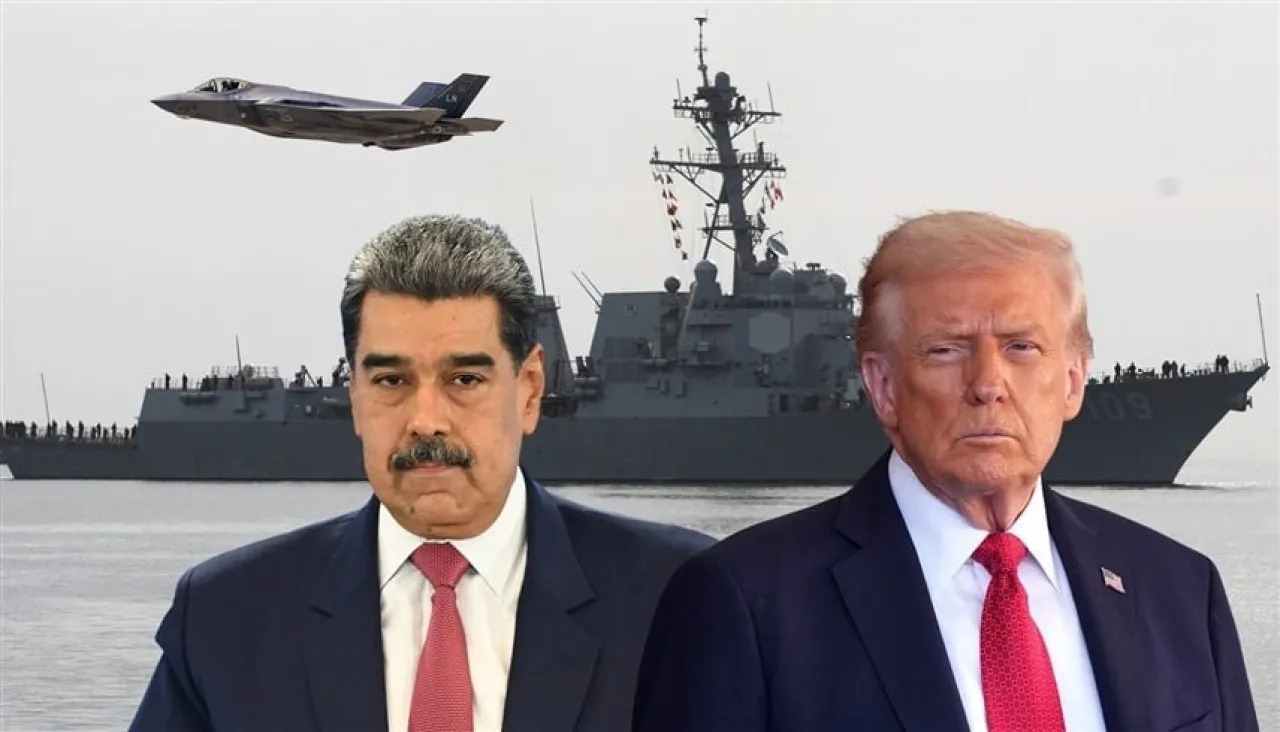
Khaberni - An American analysis believes that US President Donald Trump is facing increasingly restricted options towards Venezuela, amid an unprecedented military escalation that included naval strikes that killed more than 100 people and a declaration resembling a unilateral blockade of sanctioned Venezuelan oil tankers.
According to a report by the "Washington Post", the escalation followed Trump's announcement on social media that Venezuela "stole oil, land, and other assets" from the United States to finance criminal activities, referring to the nationalization decisions taken by Caracas decades ago and its termination of contracts with American oil companies.
Trump threatened to expand military operations in the Caribbean unless what he described as "American properties are immediately returned", warning that the shock would be "unprecedented".
The report pointed out that the American administration has so far carried out 28 strikes against boats suspected of involvement in drug smuggling, resulting in the deaths of at least 104 people, concurrently with the declaration of a "blockade" on ships transporting Venezuelan oil under sanctions.
The newspaper considered that these steps revealed that the White House has practically abandoned the publicly declared narrative that the goal was limited to combating illegal immigration and drug smuggling, in favor of a clear pursuit to weaken or overthrow Venezuelan President Nicolas Maduro.
The report quoted a source familiar with the thinking of the American administration, saying that Maduro, who has faced a US indictment since 2020 on drug trafficking charges, was classified as "a leader of a foreign terrorist cartel", adding that "his end will be either through trial or negotiation for exile in a third country".
However, the newspaper pointed out that Maduro's continued power has limited Trump's options, between a wider military escalation that may include air strikes within Venezuela, or political withdrawal that could be interpreted as a defeat. The report cited officials and experts that any ground operation would be costly politically and militarily and does not align with Trump's repeated pledge of "not entering new wars".
In this context, the newspaper cited Republican Senator Lindsey Graham, saying that showing this scale of power without overthrowing Maduro would be a "strategic mistake", questioning whether the administration's goal was actually to topple the Venezuelan president or just to apply military pressure.
The report highlighted internal political dimensions behind Trump's hardening stance, including a new strategic focus on the Western Hemisphere, and the role of prominent figures in his administration like Secretary of State Marco Rubio, who the "Washington Post" considers sees Venezuela as a key to striking Cuban influence in the region, in addition to White House Chief of Staff Steven Miller, who uses the Venezuelan immigration issue as part of the administration's tough rhetoric.