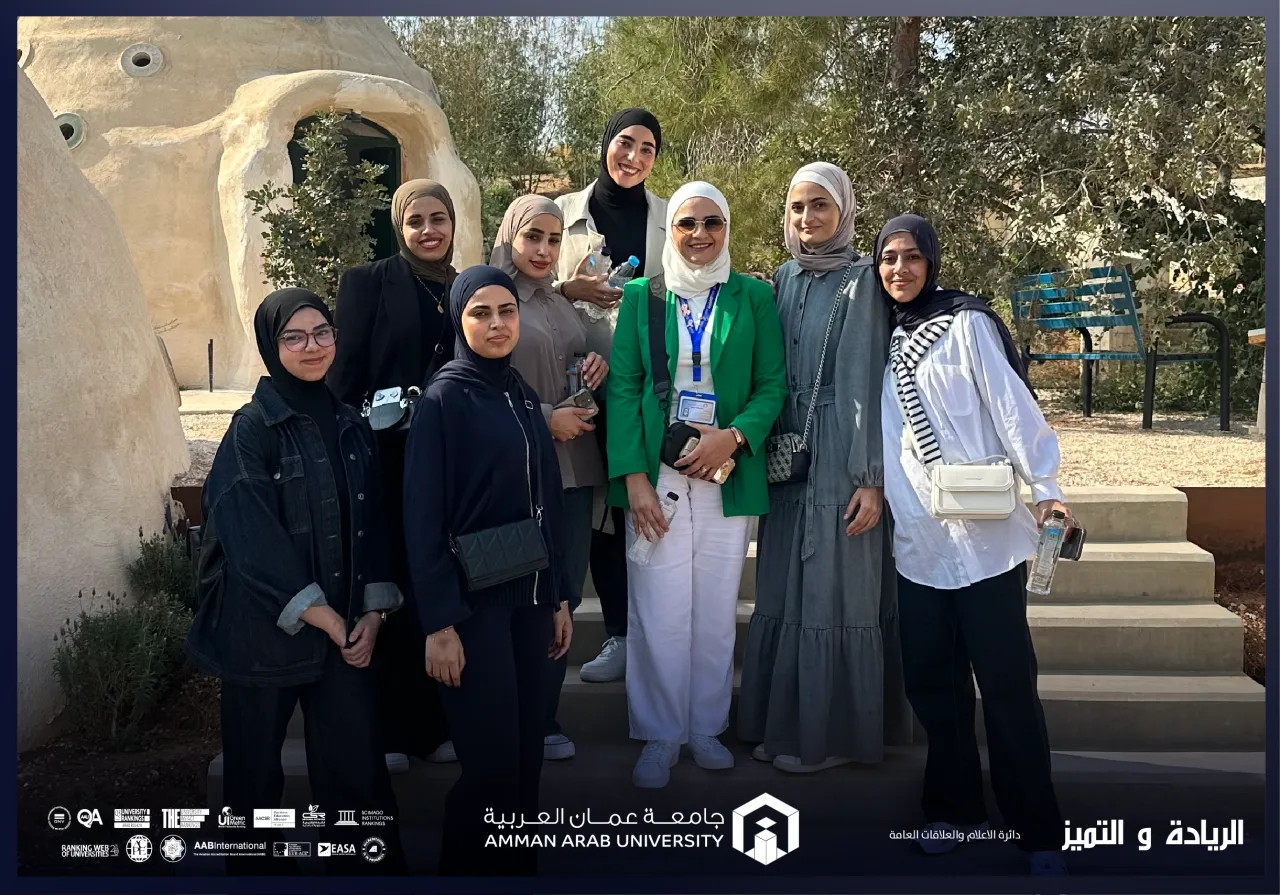
In a step aimed at enhancing applied skills and linking theoretical knowledge with practical reality within extracurricular activities, the College of Pharmacy at Amman Arab University organized a scientific field trip for students of the "Herbal Medicine" course to the Royal Botanic Garden, supervised by Dr. Haya Al-Qadiri, a faculty member in the college. The visit aimed to enable students to directly identify the native Jordanian plant species with medicinal properties, and link the theoretical concepts they learn to their natural environment. The visit also included exploring the garden's efforts in conserving endangered plants and protecting national plant genetic resources. During the tour, the students listened to specialized explanations about methods of classifying medicinal plants, techniques for extracting active compounds, and the importance of documenting traditional uses of herbs in the local community, which provided them with a deeper understanding of the connection between scientific knowledge and the botanical heritage in Jordan..
In this regard, Professor Dr. Rana Abu Haweij, Dean of the College of Pharmacy, emphasized the importance of such activities in honing students' skills and broadening their scientific horizons, pointing out the vital role of these visits in integrating theoretical concepts with practical application, and supporting students in acquiring practical experiences that enhance their academic education. She also indicated that these experiences provide students with a comprehensive perspective that combines pharmacological and environmental knowledge, enabling them to be qualified pharmacists capable of employing various therapeutic resources in professional practice..
Dr. Al-Qadiri also pointed out that this visit represents a practical model for applying scientific information in a real environment, affirming that such experiences contribute to honing students' practical skills and enhancing their ability to understand medicinal plants and their uses comprehensively, thereby supporting modern pharmacy education and preparing them to face professional challenges. The visit concluded with an interactive session, during which students had the opportunity to ask their questions about medicinal plants and their uses, methods of extraction, and scientific documentation, in an enthusiastic and positive interactive atmosphere.