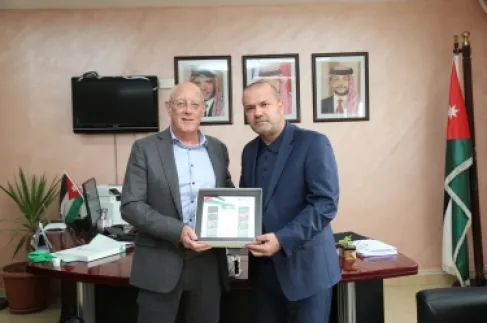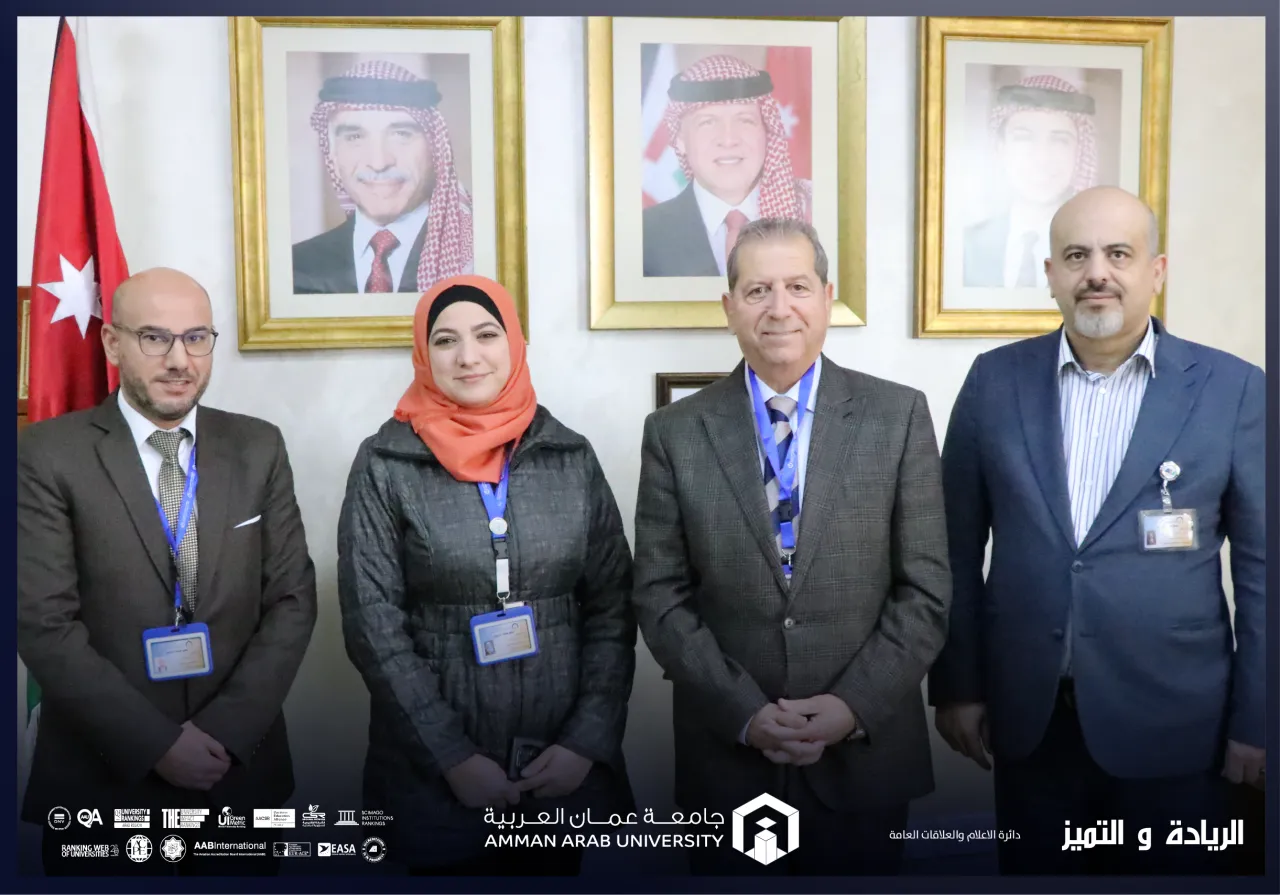
In an innovative step that merges linguistic heritage with modern technologies, The Faculty of Information Technology at Arab Amman University presented a pioneering project aimed at utilizing artificial intelligence to enhance Arabic calligraphy, introduced during a meeting held at the Arabic Language Complex, in the presence of Professor Dr. Mohammad Adnan Al-Bakhit, president of the complex, Professor Mamoun Hattab, a member of the complex, and Dr. Nasar Mansour, alongside the directors of the Planning and Media Directorate..
Representing Arab Amman University at the meeting was a team from the Faculty of Information Technology led by Dr. Bilal Khater, a faculty member, who presented their pioneering project aimed at employing artificial intelligence technologies to enhance Arabic calligraphy, which is one of the distinguished initiatives of the Faculty of Information Technology under the supervision of Dr. Bilal Khater and Dr. Walaa Al Omari, and with the participation of the students: Ahmed Rashid, Sandes Al Keilani from the Department of Data Science and Artificial Intelligence, and student Hidayah Yassin from the Software Engineering Department.
The project aims to develop smart tools and applications capable of improving the quality of Arabic calligraphy and enhancing its uses in educational, technical, and artistic fields, reflecting the Arab Amman University's commitment to innovation and supporting research projects that blend linguistic heritage with modern technologies. The team pointed out that the project is developing an innovative digital application that provides an educational and entertaining environment offering a unique and personalized user experience. It aims to preserve various Arabic calligraphic styles and ensure their mastery and enhance writing style, taking advantage of artificial intelligence technologies to provide smart educational tools that help users improve their skills interactively and accurately.
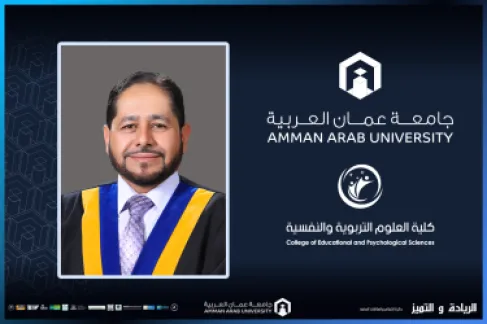
In this regard, Dr. Rami Sahweil, Dean of the Faculty of Information Technology at Arab Amman University, emphasized the importance of active participation by faculty members and students in implementing practical applied projects targeting the local community, noting that these projects constitute a real addition contributing to the development of practical skills of students and enhancing the connection of academic education with societal realities.
This participation confirms Arab Amman University's commitment to serving the local community through supporting pioneering projects and promoting innovation among its students, consolidating its vision based on integrating cultural heritage with the latest modern technologies, and ensuring effective student involvement to develop their practical experiences and link theoretical education with practical application.