Western and Arab officials revealed discussions between the United States, Israel, and the UAE about the possibility of using profits from the offshore natural gas in Gaza to fund the reconstruction of the war-torn sector, according to "Middle East Eye".
The sources stated that one of the discussed formulations includes Abu Dhabi National Oil Company (ADNOC) investing in Gaza's undeveloped gas fields, with the financial proceeds contributing to reconstruction efforts.
The sources clarified that the discussions are still preliminary and no formal commitments have been made yet, but the idea of using Palestinian gas for reconstruction resurfaced this December.
The discovery of offshore gas in Gaza dates back to 2000, and development rights for the fields are divided between the Palestinian Investment Fund and "Consolidated Contractors", along with about 45% allocated to an international partner.
Egypt had expressed interest in investing before the events of October 7, 2023, and the subsequent devastating war in the sector, which the United Nations described as a genocide.
Michael Barrow, an expert in Eastern Mediterranean gas and author of "The Gaza Sea Story", explained that the project is commercially viable, confirming that the field development costs were estimated at about $750 million and expected to generate about $4 billion in revenue, with an average annual profit of $100 million over 15 years for the benefit of the Palestinian Authority, considering that gas represents the most valuable natural resource for Palestinians currently and that its development will contribute to reconstruction.
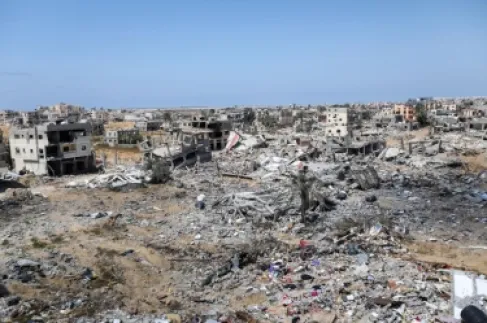
The United Nations estimates the total cost of reconstructing Gaza at about $70 billion. However, the United States and Israel have not yet made progress in discussing comprehensive reconstruction but have focused their planning efforts on creating temporary housing units in the Israeli-occupied half of Gaza, supervised by a team of American officials close to Jared Kushner, the former U.S. president's son-in-law.
The sources indicated that Gulf countries, including the UAE, were hesitant to fund a plan that might leave Gaza divided, while the Emirates emerged as the primary Gulf partner willing to work with Washington and Tel Aviv, especially as Abu Dhabi is considered the largest humanitarian donor to the sector.
The sources also confirmed that ongoing discussions aim to link Gaza's gas with the Eastern Mediterranean gas network. Meanwhile, the Israeli and Emirati embassies in Washington and the U.S. Department of State declined to comment on the matter until the publication time.
Israel had approved on Thursday the export of gas worth $35 billion to Egypt, which is experiencing a decline in production from its offshore fields. Meanwhile, the UAE showed significant interest in the gas of the Eastern Mediterranean after ADNOC and BP withdrew from a $2 billion investment deal in the Israeli "NewMed Energy" project in 2024 during the war on Gaza.
The sources added that other officials and diplomats expected the UAE to play a larger role in Gaza compared to its Gulf neighbors, noting that Qatar and Saudi Arabia did not financially commit to the reconstruction plan, while the Emirates emerged as the more serious partner, benefiting from its position as the largest humanitarian donor to the Palestinian sector.