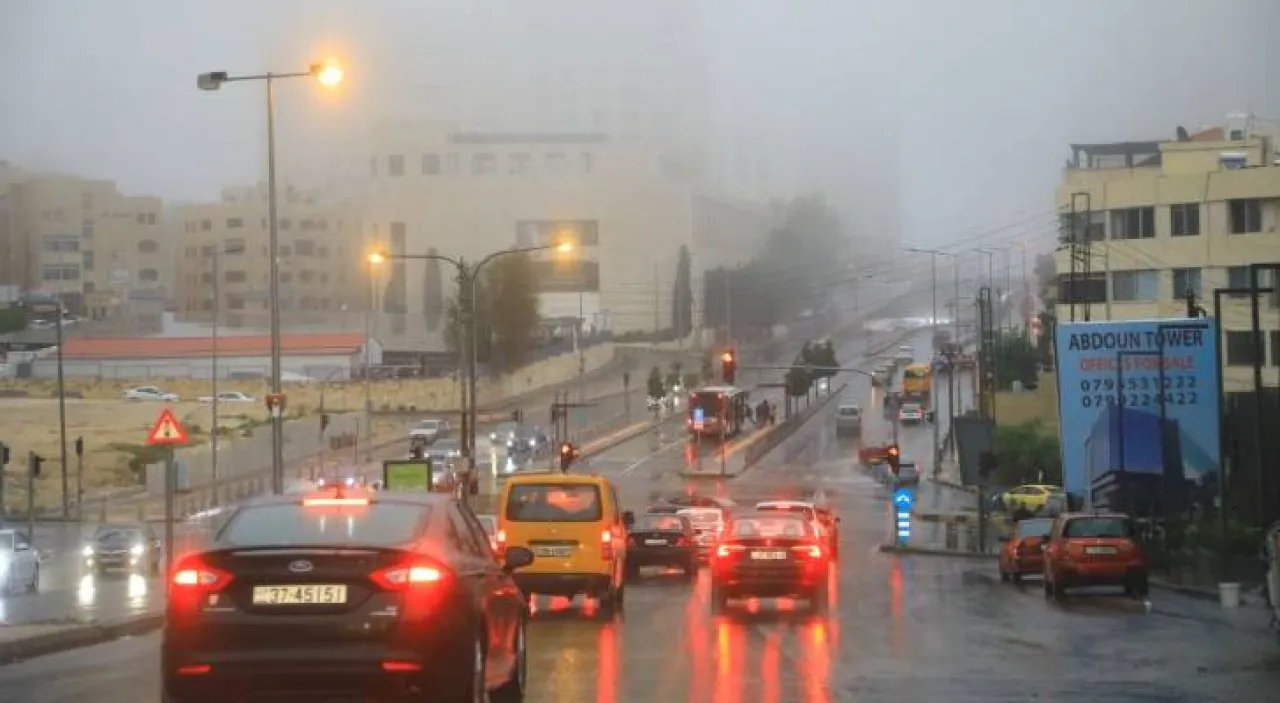
The director of the Meteorological Administration, Raed Al-Khattab, said that the winter season for 2025/2026 begins astronomically with the winter solstice, next Sunday, when the shortest day and the longest night in the northern hemisphere are recorded, while the first of December is considered the beginning of the winter season according to meteorological science.
Al-Khattab explained that the number of daylight hours on the day of the winter solstice reaches 10 hours and 3 minutes, compared to 13 hours and 57 minutes for the night, indicating that this period usually coincides with the start of the winter forty, which is considered the coldest period of the year.
He pointed out that the winter forty contributes about 30% of the total annual rainy season across the Hashemite Kingdom of Jordan, and is characterized by a noticeable drop in temperatures, with the possibility of frost and freezing, in addition to rainfall and sometimes snow, depending on the nature of the influencing weather systems, noting that the last snowfall during the winter forty was in the 2021/2022 season.
Al-Khattab referred to the climatic records at Amman Civil Airport during the winter forty, showing that the average maximum temperature is 13.1 degrees Celsius, and the average minimum temperature is 4.6 degrees Celsius, while the average total rainfall is 78 mm.
He added that the highest maximum temperature recorded during the winter forty was 26.3 degrees Celsius on December 23, 1963, while the lowest minimum temperature was -7.5 degrees Celsius on January 2, 1973, while the highest total rainfall was 215 mm in the 1973/1974 season, and the least total rainfall was 0.6 mm in the 2013/2014 season.
He pointed out that the highest maximum temperature across the kingdom during the winter forty was recorded in Aqaba and reached 31.5 degrees Celsius on January 3, 1959, while the lowest minimum temperature was recorded in Shobak and reached -14 degrees Celsius on January 7, 1992, while the Ras Munif station/Ajloun governorate recorded the highest total rainfall, amounting to 398.8 mm during the 1991/1992 season.