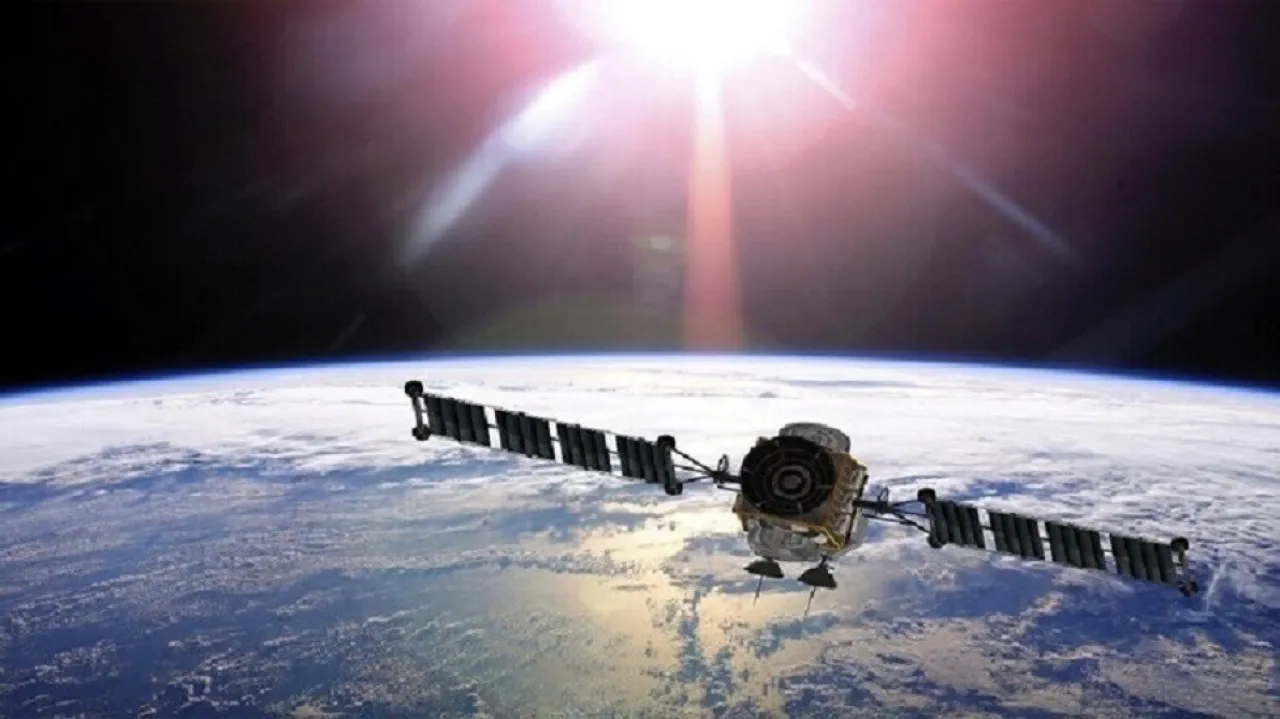
One of the Starlink network satellites operated by SpaceX faced an unexpected technical malfunction that led to it going out of control, and it is now on its way to falling to Earth.
The company announced via the "X" platform on Thursday, December 18, 2025, that the satellite identified by number 35956 experienced a "malfunction" while at an altitude of 418 kilometers (260 miles) above the Earth, resulting in a complete loss of communication with it.
According to the statement, this malfunction caused a leak from the satellite’s propulsion tank, a sudden decline of about 4 kilometers (2.5 miles) in its main orbit, and the release of a limited number of traceable small debris.
The nature of the technical description suggests the possibility of the fuel tank rupturing or some other form of structural damage. Immediately, "SpaceX" commenced close collaboration with NASA and the US Space Force to monitor these new pieces of space debris and track their paths.
To reassure the public, representatives of "Starlink" confirmed that the risk level is low. Despite its malfunction, the satellite is still "largely intact" but in an irregular spin. It is expected to enter Earth’s atmosphere in the coming few weeks and will completely burn up upon contact with the atmosphere.
The statement also clarified that its current path will keep it at a lower altitude than the International Space Station, meaning there is "no risk" to the station or its crew.
The company reaffirmed its commitment to space safety in its statement, stating: "As the world's largest operator of a satellite constellation, we are deeply committed to space safety. We take such events seriously." They added that engineering teams are working swiftly to identify the root cause of the malfunction and address it, and they have already started deploying a software update across the fleet to enhance protection against this type of incident.
This incident occurs as the "Starlink" network continues to grow rapidly, currently comprising about 9300 active satellites, which represent approximately 65% of all operational satellites around our planet. This year alone, "SpaceX" launched 122 missions dedicated to "Starlink" satellites, adding more than 3000 new satellites to low Earth orbit.
It is worth noting that "SpaceX" follows an active policy to manage the end-of-life of its satellites, which are designed to operate for about five years, intentionally removing them from orbit before they lose functionality. The company has also implemented advanced mechanisms to avoid collisions, with "Starlink" satellites executing about 145,000 automatic collision avoidance maneuvers in just the first half of 2025.
However, this incident highlights the increasing challenges in the crowded space environment. Just days ago, on December 12th, the Vice President of Engineering for "Starlink" at "SpaceX," Michael Nichols, revealed an uncoordinated close approach between a "Starlink" satellite and a recently launched Chinese satellite, pointing out that most of the risks in space stem from "a lack of coordination among satellite operators."