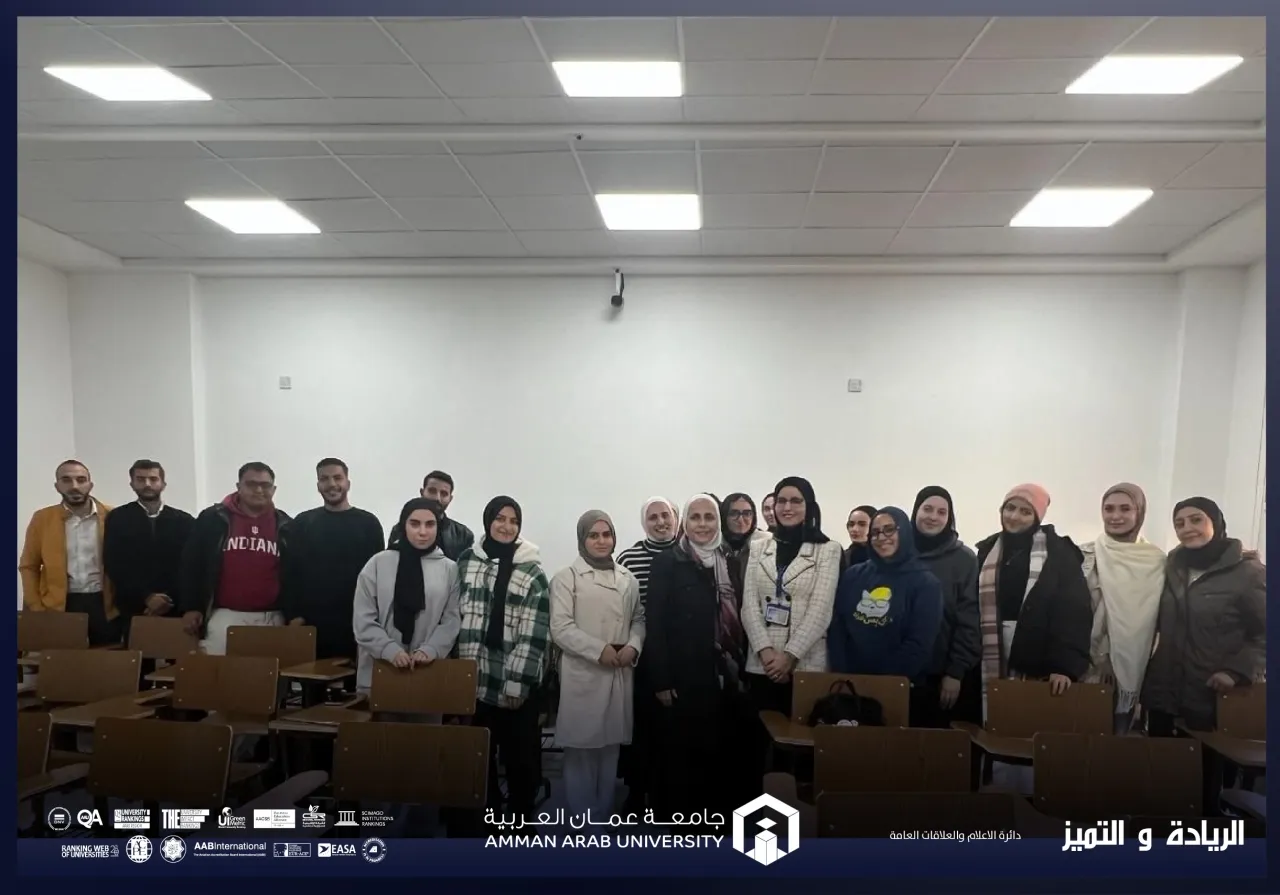
Khaberni - In pursuit of the vision and mission of Amman Arab University to enhance the educational environment that supports creativity and the development of contemporary engineering thought, the Department of Architecture at Amman Arab University held a specialized lecture titled "Sustainability in Islamic Architecture," presented by engineer Manal Qtaishat, General Manager of MIMAR MANAL QTAISHAT. This event is part of a series of scientific activities that the department is keen to organize to connect the students with the concepts of authentic architecture and its modern applications, and to deepen their understanding of global trends in sustainability, and the innovative solutions that Islamic architecture has offered that preceded its era and still inspire contemporary architectural practices.
During the lecture, engineer Qtaishat presented a rich knowledge display, discussing the fundamental principles of sustainability in Islamic architecture, showcasing how traditional architecture utilizes smart elements that ensure thermal comfort and blend with the surrounding environment, such as: manipulation of light and shade in interior spaces, using courtyards and natural ventilation to enhance air quality, and the use of locally sourced environmentally friendly materials, in addition to the aesthetic engineering of decorations that carry a functional dimension, not just an aesthetic one. She highlighted during the lecture several architectural examples from various Islamic periods, explaining how these models can be translated into modern solutions that align with concepts of green architecture and energy efficiency in contemporary buildings.
It should be noted that these lectures are part of a series of activities organized by the Department of Architecture at Amman Arab University to enhance the academic and practical experience of the students, enriching their knowledge with diverse experiences that contribute to building their skills, and empowering them to adopt sustainable solutions that meet future aspirations. The students showed great interaction with the examples presented and exchanged fruitful questions and discussions about mechanisms for integrating Islamic principles into current design projects, and the role of the architect in creating a sustainable urban environment that is based on cultural identity without abandoning modern technologies.