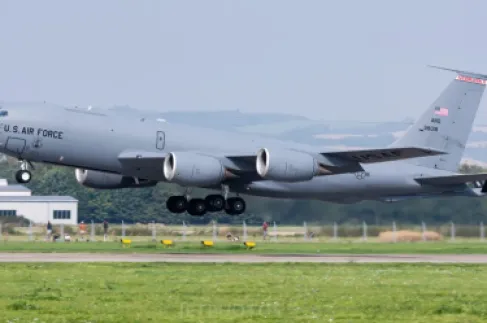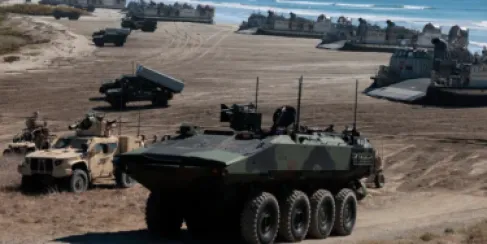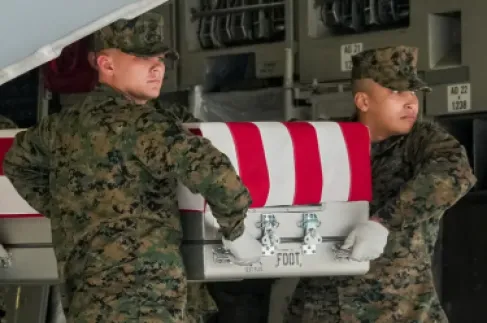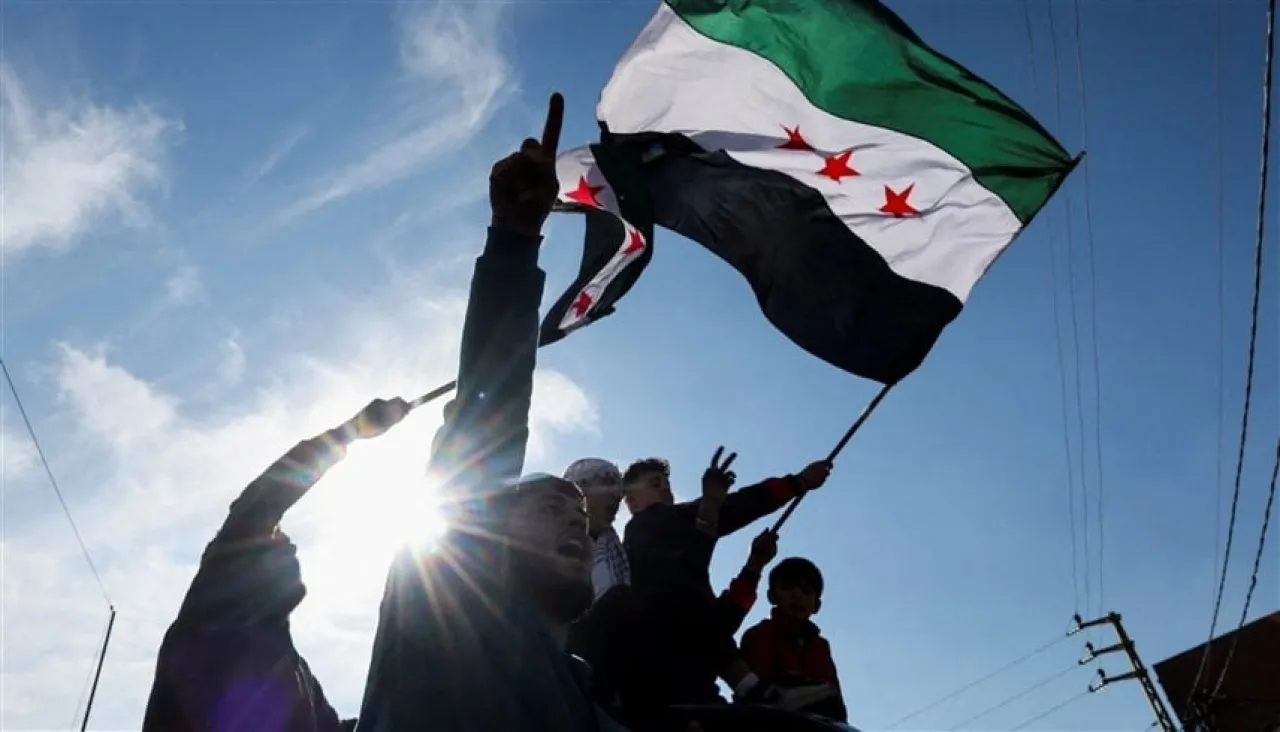
Khaberni - American professor of international relations and strategic analyst Andrew Latham said that the recent killing of American soldiers and contractors in Syria has rekindled a long-ignored fundamental question in Washington: What is the real strategic benefit of continuing the U.S. military presence on Syrian soil?
Latham added that these losses not only reflect the fragility of the mission but also reveal its lack of coherence with core American interests in a phase where international conflict priorities are changing.
Latham, a professor of political theory and international relations at Macalester College and a non-resident fellow at the American research institute “Defense Priorities,” in an analysis published by the “National Security Journal” website, explained that Syria is no longer a pivotal battlefield in the context of great power competition, and that maintaining limited and isolated U.S. forces there exposes soldiers to risks without significant strategic gains.
Regional Power Balance
The writer noted that the power balance in the Arab Mashreq is no longer managed from Washington but is the result of direct interaction between major regional powers, and he added that despite the intensity of this competition, it prevents any single party from imposing total domination over Syria or the region as a whole.
Latham continued that this mutual friction has created a kind of unstructured but effective balance, achieving the minimum of traditional American interests: preventing the emergence of a dominant regional power and stopping the Middle East from becoming an extortion tool against the international system.
Turkey: Curbing Rivals with Self-Driven Motives
The writer explained that Turkey forms a central element in this balance; although officially an ally of the United States, it practically follows a multi-axis policy governed by specific security and historical considerations.
He added that Turkey's intervention in northern Syria has limited the ability of both Iran and Russia to expand their influence westward, even if it does not fully align with the American vision.
Latham noted that Ankara’s complex relationship with Moscow — cooperation on some issues and contention on others — has contributed to keeping Russian influence in Syria conditioned and limited, not absolute nor stable.
Israel: Deterrence Alone Without the Need for U.S. Forces
The writer said that Israel plays a balancing role from another angle, through an ongoing military and intelligence campaign targeting the Iranian presence in Syria. He added that these operations have continued for years, executed independently of any direct American military presence.
Latham pointed out that the strategic impact of these strikes is to increase the cost of Iranian deployment and reduce its ability to turn Syria into a safe strategic depth, serving American interests without the need for U.S. soldiers on the ground.
Iran: Present Influence but Constrained
The writer continued that Iran remains an important player inside Syria, but operates in a highly complex environment, facing pressures from Israel, competition from Turkey, and Russian calculations that do not allow it to move freely.
He added that this overlap is not based on coordination among the rivals but on a clash of interests that imposes practical restrictions on Iranian influence, preventing it from turning into stable or comprehensive control.
A Self-Sustaining Balance Without U.S. Forces
The writer affirmed that the final outcome of this scenario is the emergence of a regional power balance that does not rely on direct U.S. military presence. Each party has enough strength and enough fears to deter others, creating a fragile yet self-sustaining stability.
Latham explained that the continued presence of a small American force in this context does not change the equation but only adds unnecessary risks to the lives of American soldiers.
What Do American Interests Really Require?
The writer said that American interests in the Middle East have always been limited: preventing dominance and ensuring that regional conflicts do not affect the global balance of power. He added that achieving these goals is no longer conditional on American military patrols in the Euphrates Valley.
Latham explained that Washington can protect its interests through diplomacy, intelligence sharing, and building partnerships, without tying its strategic credibility to a fragile and targeted military presence.
Withdrawal: A Better Strategic Option
Andrew Latham concluded that the killing of American soldiers in Syria, despite its tragic nature, should not automatically become a justification for staying. He added that the Middle East, for the first time in decades, is producing a regional balance that restricts all parties without direct American management.
The writer concluded by saying that Syria is no longer an arena defining global power balances, and that the continuation of the U.S. presence there dissipates resources and diverts focus from more crucial arenas such as Europe and the Indo-Pacific region. On rare occasions, he added, a considered withdrawal is the most rational and powerful choice.