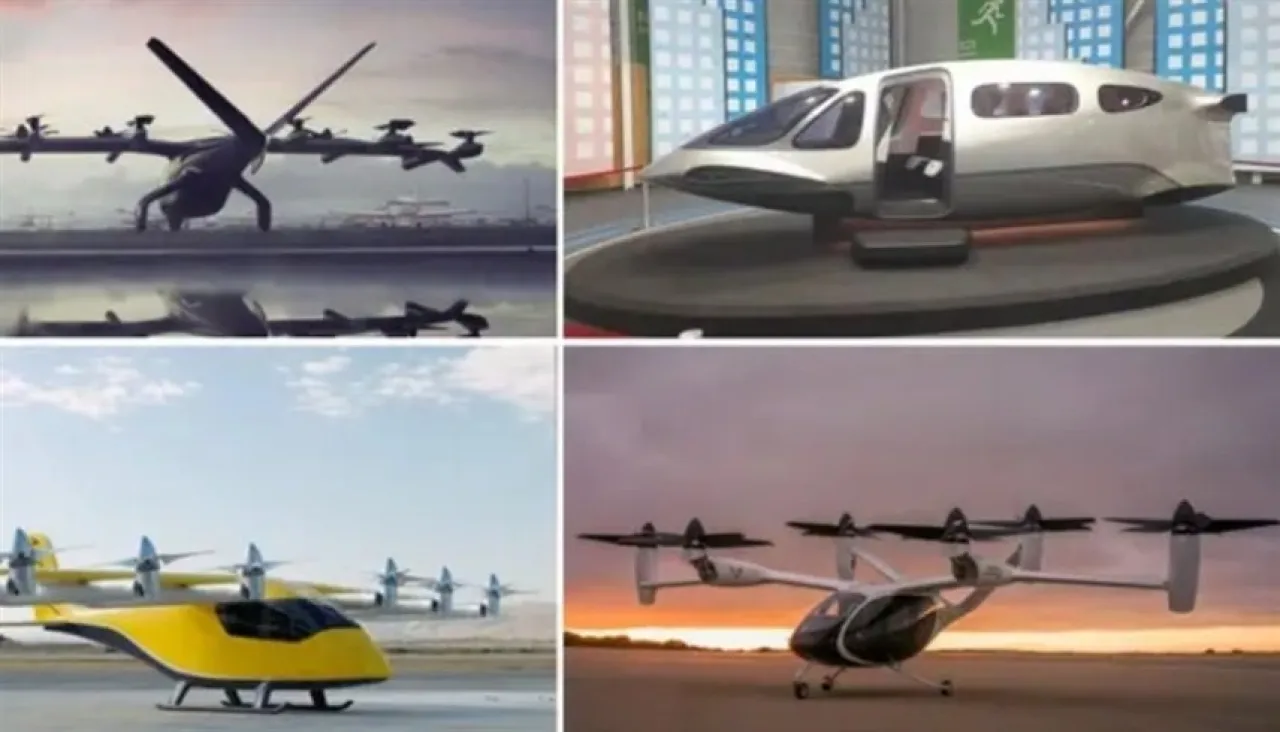
Khaberni - The autonomous air taxi sector is nearing a decisive moment in 2026, with major global companies competing to acquire regulatory certifications and enter into commercial operation, in a transformation considered one of the largest in the history of modern transport.
According to specialized reports, urban air transport is undergoing a qualitative transition from the stage of theoretical tests to actual operation, paving the way to redefine the mobility map within and between cities. This transformation is led by pioneers working on developing infrastructure, building strategic partnerships, and defining regulatory pathways that will shape the future of air transport in the coming years.
This accelerated effort indicates that autonomous air taxis are no longer just a futuristic vision, but a reality that is rapidly approaching implementation.
1- S4 Aircraft | Joby Aviation
Joby Aviation is steadily advancing towards leadership, having entered 54 S4 aircraft into the final stages of obtaining a type certificate from the Federal Aviation Administration (FAA).
The aircraft accommodates a pilot and four passengers, reaches speeds up to 200 miles per hour, with a range of 100 miles including power reserve. It relies on six dual-rotor electric engines, each generating 236 kilowatts/hour, roughly equivalent to nearly twice the power of a "Tesla Model S Plaid".
Joby plans to launch its first commercial flights in Dubai during the first quarter of 2026, before expanding in the United States later that same year. The company achieved a historic milestone in November 2025 by conducting the first direct test flight between two points within the shared airspace of the UAE.
2- Midnight Aircraft | Archer Aviation
Archer Aviation is aiming to launch its operations globally simultaneously, by obtaining American aviation certificates and international regulatory support.
The Midnight aircraft features 12 propellers, accommodates a pilot and four passengers, and can reach speeds of about 240 kilometers per hour, with an operational range of approximately 160 kilometers.
The aircraft set a record by travelling 55 miles in 31 minutes and reaching an altitude of 7,000 feet, reflecting its operational flexibility. Archer plans to start passenger flights in Abu Dhabi in 2026, with expectations for early commercial operations at the beginning of the same year.
3- VX4 Aircraft | Vertical Aerospace
Vertical Aerospace adopts a dual-technical approach by offering fully electric versions and hybrid versions of its VX4 aircraft.
The electric version accommodates 5 to 6 passengers with a range exceeding 100 miles, and the company completed the first phase of flight testing in 2024 with 20 test flights covering 70 test points. The aircraft carries a load of 1100 kg, while the range of the hybrid version extends to about 1000 miles, making it suitable for long-range defense, healthcare, and logistics sectors.
4- Lilium Jet | Lilium
Lilium distinguishes itself from competitors by focusing on regional air transport instead of short urban trips.
The six-seat Lilium Jet uses shrouded fan technology, reducing noise and enhancing efficiency. The company plans to deliver its first aircraft in 2026.
The aircraft reaches speeds up to 190 miles per hour, and its winged and aerodynamically efficient design enhances lift, range, and payload capacity, qualifying it for commercial operation upon obtaining regulatory certification.
5- Sixth Generation of Wisk Aero | Fully Autonomous Flights
Wisk Aero is the only company fully committed to developing fully autonomous passenger flights, through the sixth generation of electric eVTOL aircraft.
The aircraft seats four passengers, has a speed of 120 knots, with a range of up to 90 miles and a flight altitude ranging from 2500 to 4000 feet. The company has conducted over 1600 test flights, making it the largest and most mature autonomous flight fleet in the field.
The design of the aircraft eliminates fuel, oil, and hydraulic systems, reducing failure points and simplifying maintenance, offering a radically different vision for the future of air taxis. A future about to take off
The shift towards commercial operation of autonomous air taxis in 2026 represents one of the most significant transformations in the history of transport, as these five companies, each in their own way, redefine the concept of mobility through autonomous driving, regional transport, and infrastructure integration.
With regulatory bodies advancing in granting certifications, and the rapid construction of global partnerships, it seems that autonomous air taxis are on the right track to changing the way humans move around the world.