Khaberni - Osama Abu Zaid, the Syrian Deputy Minister of Energy for Water Resources, affirmed that Syria and Jordan have embarked on a new phase of technical and institutional coordination, represented by holding specialized meetings that addressed the study of the Yarmouk River basin, and assessing its current water situation in light of the increasing challenges associated with climate changes and the decline in water inputs.
Abu Zaid said on the sidelines of the fourth meeting of the Advisory Committee for Policies and the Administrative Committee for the Blue Peace initiative in the Middle East, held in Beirut, that the bilateral meetings between Jordan and Syria discussed the possibility of redrafting or developing the agreement that regulates the management of the basin in line with the recent climate developments and the new water reality in the region.
He stressed, concurrently, that the existing water agreement between the two sides is still valid and respected by both parties.
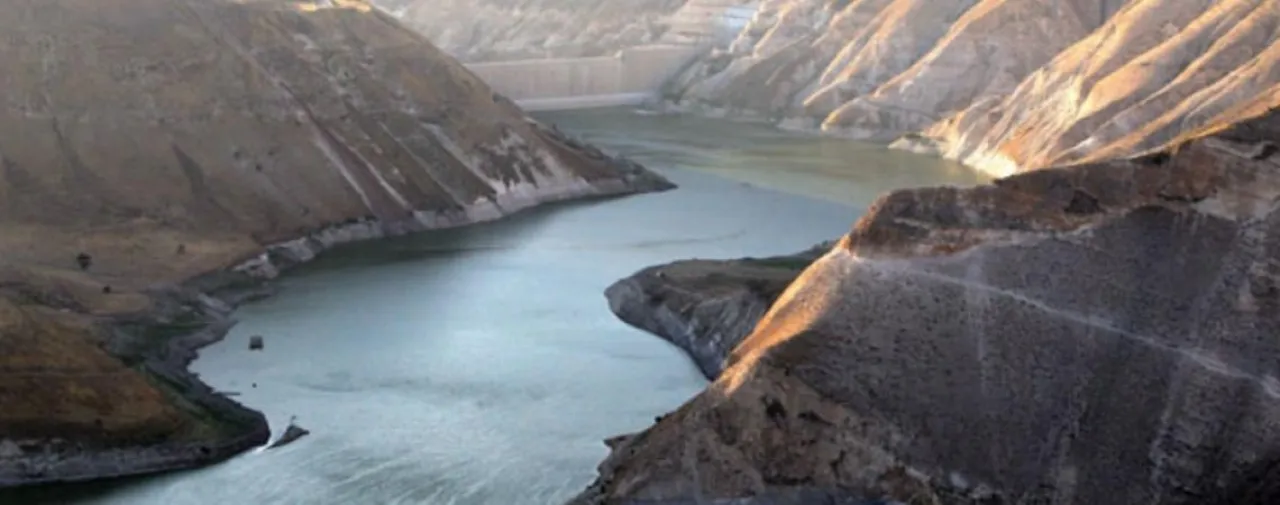
He pointed out that one of the most important outcomes of the current phase is the activation of the joint Syrian-Jordanian technical committee, noting that the Syrian technical delegation made a visit to Jordan that included examining the reality of the Unity Dam, as well as a delegation of Jordanian technicians and specialists visiting Syria, in the context of exchanging expertise and field visits to the conditions of the basin.
He explained that the technical committee held its first meeting in Jordan, while the second meeting was held in Syria, noting that the committee is tasked with annually assessing the technical reality of the Yarmouk Basin, and conducting a periodic evaluation of the water quantities coming in, which enables both sides to determine the water allocations for each country more accurately, especially in light of successive drought years and climate changes affecting the region.
He mentioned the existence of a joint project to re-study the Yarmouk basin through specialized agencies from both the Syrian and Jordanian sides, confirming that there is a direction to support this project through international funding in cooperation with the Jordanian side in order to improve the management of water resources and enhance the water inputs to the basin.
He confirmed that Syria is keen to reassure the brothers in Jordan, emphasizing that the Syrian stance is based on the principle of fair distribution and sharing the damage, adding "We in Syria do not accept to be in a state of water abundance while our brothers in Jordan suffer from thirst; water is a shared resource and the challenges we face are the same."
He indicated that the next phase will witness close cooperation and regular exchange of information and data, alongside the exchange of technical ideas and proposals, which will contribute to the development of the water reality of the Yarmouk basin and ensure the optimal benefit from it for both countries.
In regards to the existing agreement between Syria and Jordan, Abu Zaid explained that the agreement is in place and respected by both parties, confirming that if there is a need to develop some of its provisions to align with the new realities, this will be done through full consensus between both sides and within the framework of joint cooperation.
Abu Zaid stressed that the current coordination reflects a joint will to enhance the Syrian-Jordanian water partnership and to deal with the climate and water challenges with a spirit of responsibility and integration.