Khaberni - Today, Monday, the acting Chairman of the Greater Amman Municipality, Engineer Ziad Al-Reehani, sponsored the launch of the waste sorting project from the source at Sultan Market - Tla Al-Ali area, within the activities of the "Solid Waste Management in Jordan - SOWAS" project, funded by the German government, the European Union, and implemented by the German Agency for International Cooperation (GIZ), in the presence of the city manager, Engineer Ahmad Al-Malkawi, and stakeholders in the municipality.
This project continues the municipality's efforts to develop the solid waste management system, enhance circular economy concepts, and expand the source sorting program according to a phased plan aiming to cover various city areas in the coming years.
Al-Reehani stated that developing environmental services and waste management is a national priority, aligning with the economic modernization vision, national waste sector goals, sustainable development objectives, and adopted global practices, emphasizing the importance of ingraining the sorting culture among citizens.
Meanwhile, the Deputy City Manager for Regional and Environmental Affairs, Engineer Mohammad Al-Faouri, highlighted that the project represents a qualitative leap in improving environmental services by introducing modern technologies in collection and sorting mechanisms and strengthening cooperation with the supporting international institutions, which reflects on enhancing the service quality in Amman Municipality regions.
The Executive Director for Environmental Studies and Projects, Engineer Suha Al-Sheishani, explained that the municipality's expansion in source sorting projects requires developing control tools and operational needs and ensuring the integration of efforts across various departments, confirming that the new project is a basic step toward a more efficient and sustainable waste system.
The Director of the Studies and Environmental Awareness Department, Engineer Basem Al-Hawamdeh, noted that his department handled the technical preparation of the project in cooperation with the German Agency for International Cooperation, starting from field studies and identifying operational needs for the area to designing the operational model and the separate collection program and preparing community awareness plans.
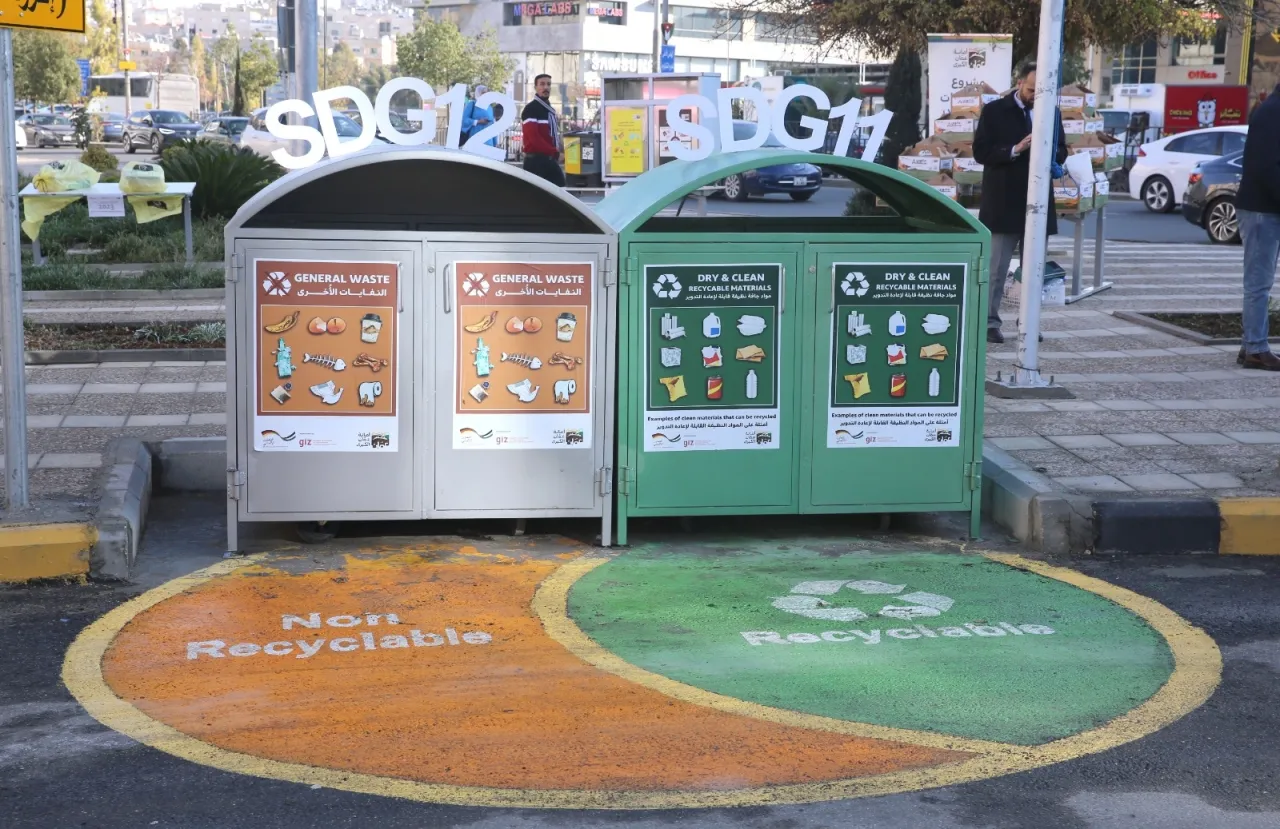
He added that the project includes, for the first time, a trial model of metallic dual-colored bins; green for recyclable materials and gray for remaining waste, introducing a trial separate collection program that contributes to enhancing operational efficiency and reducing operational costs, bolstering circular economy principles in the city.
Al-Hawamdeh praised the continuous efforts of the Studies and Environmental Awareness Department team in project preparation and operation, affirming that the project’s success is a result of institutional cooperation among all relevant entities.
He also expressed his gratitude to the international partner GIZ for its continual technical support and to partners from municipality departments and regions in implementing the project, represented by the Khalda and Tla Al-Ali regions, and the City Services, Traffic Operations, Constructions, Road Maintenance, Social Programs, and Production departments, for their vital role in site preparation and operational readiness support.
The GIZ project team clarified that the existing cooperation with Amman Municipality aims to support the circular economy, reduce waste sent to landfills, lower emissions, in addition to building the capacities of national cadres and enhancing community participation.