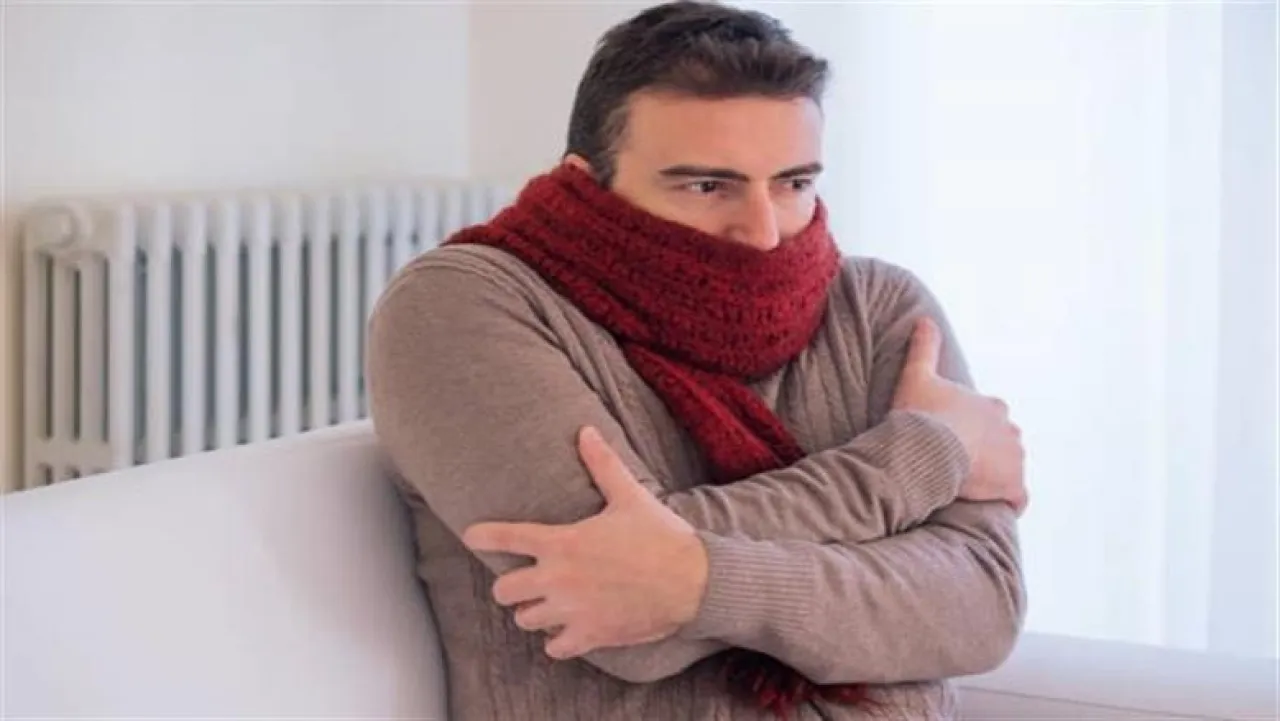
Khaberni - With the onset of winter, many notice that the house seems colder than outside, despite the weather outside possibly being at the same temperature or even colder. This sensation is not merely illusory, but has clear scientific reasons related to how heat is transferred inside homes and how our bodies perceive it.
Every winter the same scene repeats itself: you go outside and find the weather bearable, but as soon as you return home, you feel a much colder chill as if the walls retain the frost. This strange feeling raises a repeated question every winter... Why do we feel colder in the house than outside? Science has a clear answer, revealing that it is not only about temperature but also how our bodies interact with the environment around us, according to "House and Home".
This question repeats every winter.. Why do we feel colder in the house than outside?
1- Our sensation of warmth or coldness depends not only on the recorded temperature but also on how our bodies lose or gain heat. In the street, you might feel relatively warm because the sun shines and warms the air and surrounding objects, whereas inside the house, there are no direct sunlight rays to provide a sense of warmth, making the atmosphere seem colder.
2- The walls of the house themselves lose heat quickly outdoors; even if the air is cold, the walls and floors might have absorbed the sun's heat during the day. However, during the long winter, the house walls gradually cool down and lose all stored heat, making the indoor air lose warmth quicker.
The house is not well-insulated
3- If the house is not well-insulated or if there are gaps in the doors and windows, cold air enters and warm air leaks out quickly, making the feeling of cold inside stronger than outside. Good thermal insulation plays a large role in maintaining the house’s heat constant and its absence leads to faster heat escape, especially at the floors and external walls.
4- The dry air inside the house in winter can increase the sensation of coldness. The indoor air is usually less humid than the outdoor air because heating systems dry the air out, which leads to faster evaporation of moisture from the skin, making the body lose more heat and feel colder.
Also, in the street, even at low temperatures, there is often wind or outdoor activity that creates a sense of movement and change, while inside the house the air is more stagnant, reducing the body's ability to retain warmth.