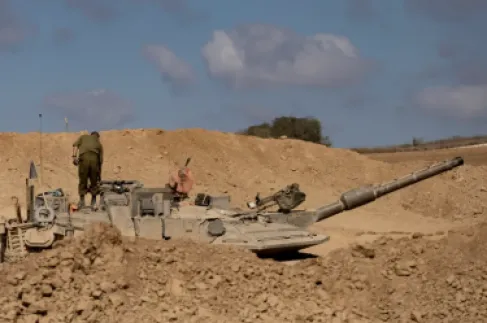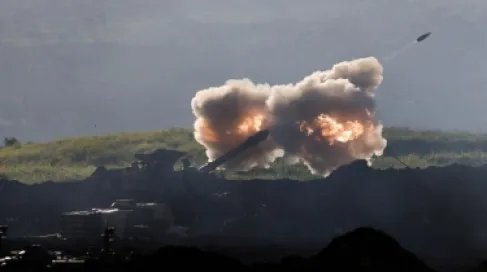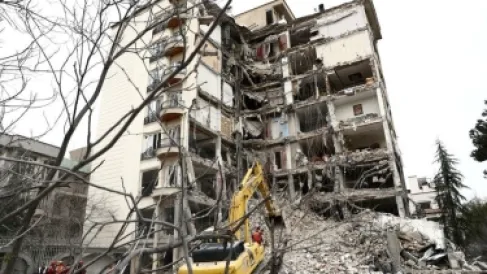
Khaberni - The Middle East faces major challenges in trying to implement the second phase of the peace plan to end the war in Gaza, which includes the disarmament of the Islamic Resistance Movement (Hamas) and the formation of a new governing authority in the sector and the withdrawal of the Israeli army from Gaza Strip.
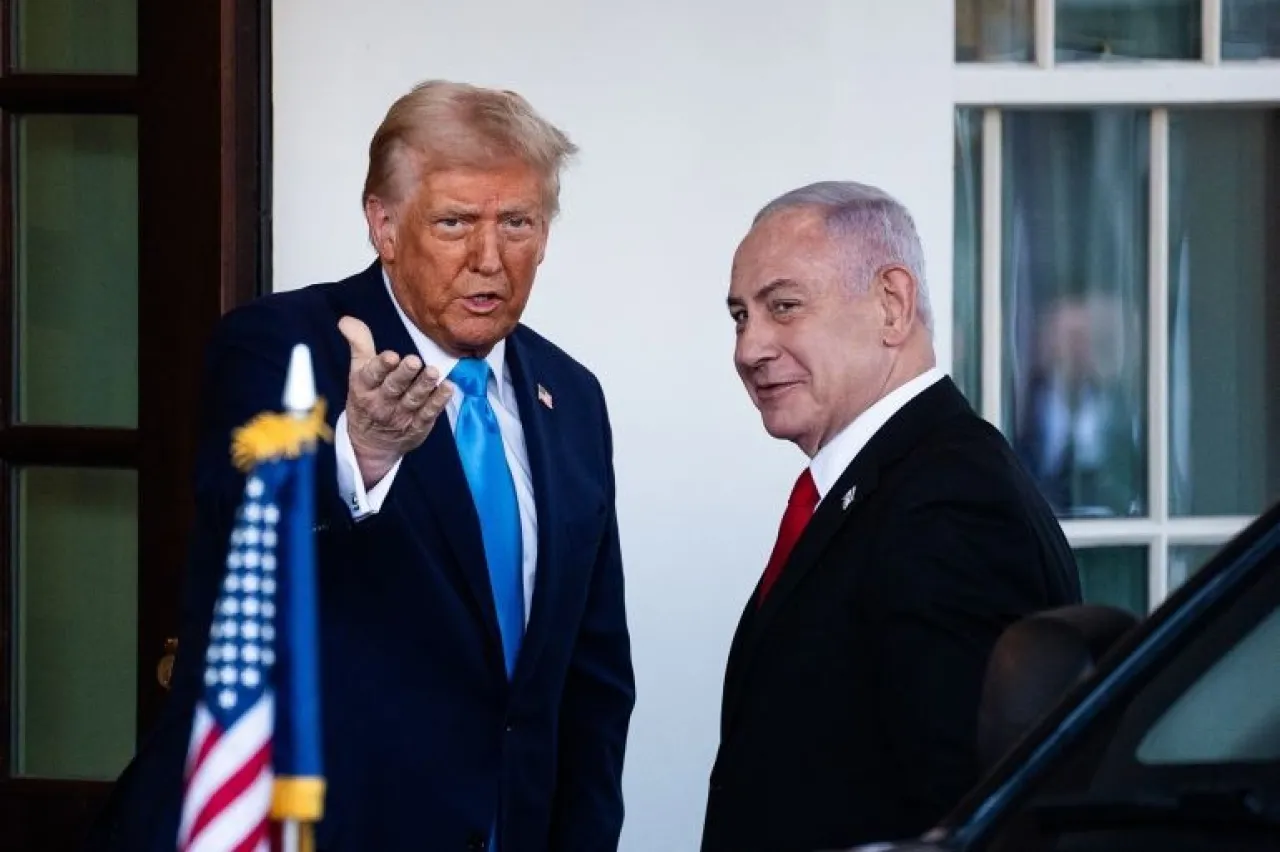
The British newspaper "Sunday Times" published an article by journalist and historian Mark Urban, who specializes in defense and foreign affairs, saying that efforts are being made to define the future of Gaza and who will reinforce control over it before the scheduled meeting between US President Donald Trump and Israeli Prime Minister Benjamin Netanyahu on the 29th of this month.
He added that under current circumstances, the second phase seems impossible for several interwoven and complicated reasons.
Warning of the consequences of stagnation
Urban pointed out that the Prime Minister of Qatar, Mohammed bin Abdulrahman Al Thani, recently warned of the consequences of freezing the Israeli withdrawal, indicating the possibility of renewed conflict.
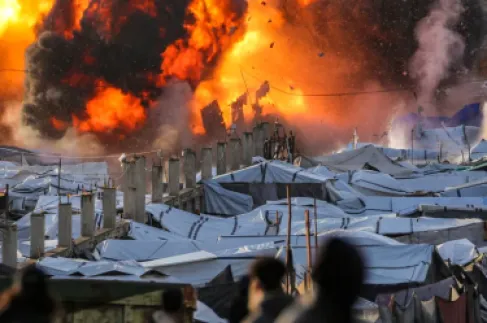
In this context, the writer said that Israel killed a senior commander in Hamas, reflecting the risks of continued stalemate. In contrast, Netanyahu expressed optimism, but Eran Etzion, former deputy national security advisor of Israel, indicated that Netanyahu might be targeting to fail the plan and exploit Hamas's "hesitation" to freeze the process.
Disarming Hamas
Among the major challenges, according to Urban, is the disarmament of Hamas, which indicated that it might give up heavy weapons but refuses to dispose of firearms, adding that Basem Naim, an official in Hamas, referred to the possibility of freezing or storing weapons.
The writer continues to identify the problems surrounding the transition to the second phase, saying that a large part of the problem lies in defining the role of the stable international force and the entities that will oversee the disarmament process.
He attributes to Naim his refusal to the presence of an international force supervising the disarmament of Hamas, asserting that their role should be limited to the borders only to prevent escalation.
Urban sees that Hamas's stance represents a problem that affects the willingness of countries to send forces to stabilize in Gaza, as countries like Azerbaijan, Indonesia, and Pakistan face internal political challenges that prevent them from participating in this mission.
He points to the proposals put forward, including replacing armed Hamas units with a new Palestinian police force, to say that if this force consists of former fighters from armed factions, he doubts its ability to disarm Hamas, adding that this point complicates the situation and makes things more ambiguous regarding the seriousness and sustainability of any future solutions.
Continuation of violence
The writer also says that what increases doubts about the continuation of the ceasefire and the transition to the next phase of the peace plan "is the continuation of the violence between the Israeli army and Hamas since the ceasefire began on October 10th."
He adds that statements from the commander of the Israeli army, Eyal Zamir, have increased the doubts of diplomats, as Zamir suggested that the yellow line might become the new border with Gaza, which means that Israel might keep half of the sector permanently, hindering any progress towards comprehensive peace.
Among the fundamental problems in implementing the plan is Hamas's opposition to the presence of foreign forces, which makes it difficult to attract countries to participate in an international stabilization force. So far, according to Urban, the countries that were ready at first are beginning to doubt their participation because of the undefined terms of the tasks and rules of engagement specific to the international force.
The writer also refers to the internal political factors in the contributing countries such as the United States, United Kingdom, and France, which make it difficult to provide sustained support for any type of peace agreement in Gaza.
He said it is not expected that the United States will provide ground forces despite its attempts to encourage allies by offering an American general to lead the force, due to opposition from Trump's "MAGA" base to foreign wars.