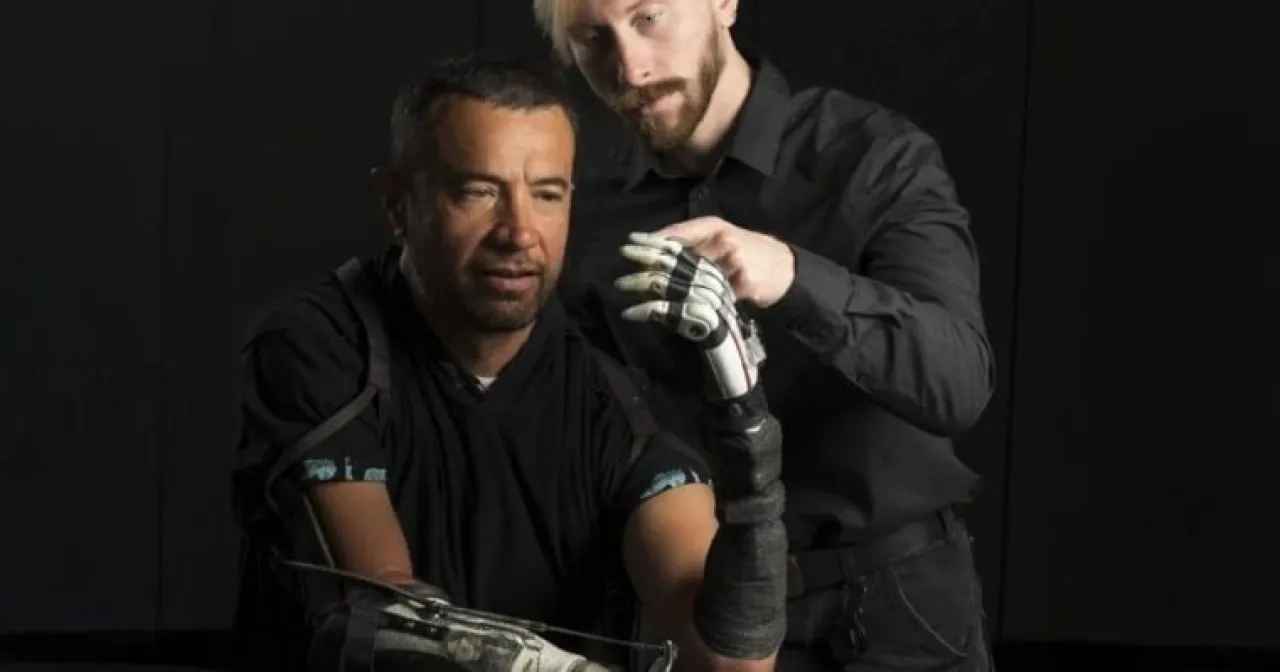
Khaberni - Researchers say that the electronic hand controlled by an artificial intelligence program, yet guided by the amputee, provides the best simulation of a natural hand's skill.
In this new development, the artificial intelligence is pre-programmed to direct the hand to different positions using pressure and proximity sensors.
According to "Health Day", the best way to improve amputees' control of the electronic hand is to grant it autonomous control capabilities.
Lead researcher Marshall Trout, from the neuroscience and robotics lab at the University of Utah, said: "Even though electronic arms have come to mimic life significantly, control over them is still not easy or intuitive."
Trout added: "Nearly half of the users will abandon their prosthetic limbs, often attributing this to poor control and the cognitive burden it causes."
The Challenge of Prosthetic Limbs
Researchers say the problem lies in the fact that a large part of natural hand movement is unconscious and intuitive. There is no need to consciously direct each finger to its correct position to grab a coffee cup, a ballpoint pen, or a bowling ball.
However, robotic prosthetic limbs, whether hands or arms, require this effort from limb amputees, who must consciously think about each finger as they try to grab something, according to the researchers.
To solve this problem, researchers turned to artificial intelligence. They trained it to respond to proximity and pressure sensors in an electronic hand to form specific pre-programmed gripping positions.
Detecting a Cotton Ball
Researchers say the pressure sensors are so precise that they can detect an almost weightless cotton ball falling on them.
Meanwhile, proximity sensors help each finger "see" the object in front of it, which allows the artificial intelligence to form the grip.