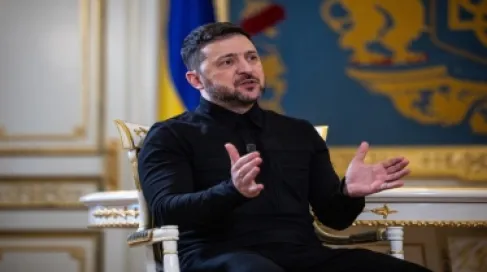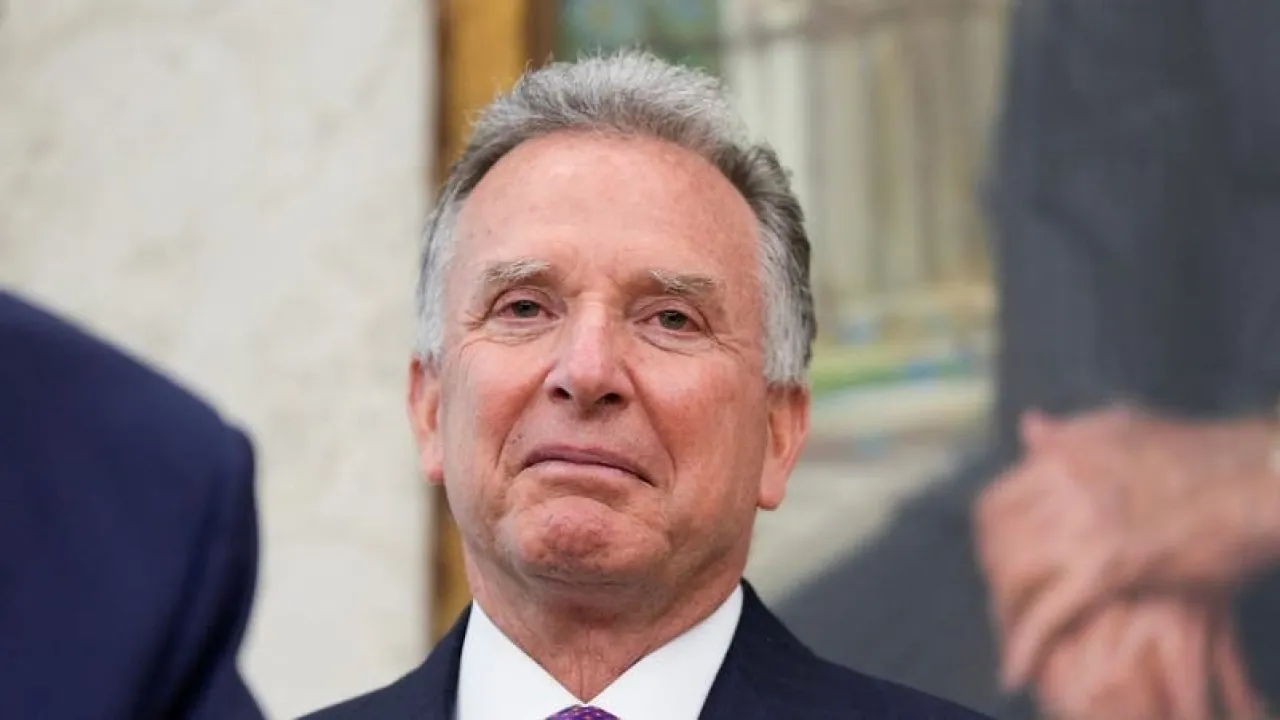
Khaberni - The White House announced on Friday that Steve Witkoff, special envoy for US President Donald Trump, will meet with Ukrainian President Volodymyr Zelensky and a number of European leaders in Berlin at the end of this week, amid Washington's efforts to end the war in Ukraine.
A White House official confirmed to Agence France-Presse what The Wall Street Journal reported about Witkoff's meeting with Zelensky and European leaders at the end of the week to discuss peace negotiations.
Zelensky had previously made a "lengthy" phone call with Witkoff and President Donald Trump's son-in-law Jared Kushner, as well as the Ukrainian negotiation team in Florida.
The German government announced on Friday that Berlin would host the leaders on Monday.
In the meantime, the European Union agreed on Friday to indefinitely freeze the assets of the Russian Central Bank deposited in Europe, removing a major obstacle to using these funds to support Ukraine in its war with Russia.
The European Union is seeking to ensure continued financing for Kyiv during the war, as it considers the Russian military operation in Ukraine a threat to its security.
For this purpose, the bloc intends to employ part of the Russian sovereign assets frozen following the Russian operation in Ukraine in 2022.
The first step, which was approved by the European Union countries on Friday, is to freeze 210 billion euros (246 billion dollars) of Russian sovereign assets as long as necessary, instead of voting every six months on an extension of the freeze.
This step would deprive Hungary and Slovakia, which have closer relations with Moscow compared to other EU countries, of their right to object to the extension of the freeze in the future, which could force the European Union to return the funds to Russia.
The indefinite freezing of assets aims to facilitate convincing Belgium to support the European Union's plan to use the frozen Russian funds to grant Ukraine a loan worth up to 165 billion euros to cover its military and civil budget needs for 2026 and 2027.
Ukraine will only repay the loan when Russia pays war reparations to Kyiv, making the loan effectively a pre-grant financed from future Russian compensation payments.
The European Council is scheduled to meet on December 18 to finalize the details of the compensation loan and resolve remaining issues, which include providing all EU governments with guarantees to Belgium that it will not bear any financial consequences alone if Moscow wins a potential lawsuit.
The German government stated that Ukrainian President Volodymyr Zelensky will visit Berlin to hold talks with Chancellor Friedrich Merz on Monday before joining leaders from Europe, the European Union, and NATO.
European diplomatic sources stated that Germany sees no alternative to the compensation loan and will provide guarantees worth 50 billion euros.
Denmark's Finance Minister Stephanie Loos, whose country currently holds the rotating presidency of the European Union, told reporters that "some concerns" still need to be addressed, but we hope to be able to pave the way towards a decision to be adopted by the European Council next week.
Valdis Dombrovskis, European Commissioner for Economic Affairs, stated that strong guarantees for Belgium are being put in place, adding at a press conference "on the Commission's side, we are open to further work to consider how to accommodate Belgium's concerns, and this effort is currently ongoing".
On his Facebook account, Hungarian Prime Minister Viktor Orban expressed his belief that the European Union's move to indefinitely freeze Russian assets will cause irreparable damage to the bloc, asserting that Hungary will do its utmost "to restore legal order".
On the other hand, the Russian Central Bank stated that the European Union's plans to use its assets are illegal and it reserves the right to use all available means to protect its interests.
The bank said it would sue the Brussels-based securities services company "Euroclear," which holds 185 billion euros out of the total value of assets frozen in Europe, in a court in Moscow due to what it described as harmful procedures affecting its ability to dispose of its money and securities.