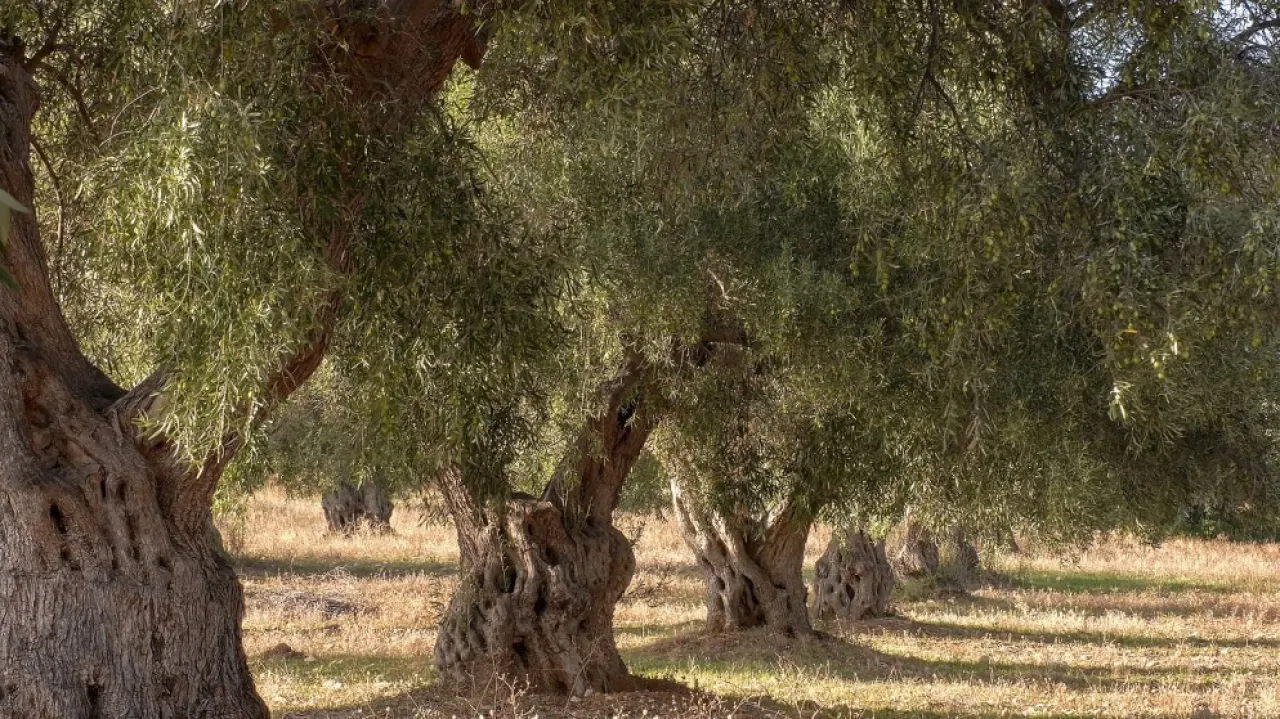
Khaberni - The Director of the Heritage Department in the Ministry of Culture, Aqil Al-Khawaldeh, described the listing of the Mehras olive tree on the UNESCO Intangible Cultural Heritage List as a Jordanian celebration for its expected economic, cultural, and social impact.
Al-Khawaldeh added in a statement to "Al-Mamlaka" on Thursday, that the Mehras tree represents a model that expresses the identity of the Jordanian people, through similarities between them such as clinging to roots, authenticity, and the tree's resistance to all weather conditions, particularly dry ones.
He pointed out that the Mehras is one of the most important varieties of olive trees globally, distinguished by its thousands of years of longevity and consistent high-quality oil yield.
Al-Khawaldeh confirmed that agricultural research centers and the Ministry of Agriculture monitor the localization of trees in Jordan, especially in the northern and southern regions.
He explained that the Mehras olive oil product is very distinctive and is a premium brand.
The Mehras is also known by other names like Kafri, Roman, or Rimmi, as confirmed by Al-Khawaldeh.
Al-Khawaldeh continued stating that "the inclusion of the Mehras increases the focus on this type globally and enhances the interest of agricultural research centers...".
He added, "Rooting the Mehras tree increases the Jordanian connection to their identity and doubles the community's coherence with the land."
The International Governmental Committee for the Preservation of Intangible Cultural Heritage, affiliated with UNESCO, announced during its meeting in New Delhi, India, on Wednesday, that the Mehras olive tree was listed as a Jordanian element on the Representative List of Intangible Cultural Heritage, along with other joint Arab-Jordanian files.
According to a statement from the Ministry of Culture, the Minister of Culture Mustafa Al-Rawashdeh stated that the inclusion of the Mehras tree as Jordanian heritage linked to cultural practices, constitutes a historical achievement and crowning of ongoing national efforts, and a testament to the depth and beauty of our intangible cultural heritage that forms our identity and the pulse of our daily lives, highlighting that registering the Mehras tree as a unique Jordanian element highlights the richness of our local practices rooted in wisdom, hospitality, and community engagement.
Al-Rawashdeh, in the statement, mentioned that the "Mehras" file serves as a tourist attraction, widely opens readings into this blessed tree which also adds to the cultural aspect an important economic source, urging the presentation of more of our heritage and files to the world due to the richness of Jordan's heritage and culture.
The Minister of Culture expressed his gratitude to the national entities that collaborated with the ministry in preparing this file, praising the role of the Ministry of Foreign Affairs and Expatriate Affairs, the Ministry of Agriculture, the National Center for Agricultural Research, the Jordanian Permanent Delegation to UNESCO in Paris, the Jordanian National Committee for Education, Culture and Science, Mehras Cooperative Society, the Jordanian Association of Olive Oil Exporters/JOPEA, the Jordanian Sensory Evaluation Association for Food, the General Union of Olive Oil Mills and Producers in Jordan, Jordanian Women's Network for Olive Oil, the Traditional Craftsmen Association, and the Jordanian academics and experts.
It is noted that the Mehras tree is a venerable origin, having maintained its entity through the eras, and is a fundamental element in the old pastoral agricultural civilization. This tree is distinguished by its adaptation capabilities to climate changes and harsh environments, maintaining a distinctive oil quality, offering up to 30% oil content in its olives, one of the highest among olive varieties worldwide. The oil is notable for its unique composition of fatty acids with a high percentage of oleic acid, in addition to the sensory properties and distinctive fruity flavor of Mehras oil specifically.
The Mehras tree is also one of the oldest genetic lineages of olives in the Mediterranean basin. Analysis of the genetic map of the Mehras has shown it to be genetically closest potentially originating the olives of Spain, Italy, and Cyprus, all of which are in the same genetic group as the Mehras, according to research findings conducted by the National Center for Agricultural Research in collaboration with two Jordanian universities confirming the centrality of olive origin in Jordan through the ages.
"Mehras" is abundant in the Maysir area in Al-Hashimiya town, belonging to Ajloun Governorate, named Mehras likening the old big camel, which crushes the path as it walks, and it is also called the Roman in the areas it exists in Tafilah, Jerash, and Wadi Rum, and is known as Kafri tree and the vintage in areas where it exists in Irbid Governorate.