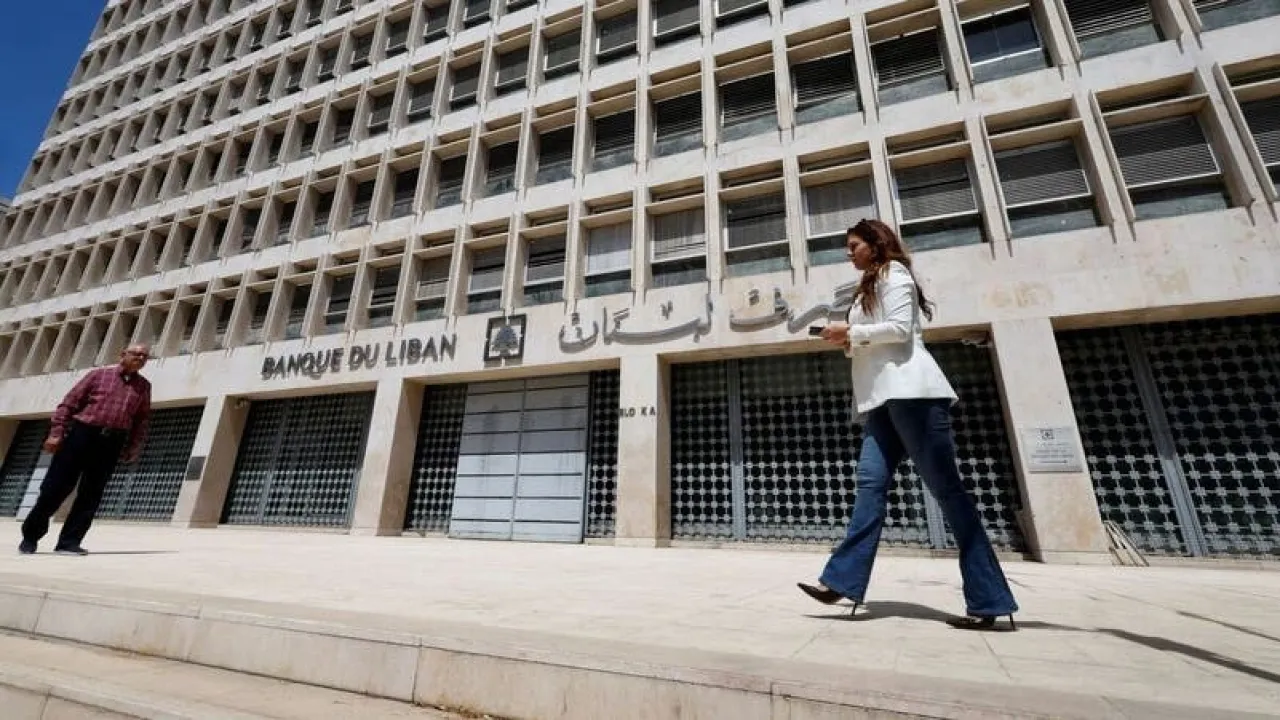
Khaberni - In a judicial development that could pave the way for understanding the reasons behind the "wasting" of depositors' money, the Lebanese Public Prosecutor for Financial Affairs, Judge Maher Shaito, in a letter sent to the Governor of the Central Bank, Karim Said, on November 18, requested a detailed statement of the bank account movements of the bank managers.
This letter comes in the context of "preliminary investigations conducted by the Financial Public Prosecution regarding suspicions of criminal activities, including banking offenses," according to Shaito.
In this context, a judicial source explained to "Alarabiya.net" today, Wednesday, that the request includes the bank accounts of current and former heads and members of the boards of directors of commercial banks in Lebanon, and transfers from the country abroad from July 1, 2019, until December 1, 2023.
The source also noted that "the Bank of Lebanon circulated the letter to the banks on Tuesday, obliging them to respond," emphasizing that the letter submitted by the Public Prosecutor for Financial Affairs was in accordance with the law, and therefore the banks' response must also be according to the law.
Financial Gap Law
The Lebanese government is soon to discuss the "Financial Gap Law" project, which determines the value of losses, amounting to about 80 billion dollars representing bank placements at the central bank, against the total of detained deposits belonging to approximately a million accounts owned by residents and non-residents individuals, guarantor funds, professional associations, institutions, and companies.
In this framework, the Prime Minister, Nawaf Salam, during his meeting with the Head of Bilateral Affairs and Company Internationalization at the General Directorate of Treasury of the French Ministry of Economy and Finance, Magali Sesana, yesterday, said that the drafting of the law is being coordinated with various concerned parties, aiming for broad consensus to ensure a solid foundation for its proper implementation.
Salam also emphasized "full commitment to protecting depositors' rights and preserving their interests, and on the other hand, working to establish a sound banking sector that enhances transparency and compliance with international standards, contributing to economic growth in Lebanon."
However, the judicial source pointed out that "these financial investigations and the Public Prosecutor's letter for Financial Affairs have no relation to the 'Financial Gap Law', but rather are a continuation of investigations that the Public Prosecutor for Financial Affairs began months ago regarding financial suspicions, at the request of several depositors whose funds dissipated in the banks."
Deposits Recovery Fund
In this context, a member of the "Lebanese Forces" bloc and member of the Finance and Budget Committee, Deputy Razi Al-Haj, told "Alarabiya.net" today, Wednesday, that if the judiciary can find out how the funds were seized and smuggled illegitimately, they should be returned to what is known as the "Deposits Recovery Fund".
Al-Haj explained that "what the Lebanese judiciary has done in this area comes in the context of following up on cases related to suspicions of money laundering or corruption. As long as banking secrecy is lifted before all regulatory and judicial bodies, it has the right to do so."
He also emphasized that "holding all responsible for the previous phase accountable is capable of recovering the deposits, part of which dissipated due to the monetary policy that was followed and the financial policy (budget deficit), in addition to corruption and manipulation of accounts."
It should be noted that for 6 years, depositors in Lebanese banks have been suffering from "detention" of their savings, while enduring direct and indirect deductions in implementing partial withdrawals, while no properties or funds of any of the bank owners, board members, or managers have been seized or prosecuted for squandering people’s money.