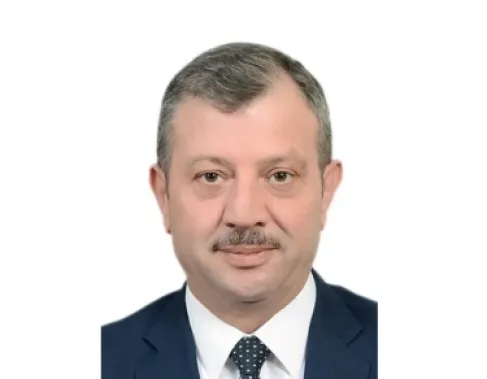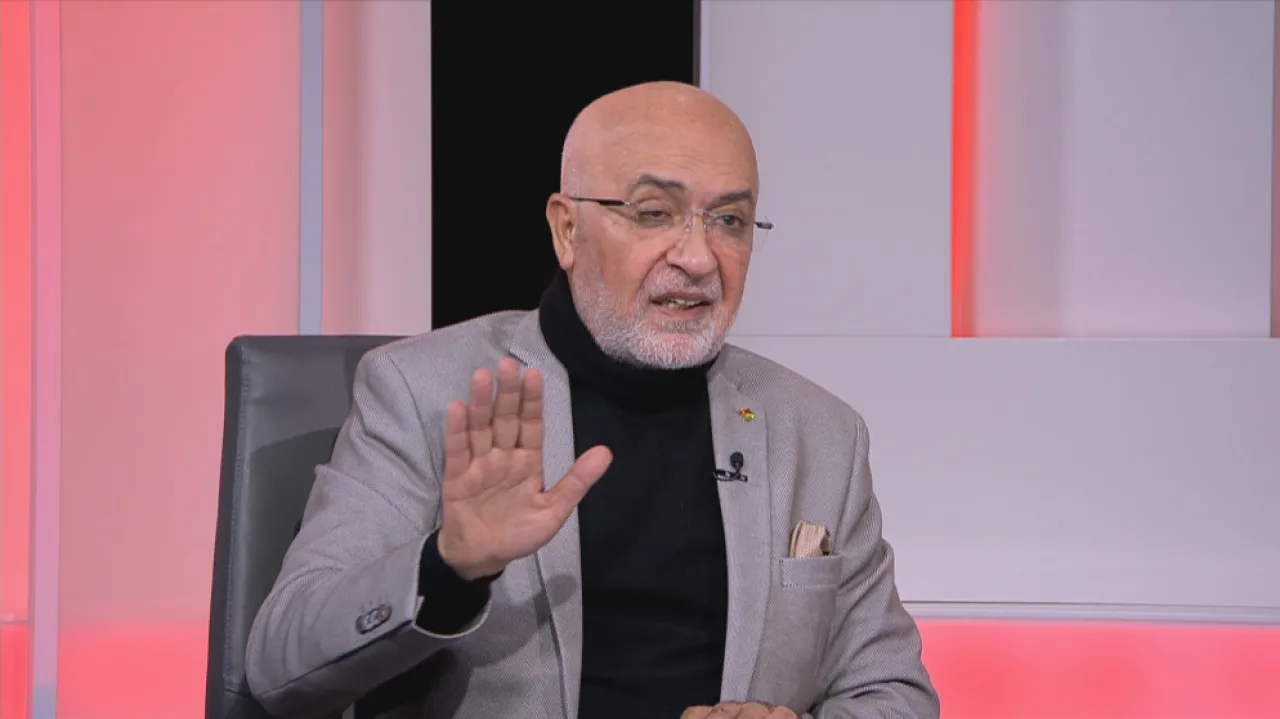
Khaberni - The head of the board of commissioners of the Independent Election Commission, Musa Al-Maaytah, stated that the new party law came with a clear reformist spirit that enhances good governance within parties, and emphasizes the necessity of their adherence to the constitution and the law, noting that the commission is the legally authorized entity to license parties and monitor their compliance with legislation and their announced programs.
This came during his sponsorship of the activities of the national conference “Jordanian Youth in Political Modernization: Young Parliamentarians as a Model,” organized by Al-Hayat Center - Rased, supported by the European Union at the University of Jordan on Wednesday.
Al-Maaytah explained that the current legislations include explicit texts that protect party members from any violations of their legal and constitutional rights, and prevent any official or unofficial entity from targeting them, including students within universities, while guaranteeing their right to resort to the competent judiciary when necessary.
He pointed out that the establishment of parties must be based on citizenship and equality, without allowing the creation of parties on religious, sectarian, ethnic, or factional grounds, which directly contradicts the principles of the constitution.
He indicated that the rectification of the parties' status in the previous phase did not witness sufficient review of their internal systems due to time constraints and focus on preparing for the elections, noting that the commission issued executive standards in April 2025 that ensure internal governance, including the election of leadership bodies, the determination of the term of the Secretary-General, and the formation of a neutral party court to resolve disputes.
Al-Maaytah stated that some parties violated these standards, as the Secretary-General combined executive and judicial powers within the party, which does not align with the requirements of democratic work, noting that the commission asked those parties to rectify their situation in accordance with the legal texts.
He affirmed that the commission was keen to conduct an extensive dialogue with the parties before issuing the official documents related to the standards, to ensure participation and avoid the idea of imposing instructions by force, explaining that the vast majority responded, and made the necessary amendments, while the dialogue is still ongoing with two or three parties to complete full compliance.
Al-Maaytah added: “We are facing about seven months of dialogue, and three months of official correspondence, and the dialogue continues since June with all parties, from the far right to the far left.”
He emphasized the importance of the role of youth in demanding the enhancement of the rule of law within party work, asserting that party life is a sensitive business that cannot succeed without adherence to the law and the constitution.
Al-Maaytah concluded his remarks by affirming the commission's commitment to applying the law fairly, saying: “Parties demand the state to apply the law, and they must in turn commit to it. The rule of law must be the unifying principle for everyone, not just a tool used according to convenience.”