Khaberni - A report from the "New York Times" stated that since Israel's withdrawal from parts of Gaza in October under a ceasefire agreement, Hamas has quickly moved to "fill the vacuum," and is "building its strength day by day".
According to the "New York Times", quoting "local businessmen", Hamas's police forces have returned to the streets once again. Its fighters executed those considered by the Palestinian resistance as traitors, and its officials imposed fees on some expensive goods imported into Gaza, according to local businessmen, while Ismail Al-Thawabta, the general director of the Government Media Office in Gaza, denied that the Hamas government collects any taxes from the imported goods.
Despite the killing of top Hamas leaders and thousands of fighters, a severe depletion of the movement's arsenal, and its control now over less than half of the territories in Gaza, the newspaper reported that Hamas managed to reaffirm its authority in Gaza, according to Israeli security officials and an Arab intelligence official, who spoke on condition of anonymity to discuss internal assessments.
Shalom Ben Hanan, a former senior official in the Shin Bet, Israel's internal intelligence agency, stated: "Hamas took a strong hit, but it was not defeated". He added: "It still exists".
Hamas came out of the war with a foundation it can build upon, where Ben Hanan, who receives briefings from Shin Bet leadership, said that despite the dwindling ranks of Hamas, official estimates indicate that 20,000 fighters are still remaining.
In this regard, Brigadier General Erez Winner, who held a senior position in the Israeli army until March, stated: "Hamas quickly replaced the leaders who were killed in the war".
Israeli and Arab officials confirmed that the movement has many places to hide and store weapons, given that more than half of the underground tunnel network remains intact
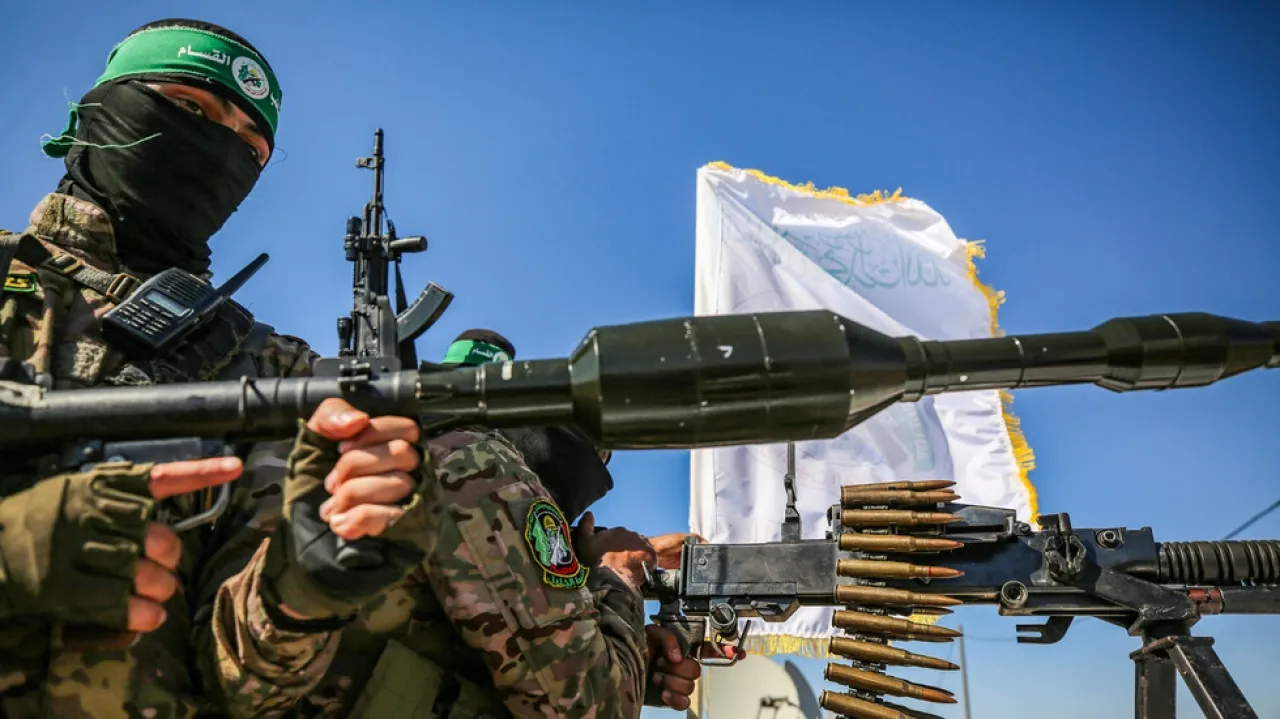
Hamas still runs the central governmental agencies in Gaza, including security devices, according to Ben Hanan. Its missile supply has dwindled, but its members still possess light weapons, such as automatic rifles, RPGs, and mortar shells.
The "New York Times" reported from residents, that Hamas operatives are running checkpoints in parts of Gaza and are questioning and detaining people. They pointed out that Hamas police prevented people from attempting to steal from aid trucks and abandoned homes.
For Hamas, giving up all its weapons would be tantamount to abandoning a fundamental element of its identity: the ability to resist Israel. On this, Wasim Afifa, a Palestinian analyst and former executive director of Al-Aqsa Channel affiliated with "Hamas", commented that members of "Hamas" view their weapons as necessary for self-defense, besides their ideological attachment to them.
In this context, Ben Hanan, the former official at Shin Bet, warned that Hamas could pose a "threat" again in the future, if Israel becomes complacent about the movement.
He believed, "If Hamas continues to control parts of Gaza and wants to rebuild its capabilities, it will find a way to rebuild them".
He concluded, "The next battle could be in 10 or 20 years, but it could be much worse than October 7th".