Khaberni - CRIF Jordan, a leading credit information company, organized a specialized workshop over the course of Tuesday and Wednesday, hosted graciously by the Amman Chamber of Commerce.
This workshop was organized to enhance communication with subscribers and keep up with developments in the credit sector, especially in light of legislative changes and rapid digital developments.
Representatives of banks, financial institutions, non-banking institutions, and relevant regulatory bodies participated in the event, reflecting the importance of the topics discussed and the various sectors' commitment to adhering to best practices in the field of credit information.
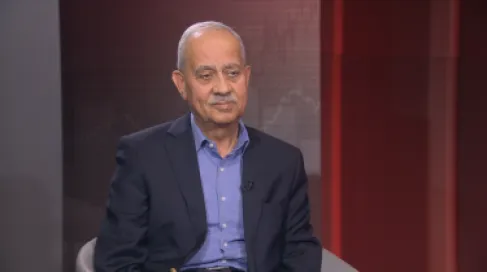
The workshop was inaugurated by Dr. Ahmad Amoudi, the General Manager of CRIF Jordan. In his opening speech, he welcomed the attendees, affirming that their presence was a testament to the growing interest in credit information and the development of its services, pointing out that partners from banks and financing institutions have always been a fundamental pillar on which CRIF Jordan was built, as they are the main providers of data, while the company's role is confined to offering the technical and technological aspect and processing the data to ensure the accuracy of results and continuity of operations.
He emphasized that the workshop addresses these variables in detail, alongside showcasing the new services launched by the company during the past period, listening to feedback from partners and users, and tackling the technical challenges they face, highlighting that continuous improvement of the credit process requires direct interaction between the company and the data-providing and using entities.
Amoudi expressed his gratitude to the Central Bank of Jordan, represented by His Excellency Dr. Adel Sharkas and his team, for their ongoing support. He also appreciated the Amman Chamber of Commerce for hosting the workshop and its constant support to the company over the years, noting that the chamber has become a primary connecting link gathering a large number of financial institutions in one place.
He explained that the legislative and tech environments are seeing rapid changes that require keeping up with and developing the tools and systems used in the credit information sector.
In this context, Amoudi highlighted the most significant legal changes that came into effect in the year 2025, including the Personal Data Protection Law, which came into effect in March, the lifting of judicial protection on checks and the non-imprisonment of the debtor that started in June, and the requirement to license any institution that offers credit starting from July, whereby no entity that is not licensed may provide financing or credit within the kingdom.
Amoudi pointed out that these changes have directly impacted the financial institutions' ability to access credit-related information, as it's no longer legally possible to obtain some of the data that was previously available, which imposes on the company the need to find alternative solutions and tools to bridge the information gap and ensure the continuity of accurate and efficient credit assessment operations.
He mentioned that lifting the judicial protection on checks has limited the execution tools for some sectors that relied on personal documents, while its impact remained relatively limited on banks due to their advanced systems of guarantees and mortgages.
Amoudi reviewed the company's journey of expansion over the past ten years, noting that it started by including the entire banking sector, followed by the microfinance sector which forms the second largest base of clients, then CRIF Jordan expanded to include non-banking financial institutions such as leasing companies and credit card issuers, and eventually reaching other sectors more linked to financing.
He explained that the telecommunications sector is still the least contributing to data due to specific challenges in obtaining permission from telecom company customers to enable data provision and inquiries at the credit information company. However, companies are currently working to modify subscription models to secure pre-approvals, which will gradually increase the database in this sector.
He also mentioned that several non-banking financing companies have recently applied for licensing from the Central Bank, and including them in the system as soon as they obtain the license will lead to complete data coverage at the kingdom's level.
Amoudi revealed that the accuracy rate of credit inquiries in Jordan is among the highest globally, currently at about 91%, expecting it to rise to 93-94% in the upcoming period, after including all licensed institutions and sectors involved in data, including government funds that are currently making efforts to include their data within the inquiry system.
Regarding the insurance sector, Amoudi stated that bringing the insurance sector under the Central Bank's supervision recently opens a new stage of cooperation, and it is hoped that insurance companies will benefit from CRIF Jordan's services in the near future.
Amoudi concluded by emphasizing that the workshop is interactive and not training-oriented, aiming to facilitate direct dialogue with the attending entities regarding the new regulatory changes, their impacts, available solutions, and the path that the company will take in the coming years.
He also honored the Director of the Amman Chamber of Commerce, Ghalib Hijazi, in appreciation for hosting the workshop and the chamber's continuous support for the company's operations.
Amoudi: CRIF Jordan expands its digital services to enhance financial inclusion and digital transformation
Amoudi added, despite the challenges posed by digital transformation processes, they represent an opportunity to enhance the public and financial institutions' confidence in the credit information system and to support the legal infrastructure behind it.
He reviewed CRIF Jordan's efforts in digital transformation of its services and the new initiatives that have been recently introduced, where the range of digital services of the company has been expanded as it provided the digital credit report through bank phone applications, in addition to the official CRIF Jordan app, along with the "Sanad" government app, which contributed to enhancing geographic availability and achieving digital inclusion on a broader scale as a new service available on the Sanad app called (My Rating) was unveiled, allowing citizens to obtain their personal rating score issued with a Quick Response (QR) Code, through which the authenticity of the report can be verified through the Sanad app.
He emphasized the importance of integrating alternative data from non-banking sectors into the credit reporting system, which includes data such as commitment records and bills from electricity and water companies and data from judicial decisions among other data that reflect the financial credibility of individuals and companies.
He explained that expanding coverage to include these sources provides a more comprehensive picture of customers' financial behavior, especially for those who might not have a sufficient banking credit history. Through alternative information – such as regularity in paying utility bills or rents – a more accurate credit rating can be formed for a larger segment of society, which helps enhance financial inclusion and enable more individuals to access financing.
New Legislative Changes
One of the main sessions in the workshop focused on the new legislative changes for the year 2025 and their impacts on the credit information sector.
Speakers detailed the recently enacted Personal Data Protection Law, explaining the compliance requirements related to storing and processing credit information to ensure the privacy of individual data.
The spotlight was also on the decision to lift judicial protection on returned checks, which came into effect this year, where speakers discussed the impact of this change on lending and borrowing behaviors. With the cancellation of criminal penalties on bounced checks, there emerges a need for more effective credit evaluation tools to assess customers' creditworthiness instead of traditionally relying on checks as a guarantee.
The Importance of Information Security at CRIF Jordan
The workshop reviewed the importance of securely handling all data obtained by companies subscribed to credit inquiry services, as this data is subject to banking secrecy laws and necessitates clear policies at each institution to determine how to handle, store, and define access to the data.
It was emphasized that CRIF Jordan pays utmost attention to information security and data protection, which it considers as the most important assets of the company, and that it works hard to provide all possible protection systems for this data, and to spread awareness about the importance of information security among both the company's employees and the system's users affiliated with the participating institutions.
Current and Potential Challenges
The workshop also addressed the current and potential challenges facing CRIF Jordan and the credit information sector in general, alongside the opportunities that are appearing on the horizon.
Among the prominent challenges discussed were how to quickly adapt to the evolving legislative environment, particularly implementing the standards of the Personal Data Protection Law and ensuring information security in all processes.
The discussion also touched on another challenge, maintaining the accuracy and updating of the data bases amid the rapid expansion in the size and sources of data.
In this context, the CRIF Jordan team explained that modern mechanisms have been adopted for continuous verification of data quality and updating in cooperation with all the information-providing entities.
The workshop concluded its activities by reviewing CRIF Jordan's future plans in light of the discussions held over the two days.
Participant Honors and Workshop Conclusion
At the end of the second day, a closing session was held where participants were honored and commemorative plaques were distributed to representatives of the participating entities in appreciation for their active contribution to the success of the workshop. Dr. Amoudi delivered a closing speech, praising the interactive involvement of attendees during the sessions and discussions, and expressing his pride in the partnership between CRIF Jordan and all the financial institutions and sectors providing information.